

2.1 Introduction
41
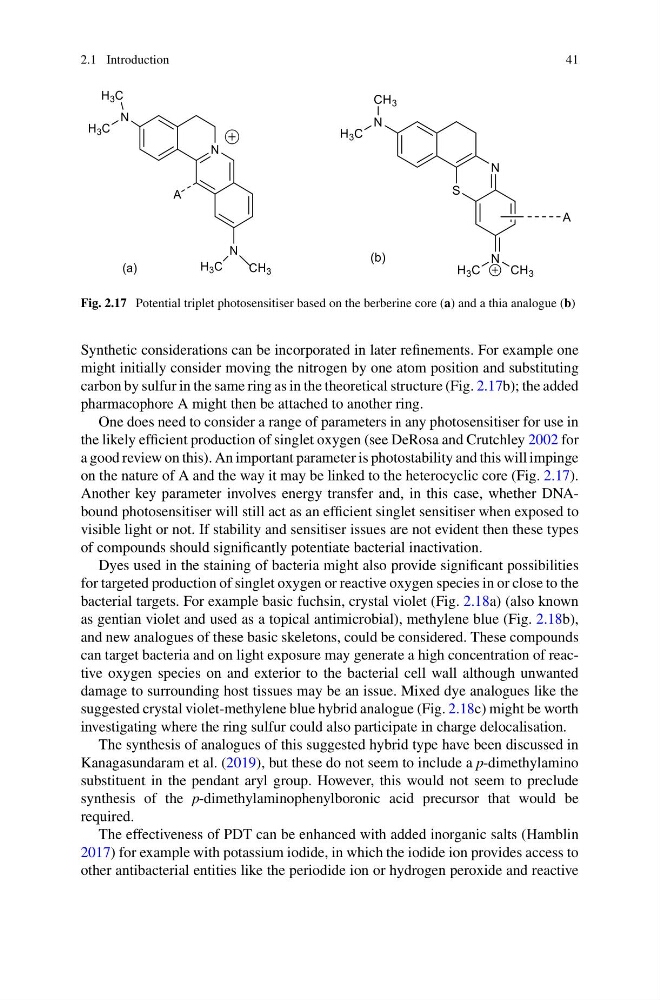
Fig. 2.17 Potential triplet photosensitiser based on the berberine core (a) and a thia analogue (b)
Synthetic considerations can be incorporated in later refinements. For example one
might initially consider moving the nitrogen by one atom position and substituting
carbon by sulfur in the same ring as in the theoretical structure (Fig. 2.17b); the added
pharmacophore A might then be attached to another ring.
One does need to consider a range of parameters in any photosensitiser for use in
the likely efficient production of singlet oxygen (see DeRosa and Crutchley 2002 for
a good review on this). An important parameter is photostability and this will impinge
on the nature of A and the way it may be linked to the heterocyclic core (Fig. 2.17).
Another key parameter involves energy transfer and, in this case, whether DNAbound photosensitiser will still act as an efficient singlet sensitiser when exposed to
visible light or not. If stability and sensitiser issues are not evident then these types
of compounds should significantly potentiate bacterial inactivation.
Dyes used in the staining of bacteria might also provide significant possibilities
for targeted production of singlet oxygen or reactive oxygen species in or close to the
bacterial targets. For example basic fuchsin, crystal violet (Fig. 2.18a) (also known
as gentian violet and used as a topical antimicrobial), methylene blue (Fig. 2.18b),
and new analogues of these basic skeletons, could be considered. These compounds
can target bacteria and on light exposure may generate a high concentration of reactive oxygen species on and exterior to the bacterial cell wall although unwanted
damage to surrounding host tissues may be an issue. Mixed dye analogues like the
suggested crystal violet-methylene blue hybrid analogue (Fig. 2.18c) might be worth
investigating where the ring sulfur could also participate in charge delocalisation.
The synthesis of analogues of this suggested hybrid type have been discussed in
Kanagasundaram et al. (2019), but these do not seem to include a p-dimethylamino
substituent in the pendant aryl group. However, this would not seem to preclude
synthesis of the p-dimethylaminophenylboronic acid precursor that would be
required.
The effectiveness of PDT can be enhanced with added inorganic salts (Hamblin
2017) for example with potassium iodide, in which the iodide ion provides access to
other antibacterial entities like the periodide ion or hydrogen peroxide and reactive
41
Fig. 2.17 Potential triplet photosensitiser based on the berberine core (a) and a thia analogue (b)
Synthetic considerations can be incorporated in later refinements. For example one
might initially consider moving the nitrogen by one atom position and substituting
carbon by sulfur in the same ring as in the theoretical structure (Fig. 2.17b); the added
pharmacophore A might then be attached to another ring.
One does need to consider a range of parameters in any photosensitiser for use in
the likely efficient production of singlet oxygen (see DeRosa and Crutchley 2002 for
a good review on this). An important parameter is photostability and this will impinge
on the nature of A and the way it may be linked to the heterocyclic core (Fig. 2.17).
Another key parameter involves energy transfer and, in this case, whether DNAbound photosensitiser will still act as an efficient singlet sensitiser when exposed to
visible light or not. If stability and sensitiser issues are not evident then these types
of compounds should significantly potentiate bacterial inactivation.
Dyes used in the staining of bacteria might also provide significant possibilities
for targeted production of singlet oxygen or reactive oxygen species in or close to the
bacterial targets. For example basic fuchsin, crystal violet (Fig. 2.18a) (also known
as gentian violet and used as a topical antimicrobial), methylene blue (Fig. 2.18b),
and new analogues of these basic skeletons, could be considered. These compounds
can target bacteria and on light exposure may generate a high concentration of reactive oxygen species on and exterior to the bacterial cell wall although unwanted
damage to surrounding host tissues may be an issue. Mixed dye analogues like the
suggested crystal violet-methylene blue hybrid analogue (Fig. 2.18c) might be worth
investigating where the ring sulfur could also participate in charge delocalisation.
The synthesis of analogues of this suggested hybrid type have been discussed in
Kanagasundaram et al. (2019), but these do not seem to include a p-dimethylamino
substituent in the pendant aryl group. However, this would not seem to preclude
synthesis of the p-dimethylaminophenylboronic acid precursor that would be
required.
The effectiveness of PDT can be enhanced with added inorganic salts (Hamblin
2017) for example with potassium iodide, in which the iodide ion provides access to
other antibacterial entities like the periodide ion or hydrogen peroxide and reactive