

2.1 Introduction
39
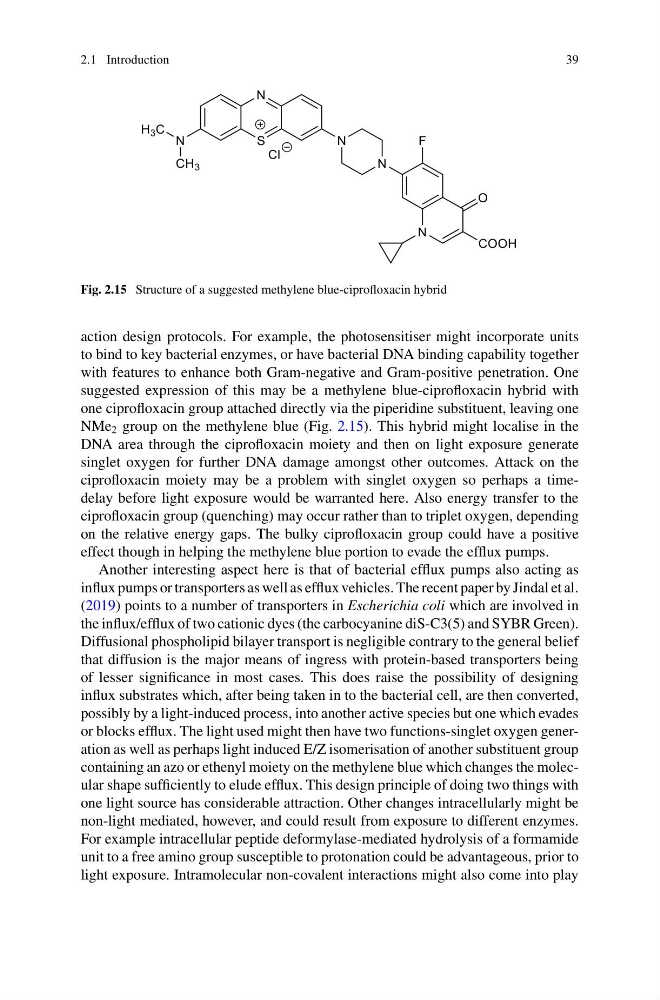
Fig. 2.15 Structure of a suggested methylene blue-ciprofloxacin hybrid
action design protocols. For example, the photosensitiser might incorporate units
to bind to key bacterial enzymes, or have bacterial DNA binding capability together
with features to enhance both Gram-negative and Gram-positive penetration. One
suggested expression of this may be a methylene blue-ciprofloxacin hybrid with
one ciprofloxacin group attached directly via the piperidine substituent, leaving one
NMe 2 group on the methylene blue (Fig. 2.15). This hybrid might localise in the
DNA area through the ciprofloxacin moiety and then on light exposure generate
singlet oxygen for further DNA damage amongst other outcomes. Attack on the
ciprofloxacin moiety may be a problem with singlet oxygen so perhaps a timedelay before light exposure would be warranted here. Also energy transfer to the
ciprofloxacin group (quenching) may occur rather than to triplet oxygen, depending
on the relative energy gaps. The bulky ciprofloxacin group could have a positive
effect though in helping the methylene blue portion to evade the efflux pumps.
Another interesting aspect here is that of bacterial efflux pumps also acting as
influx pumps or transporters as well as efflux vehicles. The recent paper by Jindal et al.
(2019) points to a number of transporters in Escherichia coli which are involved in
the influx/efflux of two cationic dyes (the carbocyanine diS-C3(5) and SYBR Green).
Diffusional phospholipid bilayer transport is negligible contrary to the general belief
that diffusion is the major means of ingress with protein-based transporters being
of lesser significance in most cases. This does raise the possibility of designing
influx substrates which, after being taken in to the bacterial cell, are then converted,
possibly by a light-induced process, into another active species but one which evades
or blocks efflux. The light used might then have two functions-singlet oxygen generation as well as perhaps light induced E/Z isomerisation of another substituent group
containing an azo or ethenyl moiety on the methylene blue which changes the molecular shape sufficiently to elude efflux. This design principle of doing two things with
one light source has considerable attraction. Other changes intracellularly might be
non-light mediated, however, and could result from exposure to different enzymes.
For example intracellular peptide deformylase-mediated hydrolysis of a formamide
unit to a free amino group susceptible to protonation could be advantageous, prior to
light exposure. Intramolecular non-covalent interactions might also come into play
39
Fig. 2.15 Structure of a suggested methylene blue-ciprofloxacin hybrid
action design protocols. For example, the photosensitiser might incorporate units
to bind to key bacterial enzymes, or have bacterial DNA binding capability together
with features to enhance both Gram-negative and Gram-positive penetration. One
suggested expression of this may be a methylene blue-ciprofloxacin hybrid with
one ciprofloxacin group attached directly via the piperidine substituent, leaving one
NMe 2 group on the methylene blue (Fig. 2.15). This hybrid might localise in the
DNA area through the ciprofloxacin moiety and then on light exposure generate
singlet oxygen for further DNA damage amongst other outcomes. Attack on the
ciprofloxacin moiety may be a problem with singlet oxygen so perhaps a timedelay before light exposure would be warranted here. Also energy transfer to the
ciprofloxacin group (quenching) may occur rather than to triplet oxygen, depending
on the relative energy gaps. The bulky ciprofloxacin group could have a positive
effect though in helping the methylene blue portion to evade the efflux pumps.
Another interesting aspect here is that of bacterial efflux pumps also acting as
influx pumps or transporters as well as efflux vehicles. The recent paper by Jindal et al.
(2019) points to a number of transporters in Escherichia coli which are involved in
the influx/efflux of two cationic dyes (the carbocyanine diS-C3(5) and SYBR Green).
Diffusional phospholipid bilayer transport is negligible contrary to the general belief
that diffusion is the major means of ingress with protein-based transporters being
of lesser significance in most cases. This does raise the possibility of designing
influx substrates which, after being taken in to the bacterial cell, are then converted,
possibly by a light-induced process, into another active species but one which evades
or blocks efflux. The light used might then have two functions-singlet oxygen generation as well as perhaps light induced E/Z isomerisation of another substituent group
containing an azo or ethenyl moiety on the methylene blue which changes the molecular shape sufficiently to elude efflux. This design principle of doing two things with
one light source has considerable attraction. Other changes intracellularly might be
non-light mediated, however, and could result from exposure to different enzymes.
For example intracellular peptide deformylase-mediated hydrolysis of a formamide
unit to a free amino group susceptible to protonation could be advantageous, prior to
light exposure. Intramolecular non-covalent interactions might also come into play