

2.1 Introduction
29
(a)
(b)
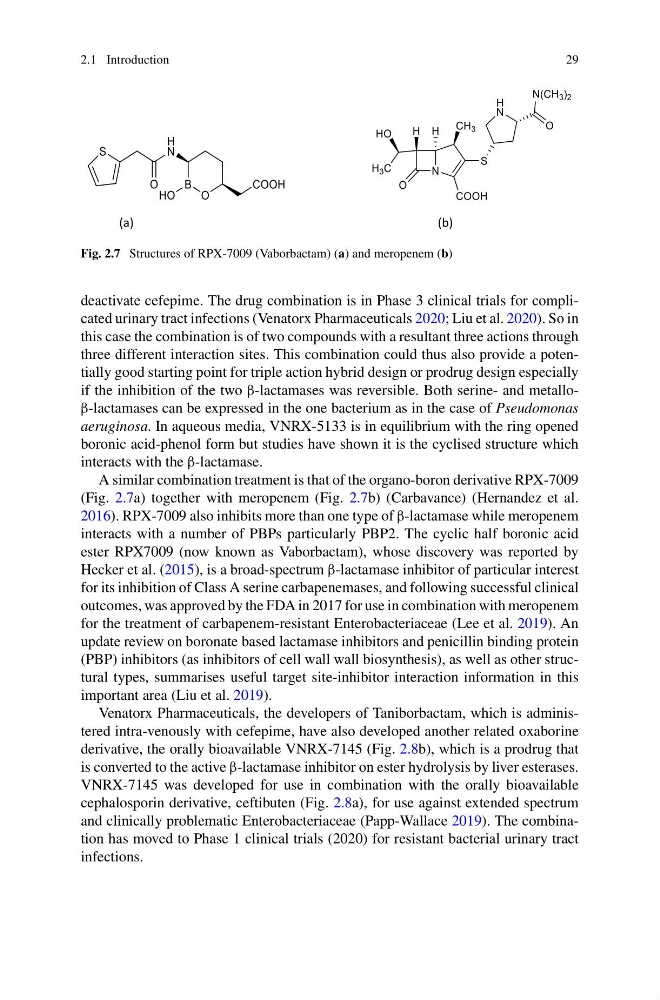
Fig. 2.7 Structures of RPX-7009 (Vaborbactam) (a) and meropenem (b)
deactivate cefepime. The drug combination is in Phase 3 clinical trials for complicated urinary tract infections (Venatorx Pharmaceuticals 2020; Liu et al. 2020). So in
this case the combination is of two compounds with a resultant three actions through
three different interaction sites. This combination could thus also provide a potentially good starting point for triple action hybrid design or prodrug design especially
if the inhibition of the two β-lactamases was reversible. Both serine- and metalloβ-lactamases can be expressed in the one bacterium as in the case of Pseudomonas
aeruginosa. In aqueous media, VNRX-5133 is in equilibrium with the ring opened
boronic acid-phenol form but studies have shown it is the cyclised structure which
interacts with the β-lactamase.
A similar combination treatment is that of the organo-boron derivative RPX-7009
(Fig. 2.7a) together with meropenem (Fig. 2.7b) (Carbavance) (Hernandez et al.
2016). RPX-7009 also inhibits more than one type of β-lactamase while meropenem
interacts with a number of PBPs particularly PBP2. The cyclic half boronic acid
ester RPX7009 (now known as Vaborbactam), whose discovery was reported by
Hecker et al. (2015), is a broad-spectrum β-lactamase inhibitor of particular interest
for its inhibition of Class A serine carbapenemases, and following successful clinical
outcomes, was approved by the FDA in 2017 for use in combination with meropenem
for the treatment of carbapenem-resistant Enterobacteriaceae (Lee et al. 2019). An
update review on boronate based lactamase inhibitors and penicillin binding protein
(PBP) inhibitors (as inhibitors of cell wall wall biosynthesis), as well as other structural types, summarises useful target site-inhibitor interaction information in this
important area (Liu et al. 2019).
Venatorx Pharmaceuticals, the developers of Taniborbactam, which is administered intra-venously with cefepime, have also developed another related oxaborine
derivative, the orally bioavailable VNRX-7145 (Fig. 2.8b), which is a prodrug that
is converted to the active β-lactamase inhibitor on ester hydrolysis by liver esterases.
VNRX-7145 was developed for use in combination with the orally bioavailable
cephalosporin derivative, ceftibuten (Fig. 2.8a), for use against extended spectrum
and clinically problematic Enterobacteriaceae (Papp-Wallace 2019). The combination has moved to Phase 1 clinical trials (2020) for resistant bacterial urinary tract
infections.
29
(a)
(b)
Fig. 2.7 Structures of RPX-7009 (Vaborbactam) (a) and meropenem (b)
deactivate cefepime. The drug combination is in Phase 3 clinical trials for complicated urinary tract infections (Venatorx Pharmaceuticals 2020; Liu et al. 2020). So in
this case the combination is of two compounds with a resultant three actions through
three different interaction sites. This combination could thus also provide a potentially good starting point for triple action hybrid design or prodrug design especially
if the inhibition of the two β-lactamases was reversible. Both serine- and metalloβ-lactamases can be expressed in the one bacterium as in the case of Pseudomonas
aeruginosa. In aqueous media, VNRX-5133 is in equilibrium with the ring opened
boronic acid-phenol form but studies have shown it is the cyclised structure which
interacts with the β-lactamase.
A similar combination treatment is that of the organo-boron derivative RPX-7009
(Fig. 2.7a) together with meropenem (Fig. 2.7b) (Carbavance) (Hernandez et al.
2016). RPX-7009 also inhibits more than one type of β-lactamase while meropenem
interacts with a number of PBPs particularly PBP2. The cyclic half boronic acid
ester RPX7009 (now known as Vaborbactam), whose discovery was reported by
Hecker et al. (2015), is a broad-spectrum β-lactamase inhibitor of particular interest
for its inhibition of Class A serine carbapenemases, and following successful clinical
outcomes, was approved by the FDA in 2017 for use in combination with meropenem
for the treatment of carbapenem-resistant Enterobacteriaceae (Lee et al. 2019). An
update review on boronate based lactamase inhibitors and penicillin binding protein
(PBP) inhibitors (as inhibitors of cell wall wall biosynthesis), as well as other structural types, summarises useful target site-inhibitor interaction information in this
important area (Liu et al. 2019).
Venatorx Pharmaceuticals, the developers of Taniborbactam, which is administered intra-venously with cefepime, have also developed another related oxaborine
derivative, the orally bioavailable VNRX-7145 (Fig. 2.8b), which is a prodrug that
is converted to the active β-lactamase inhibitor on ester hydrolysis by liver esterases.
VNRX-7145 was developed for use in combination with the orally bioavailable
cephalosporin derivative, ceftibuten (Fig. 2.8a), for use against extended spectrum
and clinically problematic Enterobacteriaceae (Papp-Wallace 2019). The combination has moved to Phase 1 clinical trials (2020) for resistant bacterial urinary tract
infections.