

104
3 Single Molecule Non-cleavable Multiply Active Antibacterials
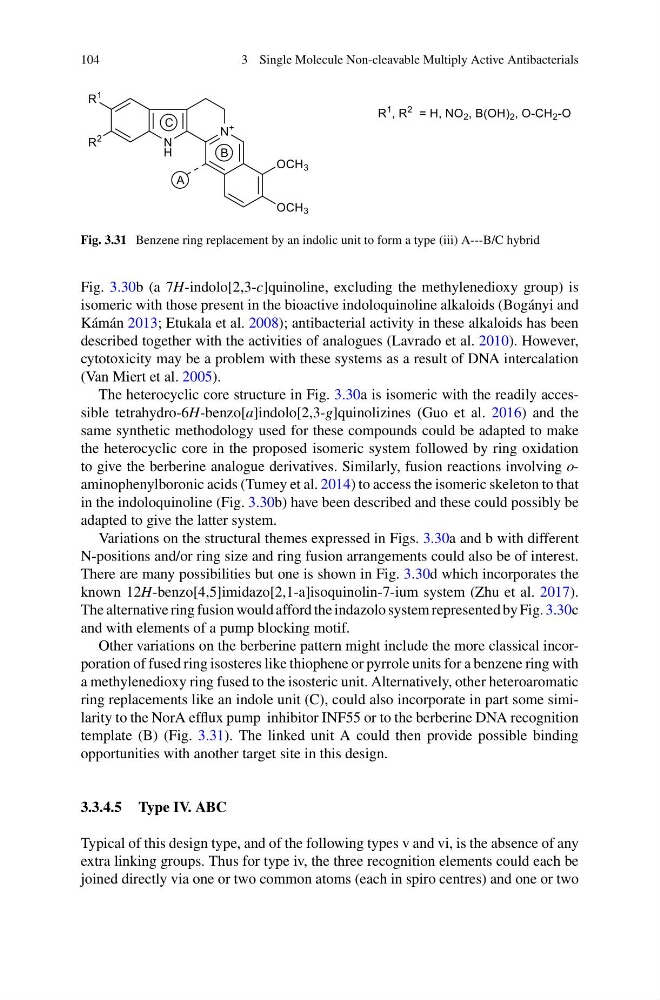
Fig. 3.31 Benzene ring replacement by an indolic unit to form a type (iii) A---B/C hybrid
Fig. 3.30b (a 7H-indolo[2,3-c]quinoline, excluding the methylenedioxy group) is
isomeric with those present in the bioactive indoloquinoline alkaloids (Bogányi and
Kámán 2013; Etukala et al. 2008); antibacterial activity in these alkaloids has been
described together with the activities of analogues (Lavrado et al. 2010). However,
cytotoxicity may be a problem with these systems as a result of DNA intercalation
(Van Miert et al. 2005).
The heterocyclic core structure in Fig. 3.30a is isomeric with the readily accessible tetrahydro-6H-benzo[a]indolo[2,3-g]quinolizines (Guo et al. 2016) and the
same synthetic methodology used for these compounds could be adapted to make
the heterocyclic core in the proposed isomeric system followed by ring oxidation
to give the berberine analogue derivatives. Similarly, fusion reactions involving oaminophenylboronic acids (Tumey et al. 2014) to access the isomeric skeleton to that
in the indoloquinoline (Fig. 3.30b) have been described and these could possibly be
adapted to give the latter system.
Variations on the structural themes expressed in Figs. 3.30a and b with different
N-positions and/or ring size and ring fusion arrangements could also be of interest.
There are many possibilities but one is shown in Fig. 3.30d which incorporates the
known 12H-benzo[4,5]imidazo[2,1-a]isoquinolin-7-ium system (Zhu et al. 2017).
The alternative ring fusion would afford the indazolo system represented by Fig. 3.30c
and with elements of a pump blocking motif.
Other variations on the berberine pattern might include the more classical incorporation of fused ring isosteres like thiophene or pyrrole units for a benzene ring with
a methylenedioxy ring fused to the isosteric unit. Alternatively, other heteroaromatic
ring replacements like an indole unit (C), could also incorporate in part some similarity to the NorA efflux pump inhibitor INF55 or to the berberine DNA recognition
template (B) (Fig. 3.31). The linked unit A could then provide possible binding
opportunities with another target site in this design.
3.3.4.5 Type IV. ABC
Typical of this design type, and of the following types v and vi, is the absence of any
extra linking groups. Thus for type iv, the three recognition elements could each be
joined directly via one or two common atoms (each in spiro centres) and one or two
3 Single Molecule Non-cleavable Multiply Active Antibacterials
Fig. 3.31 Benzene ring replacement by an indolic unit to form a type (iii) A---B/C hybrid
Fig. 3.30b (a 7H-indolo[2,3-c]quinoline, excluding the methylenedioxy group) is
isomeric with those present in the bioactive indoloquinoline alkaloids (Bogányi and
Kámán 2013; Etukala et al. 2008); antibacterial activity in these alkaloids has been
described together with the activities of analogues (Lavrado et al. 2010). However,
cytotoxicity may be a problem with these systems as a result of DNA intercalation
(Van Miert et al. 2005).
The heterocyclic core structure in Fig. 3.30a is isomeric with the readily accessible tetrahydro-6H-benzo[a]indolo[2,3-g]quinolizines (Guo et al. 2016) and the
same synthetic methodology used for these compounds could be adapted to make
the heterocyclic core in the proposed isomeric system followed by ring oxidation
to give the berberine analogue derivatives. Similarly, fusion reactions involving oaminophenylboronic acids (Tumey et al. 2014) to access the isomeric skeleton to that
in the indoloquinoline (Fig. 3.30b) have been described and these could possibly be
adapted to give the latter system.
Variations on the structural themes expressed in Figs. 3.30a and b with different
N-positions and/or ring size and ring fusion arrangements could also be of interest.
There are many possibilities but one is shown in Fig. 3.30d which incorporates the
known 12H-benzo[4,5]imidazo[2,1-a]isoquinolin-7-ium system (Zhu et al. 2017).
The alternative ring fusion would afford the indazolo system represented by Fig. 3.30c
and with elements of a pump blocking motif.
Other variations on the berberine pattern might include the more classical incorporation of fused ring isosteres like thiophene or pyrrole units for a benzene ring with
a methylenedioxy ring fused to the isosteric unit. Alternatively, other heteroaromatic
ring replacements like an indole unit (C), could also incorporate in part some similarity to the NorA efflux pump inhibitor INF55 or to the berberine DNA recognition
template (B) (Fig. 3.31). The linked unit A could then provide possible binding
opportunities with another target site in this design.
3.3.4.5 Type IV. ABC
Typical of this design type, and of the following types v and vi, is the absence of any
extra linking groups. Thus for type iv, the three recognition elements could each be
joined directly via one or two common atoms (each in spiro centres) and one or two