

122
5 Gravitational (Clock) Compass
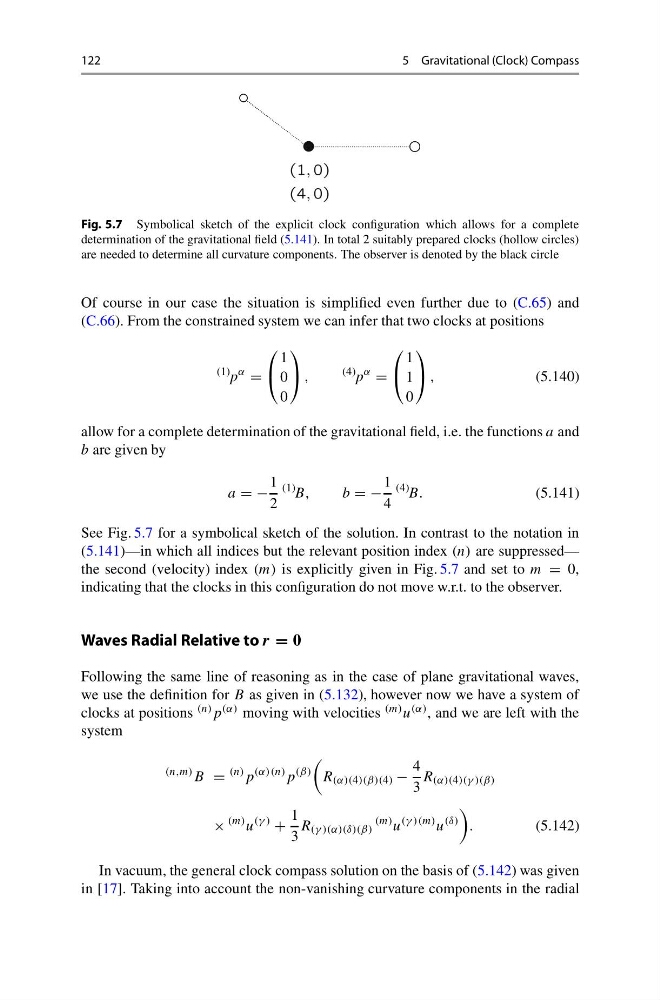
Fig. 5.7 Symbolical sketch of the explicit clock configuration which allows for a complete
determination of the gravitational field (5.141). In total 2 suitably prepared clocks (hollow circles)
are needed to determine all curvature components. The observer is denoted by the black circle
Of course in our case the situation is simplified even further due to (C.65) and
(C.66). From the constrained system we can infer that two clocks at positions
(1)
p
α
=
⎛
⎝
1
0
0
⎞
⎠ ,
(4)
p
α
=
⎛
⎝
1
1
0
⎞
⎠ ,
(5.140)
allow for a complete determination of the gravitational field, i.e. the functions a and
b are given by
a = −
1
2
(1)
B,
b = −
1
4
(4)
B.
(5.141)
See Fig. 5.7 for a symbolical sketch of the solution. In contrast to the notation in
(5.141)—in which all indices but the relevant position index (n) are suppressed—
the second (velocity) index (m) is explicitly given in Fig. 5.7 and set to m = 0,
indicating that the clocks in this configuration do not move w.r.t. to the observer.
Waves Radial Relative to r = 0
Following the same line of reasoning as in the case of plane gravitational waves,
we use the definition for B as given in (5.132), however now we have a system of
clocks at positions (n) p (α) moving with velocities (m) u (α) , and we are left with the
system
(n,m) B =
(n) p
(α)(n) p
(β)
R (α)(4)(β)(4) −
4
3
R (α)(4)(γ )(β)
×
(m) u
(γ )
+
1
3
R (γ )(α)(δ)(β)
(m) u
(γ )(m) u
(δ)
.
(5.142)
In vacuum, the general clock compass solution on the basis of (5.142) was given
in [17]. Taking into account the non-vanishing curvature components in the radial
5 Gravitational (Clock) Compass
Fig. 5.7 Symbolical sketch of the explicit clock configuration which allows for a complete
determination of the gravitational field (5.141). In total 2 suitably prepared clocks (hollow circles)
are needed to determine all curvature components. The observer is denoted by the black circle
Of course in our case the situation is simplified even further due to (C.65) and
(C.66). From the constrained system we can infer that two clocks at positions
(1)
p
α
=
⎛
⎝
1
0
0
⎞
⎠ ,
(4)
p
α
=
⎛
⎝
1
1
0
⎞
⎠ ,
(5.140)
allow for a complete determination of the gravitational field, i.e. the functions a and
b are given by
a = −
1
2
(1)
B,
b = −
1
4
(4)
B.
(5.141)
See Fig. 5.7 for a symbolical sketch of the solution. In contrast to the notation in
(5.141)—in which all indices but the relevant position index (n) are suppressed—
the second (velocity) index (m) is explicitly given in Fig. 5.7 and set to m = 0,
indicating that the clocks in this configuration do not move w.r.t. to the observer.
Waves Radial Relative to r = 0
Following the same line of reasoning as in the case of plane gravitational waves,
we use the definition for B as given in (5.132), however now we have a system of
clocks at positions (n) p (α) moving with velocities (m) u (α) , and we are left with the
system
(n,m) B =
(n) p
(α)(n) p
(β)
R (α)(4)(β)(4) −
4
3
R (α)(4)(γ )(β)
×
(m) u
(γ )
+
1
3
R (γ )(α)(δ)(β)
(m) u
(γ )(m) u
(δ)
.
(5.142)
In vacuum, the general clock compass solution on the basis of (5.142) was given
in [17]. Taking into account the non-vanishing curvature components in the radial