

66
3 Physical Theory of RFID System Physical Anti-Collision
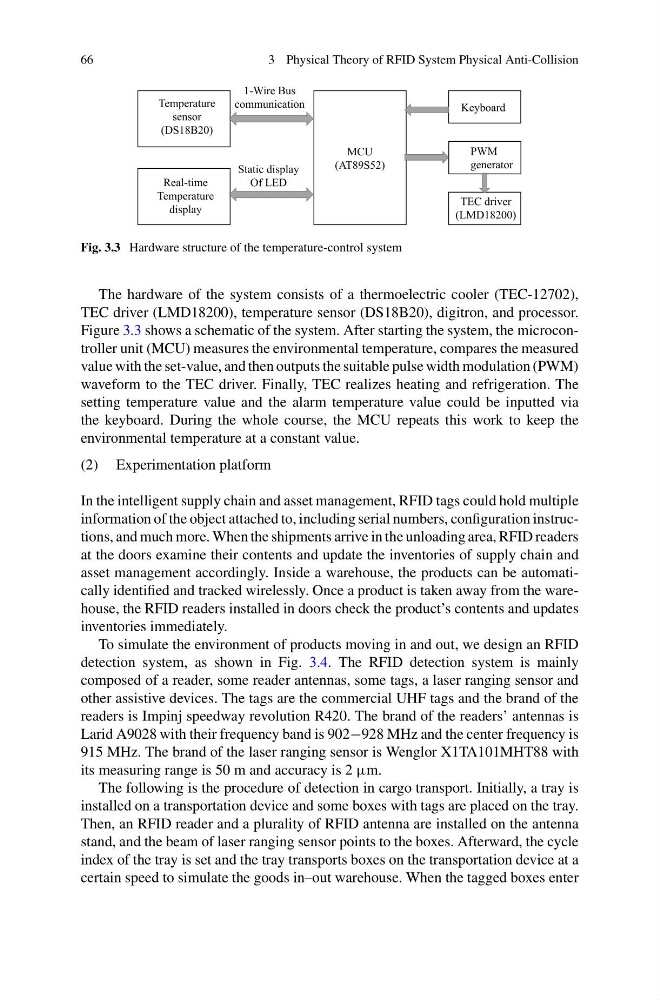
Fig. 3.3 Hardware structure of the temperature-control system
The hardware of the system consists of a thermoelectric cooler (TEC-12702),
TEC driver (LMD18200), temperature sensor (DS18B20), digitron, and processor.
Figure 3.3 shows a schematic of the system. After starting the system, the microcontroller unit (MCU) measures the environmental temperature, compares the measured
value with the set-value, and then outputs the suitable pulse width modulation (PWM)
waveform to the TEC driver. Finally, TEC realizes heating and refrigeration. The
setting temperature value and the alarm temperature value could be inputted via
the keyboard. During the whole course, the MCU repeats this work to keep the
environmental temperature at a constant value.
(2) Experimentation platform
In the intelligent supply chain and asset management, RFID tags could hold multiple
information of the object attached to, including serial numbers, configuration instructions, and much more. When the shipments arrive in the unloading area, RFID readers
at the doors examine their contents and update the inventories of supply chain and
asset management accordingly. Inside a warehouse, the products can be automatically identified and tracked wirelessly. Once a product is taken away from the warehouse, the RFID readers installed in doors check the product’s contents and updates
inventories immediately.
To simulate the environment of products moving in and out, we design an RFID
detection system, as shown in Fig. 3.4. The RFID detection system is mainly
composed of a reader, some reader antennas, some tags, a laser ranging sensor and
other assistive devices. The tags are the commercial UHF tags and the brand of the
readers is Impinj speedway revolution R420. The brand of the readers’ antennas is
Larid A9028 with their frequency band is 902−928 MHz and the center frequency is
915 MHz. The brand of the laser ranging sensor is Wenglor X1TA101MHT88 with
its measuring range is 50 m and accuracy is 2 μm.
The following is the procedure of detection in cargo transport. Initially, a tray is
installed on a transportation device and some boxes with tags are placed on the tray.
Then, an RFID reader and a plurality of RFID antenna are installed on the antenna
stand, and the beam of laser ranging sensor points to the boxes. Afterward, the cycle
index of the tray is set and the tray transports boxes on the transportation device at a
certain speed to simulate the goods in–out warehouse. When the tagged boxes enter
3 Physical Theory of RFID System Physical Anti-Collision
Fig. 3.3 Hardware structure of the temperature-control system
The hardware of the system consists of a thermoelectric cooler (TEC-12702),
TEC driver (LMD18200), temperature sensor (DS18B20), digitron, and processor.
Figure 3.3 shows a schematic of the system. After starting the system, the microcontroller unit (MCU) measures the environmental temperature, compares the measured
value with the set-value, and then outputs the suitable pulse width modulation (PWM)
waveform to the TEC driver. Finally, TEC realizes heating and refrigeration. The
setting temperature value and the alarm temperature value could be inputted via
the keyboard. During the whole course, the MCU repeats this work to keep the
environmental temperature at a constant value.
(2) Experimentation platform
In the intelligent supply chain and asset management, RFID tags could hold multiple
information of the object attached to, including serial numbers, configuration instructions, and much more. When the shipments arrive in the unloading area, RFID readers
at the doors examine their contents and update the inventories of supply chain and
asset management accordingly. Inside a warehouse, the products can be automatically identified and tracked wirelessly. Once a product is taken away from the warehouse, the RFID readers installed in doors check the product’s contents and updates
inventories immediately.
To simulate the environment of products moving in and out, we design an RFID
detection system, as shown in Fig. 3.4. The RFID detection system is mainly
composed of a reader, some reader antennas, some tags, a laser ranging sensor and
other assistive devices. The tags are the commercial UHF tags and the brand of the
readers is Impinj speedway revolution R420. The brand of the readers’ antennas is
Larid A9028 with their frequency band is 902−928 MHz and the center frequency is
915 MHz. The brand of the laser ranging sensor is Wenglor X1TA101MHT88 with
its measuring range is 50 m and accuracy is 2 μm.
The following is the procedure of detection in cargo transport. Initially, a tray is
installed on a transportation device and some boxes with tags are placed on the tray.
Then, an RFID reader and a plurality of RFID antenna are installed on the antenna
stand, and the beam of laser ranging sensor points to the boxes. Afterward, the cycle
index of the tray is set and the tray transports boxes on the transportation device at a
certain speed to simulate the goods in–out warehouse. When the tagged boxes enter