

6.2 The Theory RFID Multi-tag Image Denoising by FDnCNN
209
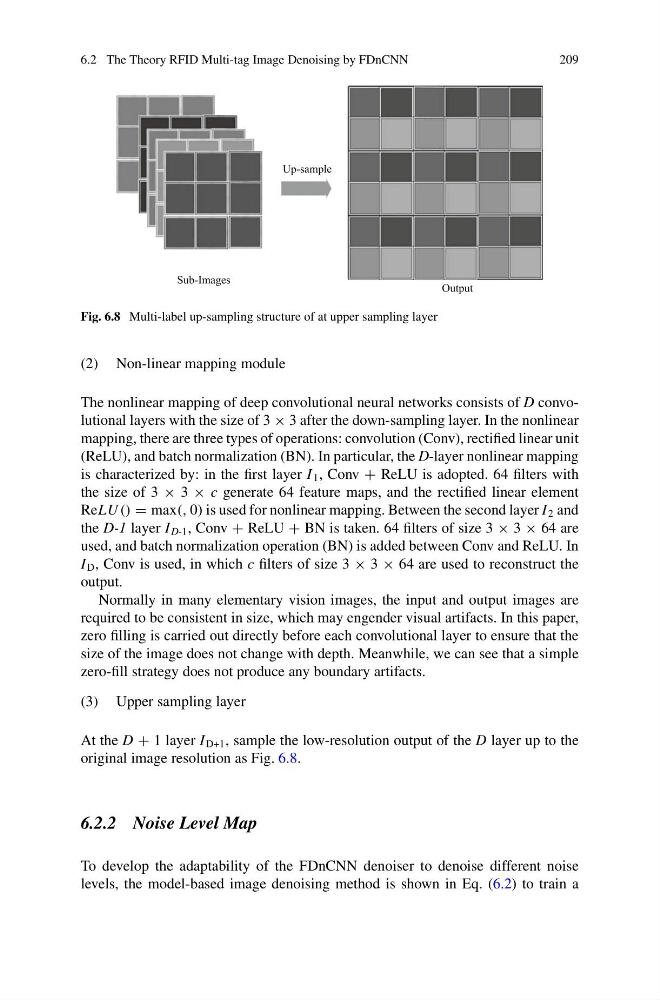
Fig. 6.8 Multi-label up-sampling structure of at upper sampling layer
(2) Non-linear mapping module
The nonlinear mapping of deep convolutional neural networks consists of D convolutional layers with the size of 3 × 3 after the down-sampling layer. In the nonlinear
mapping, there are three types of operations: convolution (Conv), rectified linear unit
(ReLU), and batch normalization (BN). In particular, the D-layer nonlinear mapping
is characterized by: in the first layer I 1 , Conv + ReLU is adopted. 64 filters with
the size of 3 × 3 × c generate 64 feature maps, and the rectified linear element
ReLU () = max(, 0) is used for nonlinear mapping. Between the second layer I 2 and
the D-1 layer I D-1 , Conv + ReLU + BN is taken. 64 filters of size 3 × 3 × 64 are
used, and batch normalization operation (BN) is added between Conv and ReLU. In
I D , Conv is used, in which c filters of size 3 × 3 × 64 are used to reconstruct the
output.
Normally in many elementary vision images, the input and output images are
required to be consistent in size, which may engender visual artifacts. In this paper,
zero filling is carried out directly before each convolutional layer to ensure that the
size of the image does not change with depth. Meanwhile, we can see that a simple
zero-fill strategy does not produce any boundary artifacts.
(3) Upper sampling layer
At the D + 1 layer I D+1 , sample the low-resolution output of the D layer up to the
original image resolution as Fig. 6.8.
6.2.2 Noise Level Map
To develop the adaptability of the FDnCNN denoiser to denoise different noise
levels, the model-based image denoising method is shown in Eq. (6.2) to train a
209
Fig. 6.8 Multi-label up-sampling structure of at upper sampling layer
(2) Non-linear mapping module
The nonlinear mapping of deep convolutional neural networks consists of D convolutional layers with the size of 3 × 3 after the down-sampling layer. In the nonlinear
mapping, there are three types of operations: convolution (Conv), rectified linear unit
(ReLU), and batch normalization (BN). In particular, the D-layer nonlinear mapping
is characterized by: in the first layer I 1 , Conv + ReLU is adopted. 64 filters with
the size of 3 × 3 × c generate 64 feature maps, and the rectified linear element
ReLU () = max(, 0) is used for nonlinear mapping. Between the second layer I 2 and
the D-1 layer I D-1 , Conv + ReLU + BN is taken. 64 filters of size 3 × 3 × 64 are
used, and batch normalization operation (BN) is added between Conv and ReLU. In
I D , Conv is used, in which c filters of size 3 × 3 × 64 are used to reconstruct the
output.
Normally in many elementary vision images, the input and output images are
required to be consistent in size, which may engender visual artifacts. In this paper,
zero filling is carried out directly before each convolutional layer to ensure that the
size of the image does not change with depth. Meanwhile, we can see that a simple
zero-fill strategy does not produce any boundary artifacts.
(3) Upper sampling layer
At the D + 1 layer I D+1 , sample the low-resolution output of the D layer up to the
original image resolution as Fig. 6.8.
6.2.2 Noise Level Map
To develop the adaptability of the FDnCNN denoiser to denoise different noise
levels, the model-based image denoising method is shown in Eq. (6.2) to train a