

32
2 Electrochemistry and Electrodeposition
(a)
(b)
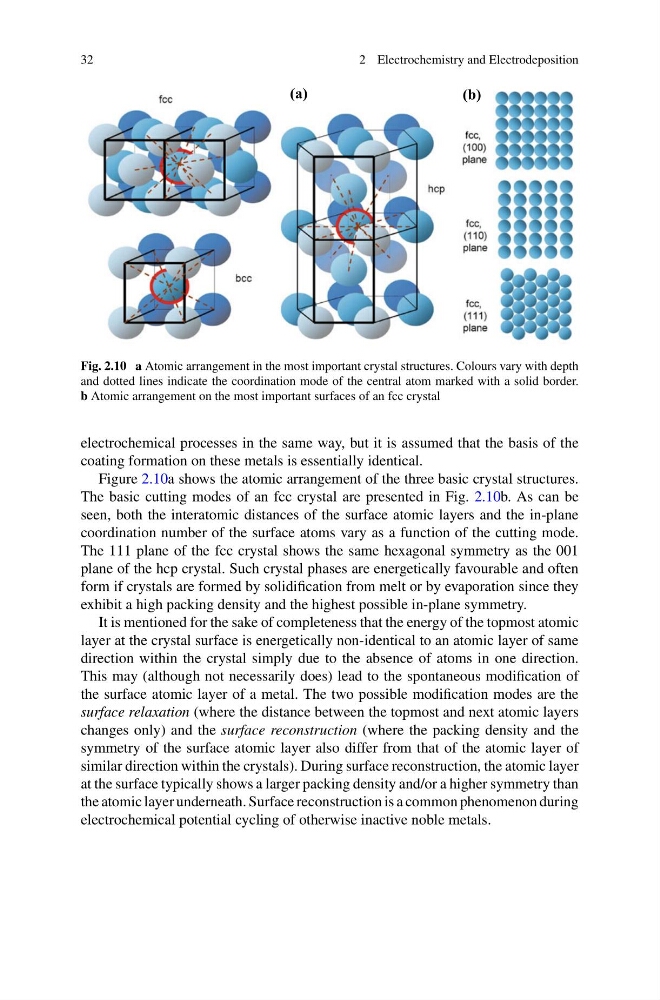
Fig. 2.10 a Atomic arrangement in the most important crystal structures. Colours vary with depth
and dotted lines indicate the coordination mode of the central atom marked with a solid border.
b Atomic arrangement on the most important surfaces of an fcc crystal
electrochemical processes in the same way, but it is assumed that the basis of the
coating formation on these metals is essentially identical.
Figure 2.10a shows the atomic arrangement of the three basic crystal structures.
The basic cutting modes of an fcc crystal are presented in Fig. 2.10b. As can be
seen, both the interatomic distances of the surface atomic layers and the in-plane
coordination number of the surface atoms vary as a function of the cutting mode.
The 111 plane of the fcc crystal shows the same hexagonal symmetry as the 001
plane of the hcp crystal. Such crystal phases are energetically favourable and often
form if crystals are formed by solidification from melt or by evaporation since they
exhibit a high packing density and the highest possible in-plane symmetry.
It is mentioned for the sake of completeness that the energy of the topmost atomic
layer at the crystal surface is energetically non-identical to an atomic layer of same
direction within the crystal simply due to the absence of atoms in one direction.
This may (although not necessarily does) lead to the spontaneous modification of
the surface atomic layer of a metal. The two possible modification modes are the
surface relaxation (where the distance between the topmost and next atomic layers
changes only) and the surface reconstruction (where the packing density and the
symmetry of the surface atomic layer also differ from that of the atomic layer of
similar direction within the crystals). During surface reconstruction, the atomic layer
at the surface typically shows a larger packing density and/or a higher symmetry than
the atomic layer underneath. Surface reconstruction is a common phenomenon during
electrochemical potential cycling of otherwise inactive noble metals.
2 Electrochemistry and Electrodeposition
(a)
(b)
Fig. 2.10 a Atomic arrangement in the most important crystal structures. Colours vary with depth
and dotted lines indicate the coordination mode of the central atom marked with a solid border.
b Atomic arrangement on the most important surfaces of an fcc crystal
electrochemical processes in the same way, but it is assumed that the basis of the
coating formation on these metals is essentially identical.
Figure 2.10a shows the atomic arrangement of the three basic crystal structures.
The basic cutting modes of an fcc crystal are presented in Fig. 2.10b. As can be
seen, both the interatomic distances of the surface atomic layers and the in-plane
coordination number of the surface atoms vary as a function of the cutting mode.
The 111 plane of the fcc crystal shows the same hexagonal symmetry as the 001
plane of the hcp crystal. Such crystal phases are energetically favourable and often
form if crystals are formed by solidification from melt or by evaporation since they
exhibit a high packing density and the highest possible in-plane symmetry.
It is mentioned for the sake of completeness that the energy of the topmost atomic
layer at the crystal surface is energetically non-identical to an atomic layer of same
direction within the crystal simply due to the absence of atoms in one direction.
This may (although not necessarily does) lead to the spontaneous modification of
the surface atomic layer of a metal. The two possible modification modes are the
surface relaxation (where the distance between the topmost and next atomic layers
changes only) and the surface reconstruction (where the packing density and the
symmetry of the surface atomic layer also differ from that of the atomic layer of
similar direction within the crystals). During surface reconstruction, the atomic layer
at the surface typically shows a larger packing density and/or a higher symmetry than
the atomic layer underneath. Surface reconstruction is a common phenomenon during
electrochemical potential cycling of otherwise inactive noble metals.