

320
A. Neam¸ tu Popescu et al.
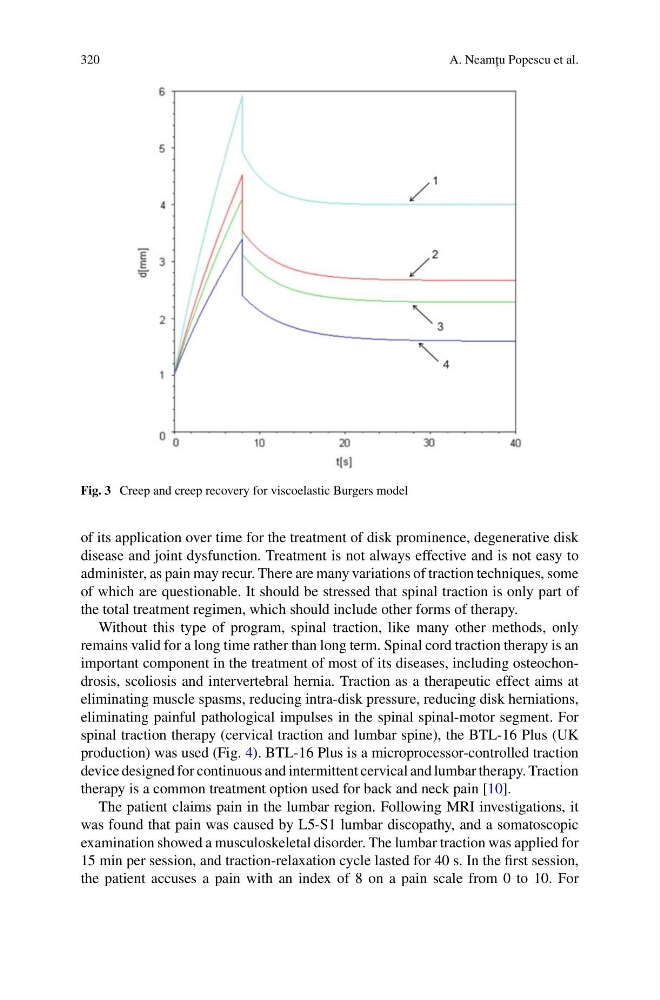
Fig. 3 Creep and creep recovery for viscoelastic Burgers model
of its application over time for the treatment of disk prominence, degenerative disk
disease and joint dysfunction. Treatment is not always effective and is not easy to
administer, as pain may recur. There are many variations of traction techniques, some
of which are questionable. It should be stressed that spinal traction is only part of
the total treatment regimen, which should include other forms of therapy.
Without this type of program, spinal traction, like many other methods, only
remains valid for a long time rather than long term. Spinal cord traction therapy is an
important component in the treatment of most of its diseases, including osteochondrosis, scoliosis and intervertebral hernia. Traction as a therapeutic effect aims at
eliminating muscle spasms, reducing intra-disk pressure, reducing disk herniations,
eliminating painful pathological impulses in the spinal spinal-motor segment. For
spinal traction therapy (cervical traction and lumbar spine), the BTL-16 Plus (UK
production) was used (Fig. 4). BTL-16 Plus is a microprocessor-controlled traction
device designed for continuous and intermittent cervical and lumbar therapy. Traction
therapy is a common treatment option used for back and neck pain [10].
The patient claims pain in the lumbar region. Following MRI investigations, it
was found that pain was caused by L5-S1 lumbar discopathy, and a somatoscopic
examination showed a musculoskeletal disorder. The lumbar traction was applied for
15 min per session, and traction-relaxation cycle lasted for 40 s. In the first session,
the patient accuses a pain with an index of 8 on a pain scale from 0 to 10. For
A. Neam¸ tu Popescu et al.
Fig. 3 Creep and creep recovery for viscoelastic Burgers model
of its application over time for the treatment of disk prominence, degenerative disk
disease and joint dysfunction. Treatment is not always effective and is not easy to
administer, as pain may recur. There are many variations of traction techniques, some
of which are questionable. It should be stressed that spinal traction is only part of
the total treatment regimen, which should include other forms of therapy.
Without this type of program, spinal traction, like many other methods, only
remains valid for a long time rather than long term. Spinal cord traction therapy is an
important component in the treatment of most of its diseases, including osteochondrosis, scoliosis and intervertebral hernia. Traction as a therapeutic effect aims at
eliminating muscle spasms, reducing intra-disk pressure, reducing disk herniations,
eliminating painful pathological impulses in the spinal spinal-motor segment. For
spinal traction therapy (cervical traction and lumbar spine), the BTL-16 Plus (UK
production) was used (Fig. 4). BTL-16 Plus is a microprocessor-controlled traction
device designed for continuous and intermittent cervical and lumbar therapy. Traction
therapy is a common treatment option used for back and neck pain [10].
The patient claims pain in the lumbar region. Following MRI investigations, it
was found that pain was caused by L5-S1 lumbar discopathy, and a somatoscopic
examination showed a musculoskeletal disorder. The lumbar traction was applied for
15 min per session, and traction-relaxation cycle lasted for 40 s. In the first session,
the patient accuses a pain with an index of 8 on a pain scale from 0 to 10. For