

50
H. Zhu et al.
HN
O
O
N
H
OH OH
O
HN
O
O
N
H
OH O
O
HN
O
O
N
H
OH O
O
O
HN
O
O
N
H
O
O
O
O
330 (armochaetoglobin E)
329 (armochaetoglobin D)
328 (armochaetoglobin C)
327 (armochaetoglobin B)
331 (armochaetoglasin B)
332 (armochaetoglasin C)
HN
O
O
N
H
O
O
O
O
O
HN
O
O
N
H
O
O
O
HN
O
O
N
H
O
O
O
333 (yamchaetoglobosin A)
OH
HN
O
N
H
O
NH
O
326 (armochaetoglobin A)
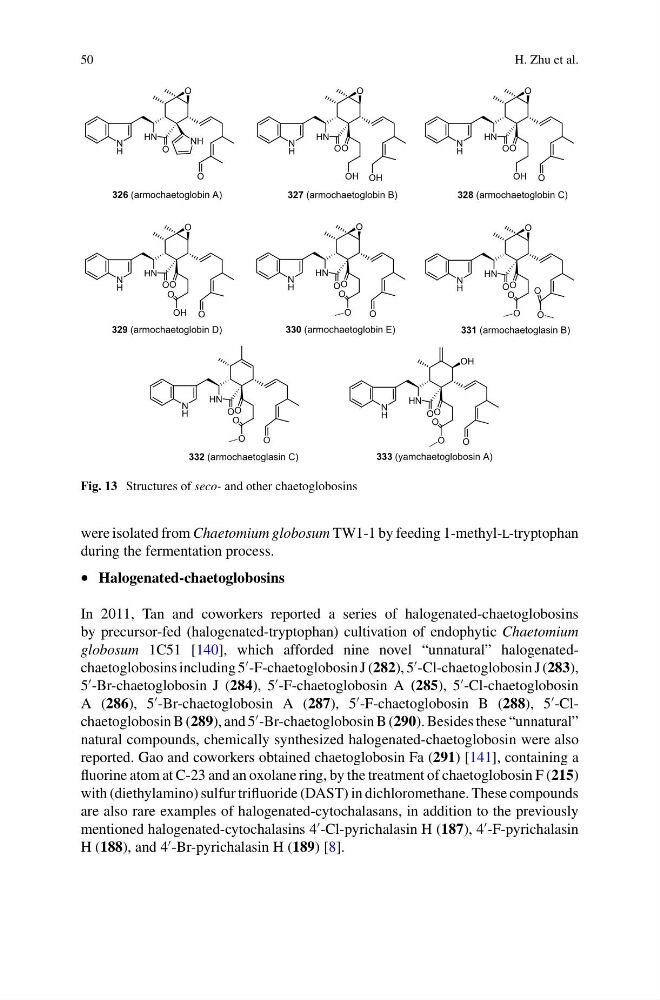
Fig. 13 Structures of seco- and other chaetoglobosins
were isolated from Chaetomium globosum TW1-1 by feeding 1-methyl-l-tryptophan
during the fermentation process.
• Halogenated-chaetoglobosins
In 2011, Tan and coworkers reported a series of halogenated-chaetoglobosins
by precursor-fed (halogenated-tryptophan) cultivation of endophytic Chaetomium
globosum 1C51 [140], which afforded nine novel “unnatural” halogenatedchaetoglobosins including 5
-F-chaetoglobosin J (282), 5
-Cl-chaetoglobosin J (283),
5
-Br-chaetoglobosin J (284), 5
-F-chaetoglobosin A (285), 5
-Cl-chaetoglobosin
A (286), 5
-Br-chaetoglobosin A (287), 5
-F-chaetoglobosin B (288), 5
-Clchaetoglobosin B (289), and 5
-Br-chaetoglobosin B (290). Besides these “unnatural”
natural compounds, chemically synthesized halogenated-chaetoglobosin were also
reported. Gao and coworkers obtained chaetoglobosin Fa (291) [141], containing a
fluorine atom at C-23 and an oxolane ring, by the treatment of chaetoglobosin F (215)
with (diethylamino) sulfur trifluoride (DAST) in dichloromethane. These compounds
are also rare examples of halogenated-cytochalasans, in addition to the previously
mentioned halogenated-cytochalasins 4
-Cl-pyrichalasin H (187), 4
-F-pyrichalasin
H (188), and 4
-Br-pyrichalasin H (189) [8].
H. Zhu et al.
HN
O
O
N
H
OH OH
O
HN
O
O
N
H
OH O
O
HN
O
O
N
H
OH O
O
O
HN
O
O
N
H
O
O
O
O
330 (armochaetoglobin E)
329 (armochaetoglobin D)
328 (armochaetoglobin C)
327 (armochaetoglobin B)
331 (armochaetoglasin B)
332 (armochaetoglasin C)
HN
O
O
N
H
O
O
O
O
O
HN
O
O
N
H
O
O
O
HN
O
O
N
H
O
O
O
333 (yamchaetoglobosin A)
OH
HN
O
N
H
O
NH
O
326 (armochaetoglobin A)
Fig. 13 Structures of seco- and other chaetoglobosins
were isolated from Chaetomium globosum TW1-1 by feeding 1-methyl-l-tryptophan
during the fermentation process.
• Halogenated-chaetoglobosins
In 2011, Tan and coworkers reported a series of halogenated-chaetoglobosins
by precursor-fed (halogenated-tryptophan) cultivation of endophytic Chaetomium
globosum 1C51 [140], which afforded nine novel “unnatural” halogenatedchaetoglobosins including 5
-F-chaetoglobosin J (282), 5
-Cl-chaetoglobosin J (283),
5
-Br-chaetoglobosin J (284), 5
-F-chaetoglobosin A (285), 5
-Cl-chaetoglobosin
A (286), 5
-Br-chaetoglobosin A (287), 5
-F-chaetoglobosin B (288), 5
-Clchaetoglobosin B (289), and 5
-Br-chaetoglobosin B (290). Besides these “unnatural”
natural compounds, chemically synthesized halogenated-chaetoglobosin were also
reported. Gao and coworkers obtained chaetoglobosin Fa (291) [141], containing a
fluorine atom at C-23 and an oxolane ring, by the treatment of chaetoglobosin F (215)
with (diethylamino) sulfur trifluoride (DAST) in dichloromethane. These compounds
are also rare examples of halogenated-cytochalasans, in addition to the previously
mentioned halogenated-cytochalasins 4
-Cl-pyrichalasin H (187), 4
-F-pyrichalasin
H (188), and 4
-Br-pyrichalasin H (189) [8].