

208
N. N. Win and H. Morita
O
O
O
386 (mansonone E)
O
O
O
387 (mansorin I)
HO
O
O
389 (mansonone G)
HO
O
O
HO
390 (mansorin B)
O
OH
OH
O
388 (populene F)
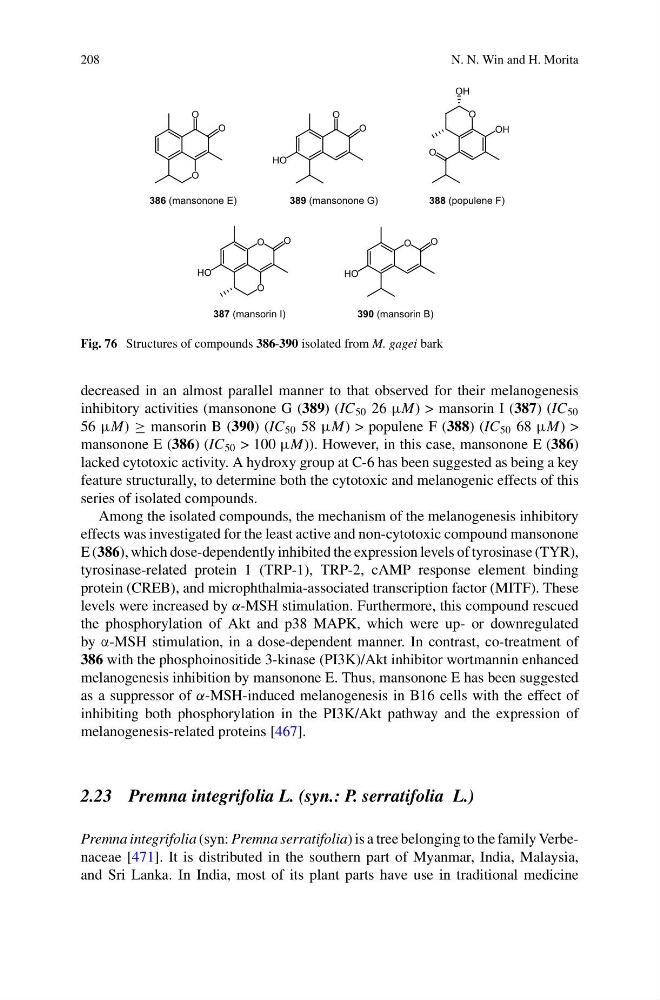
Fig. 76 Structures of compounds 386-390 isolated from M. gagei bark
decreased in an almost parallel manner to that observed for their melanogenesis
inhibitory activities (mansonone G (389) (IC 50 26 μM) > mansorin I (387) (IC 50
56 μM) ≥ mansorin B (390) (IC 50 58 μM) > populene F (388) (IC 50 68 μM) >
mansonone E (386) (IC 50 > 100 μM)). However, in this case, mansonone E (386)
lacked cytotoxic activity. A hydroxy group at C-6 has been suggested as being a key
feature structurally, to determine both the cytotoxic and melanogenic effects of this
series of isolated compounds.
Among the isolated compounds, the mechanism of the melanogenesis inhibitory
effects was investigated for the least active and non-cytotoxic compound mansonone
E (386), which dose-dependently inhibited the expression levels of tyrosinase (TYR),
tyrosinase-related protein 1 (TRP-1), TRP-2, cAMP response element binding
protein (CREB), and microphthalmia-associated transcription factor (MITF). These
levels were increased by α-MSH stimulation. Furthermore, this compound rescued
the phosphorylation of Akt and p38 MAPK, which were up- or downregulated
by α-MSH stimulation, in a dose-dependent manner. In contrast, co-treatment of
386 with the phosphoinositide 3-kinase (PI3K)/Akt inhibitor wortmannin enhanced
melanogenesis inhibition by mansonone E. Thus, mansonone E has been suggested
as a suppressor of α-MSH-induced melanogenesis in B16 cells with the effect of
inhibiting both phosphorylation in the PI3K/Akt pathway and the expression of
melanogenesis-related proteins [467].
2.23 Premna integrifolia L. (syn.: P. serratifolia L.)
Premna integrifolia (syn: Premna serratifolia) is a tree belonging to the family Verbenaceae [471]. It is distributed in the southern part of Myanmar, India, Malaysia,
and Sri Lanka. In India, most of its plant parts have use in traditional medicine
N. N. Win and H. Morita
O
O
O
386 (mansonone E)
O
O
O
387 (mansorin I)
HO
O
O
389 (mansonone G)
HO
O
O
HO
390 (mansorin B)
O
OH
OH
O
388 (populene F)
Fig. 76 Structures of compounds 386-390 isolated from M. gagei bark
decreased in an almost parallel manner to that observed for their melanogenesis
inhibitory activities (mansonone G (389) (IC 50 26 μM) > mansorin I (387) (IC 50
56 μM) ≥ mansorin B (390) (IC 50 58 μM) > populene F (388) (IC 50 68 μM) >
mansonone E (386) (IC 50 > 100 μM)). However, in this case, mansonone E (386)
lacked cytotoxic activity. A hydroxy group at C-6 has been suggested as being a key
feature structurally, to determine both the cytotoxic and melanogenic effects of this
series of isolated compounds.
Among the isolated compounds, the mechanism of the melanogenesis inhibitory
effects was investigated for the least active and non-cytotoxic compound mansonone
E (386), which dose-dependently inhibited the expression levels of tyrosinase (TYR),
tyrosinase-related protein 1 (TRP-1), TRP-2, cAMP response element binding
protein (CREB), and microphthalmia-associated transcription factor (MITF). These
levels were increased by α-MSH stimulation. Furthermore, this compound rescued
the phosphorylation of Akt and p38 MAPK, which were up- or downregulated
by α-MSH stimulation, in a dose-dependent manner. In contrast, co-treatment of
386 with the phosphoinositide 3-kinase (PI3K)/Akt inhibitor wortmannin enhanced
melanogenesis inhibition by mansonone E. Thus, mansonone E has been suggested
as a suppressor of α-MSH-induced melanogenesis in B16 cells with the effect of
inhibiting both phosphorylation in the PI3K/Akt pathway and the expression of
melanogenesis-related proteins [467].
2.23 Premna integrifolia L. (syn.: P. serratifolia L.)
Premna integrifolia (syn: Premna serratifolia) is a tree belonging to the family Verbenaceae [471]. It is distributed in the southern part of Myanmar, India, Malaysia,
and Sri Lanka. In India, most of its plant parts have use in traditional medicine