

190
N. N. Win and H. Morita
O
OH
O
O
O
O
OR
OH
290 (chrysoplenetin) R = Me
291 (chrysosplenol D) R = H
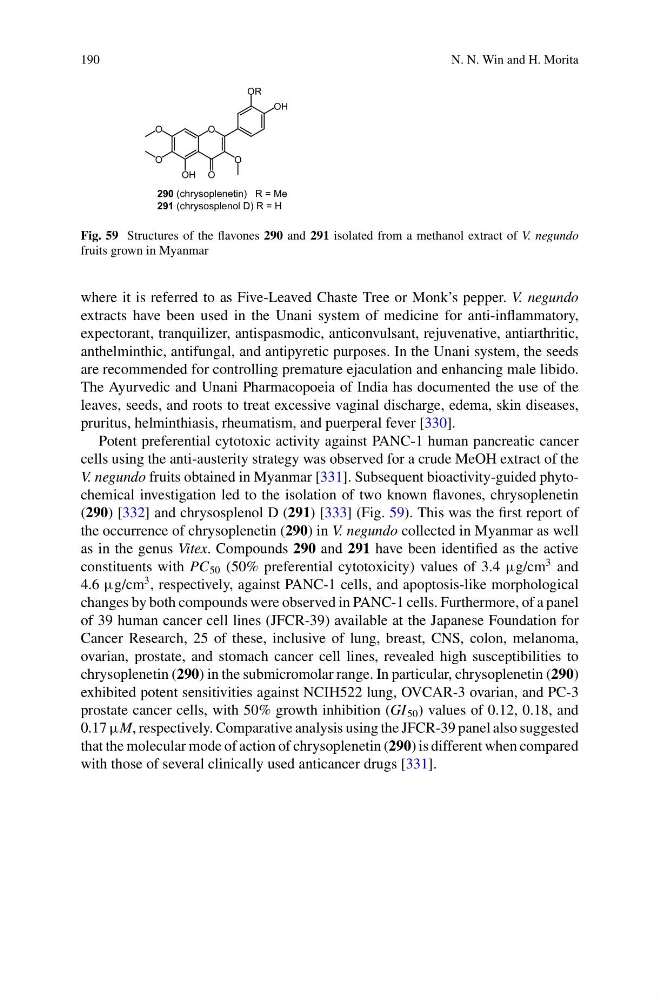
Fig. 59 Structures of the flavones 290 and 291 isolated from a methanol extract of V. negundo
fruits grown in Myanmar
where it is referred to as Five-Leaved Chaste Tree or Monk’s pepper. V. negundo
extracts have been used in the Unani system of medicine for anti-inflammatory,
expectorant, tranquilizer, antispasmodic, anticonvulsant, rejuvenative, antiarthritic,
anthelminthic, antifungal, and antipyretic purposes. In the Unani system, the seeds
are recommended for controlling premature ejaculation and enhancing male libido.
The Ayurvedic and Unani Pharmacopoeia of India has documented the use of the
leaves, seeds, and roots to treat excessive vaginal discharge, edema, skin diseases,
pruritus, helminthiasis, rheumatism, and puerperal fever [330].
Potent preferential cytotoxic activity against PANC-1 human pancreatic cancer
cells using the anti-austerity strategy was observed for a crude MeOH extract of the
V. negundo fruits obtained in Myanmar [331]. Subsequent bioactivity-guided phytochemical investigation led to the isolation of two known flavones, chrysoplenetin
(290) [332] and chrysosplenol D (291) [333] (Fig. 59). This was the first report of
the occurrence of chrysoplenetin (290) in V. negundo collected in Myanmar as well
as in the genus Vitex. Compounds 290 and 291 have been identified as the active
constituents with PC 50 (50% preferential cytotoxicity) values of 3.4 μg/cm
3 and
4.6 μg/cm
3 , respectively, against PANC-1 cells, and apoptosis-like morphological
changes by both compounds were observed in PANC-1 cells. Furthermore, of a panel
of 39 human cancer cell lines (JFCR-39) available at the Japanese Foundation for
Cancer Research, 25 of these, inclusive of lung, breast, CNS, colon, melanoma,
ovarian, prostate, and stomach cancer cell lines, revealed high susceptibilities to
chrysoplenetin (290) in the submicromolar range. In particular, chrysoplenetin (290)
exhibited potent sensitivities against NCIH522 lung, OVCAR-3 ovarian, and PC-3
prostate cancer cells, with 50% growth inhibition (GI 50 ) values of 0.12, 0.18, and
0.17 μM, respectively. Comparative analysis using the JFCR-39 panel also suggested
that the molecular mode of action of chrysoplenetin (290) is different when compared
with those of several clinically used anticancer drugs [331].
N. N. Win and H. Morita
O
OH
O
O
O
O
OR
OH
290 (chrysoplenetin) R = Me
291 (chrysosplenol D) R = H
Fig. 59 Structures of the flavones 290 and 291 isolated from a methanol extract of V. negundo
fruits grown in Myanmar
where it is referred to as Five-Leaved Chaste Tree or Monk’s pepper. V. negundo
extracts have been used in the Unani system of medicine for anti-inflammatory,
expectorant, tranquilizer, antispasmodic, anticonvulsant, rejuvenative, antiarthritic,
anthelminthic, antifungal, and antipyretic purposes. In the Unani system, the seeds
are recommended for controlling premature ejaculation and enhancing male libido.
The Ayurvedic and Unani Pharmacopoeia of India has documented the use of the
leaves, seeds, and roots to treat excessive vaginal discharge, edema, skin diseases,
pruritus, helminthiasis, rheumatism, and puerperal fever [330].
Potent preferential cytotoxic activity against PANC-1 human pancreatic cancer
cells using the anti-austerity strategy was observed for a crude MeOH extract of the
V. negundo fruits obtained in Myanmar [331]. Subsequent bioactivity-guided phytochemical investigation led to the isolation of two known flavones, chrysoplenetin
(290) [332] and chrysosplenol D (291) [333] (Fig. 59). This was the first report of
the occurrence of chrysoplenetin (290) in V. negundo collected in Myanmar as well
as in the genus Vitex. Compounds 290 and 291 have been identified as the active
constituents with PC 50 (50% preferential cytotoxicity) values of 3.4 μg/cm
3 and
4.6 μg/cm
3 , respectively, against PANC-1 cells, and apoptosis-like morphological
changes by both compounds were observed in PANC-1 cells. Furthermore, of a panel
of 39 human cancer cell lines (JFCR-39) available at the Japanese Foundation for
Cancer Research, 25 of these, inclusive of lung, breast, CNS, colon, melanoma,
ovarian, prostate, and stomach cancer cell lines, revealed high susceptibilities to
chrysoplenetin (290) in the submicromolar range. In particular, chrysoplenetin (290)
exhibited potent sensitivities against NCIH522 lung, OVCAR-3 ovarian, and PC-3
prostate cancer cells, with 50% growth inhibition (GI 50 ) values of 0.12, 0.18, and
0.17 μM, respectively. Comparative analysis using the JFCR-39 panel also suggested
that the molecular mode of action of chrysoplenetin (290) is different when compared
with those of several clinically used anticancer drugs [331].