

Bioactive Compounds from Medicinal Plants in Myanmar
191
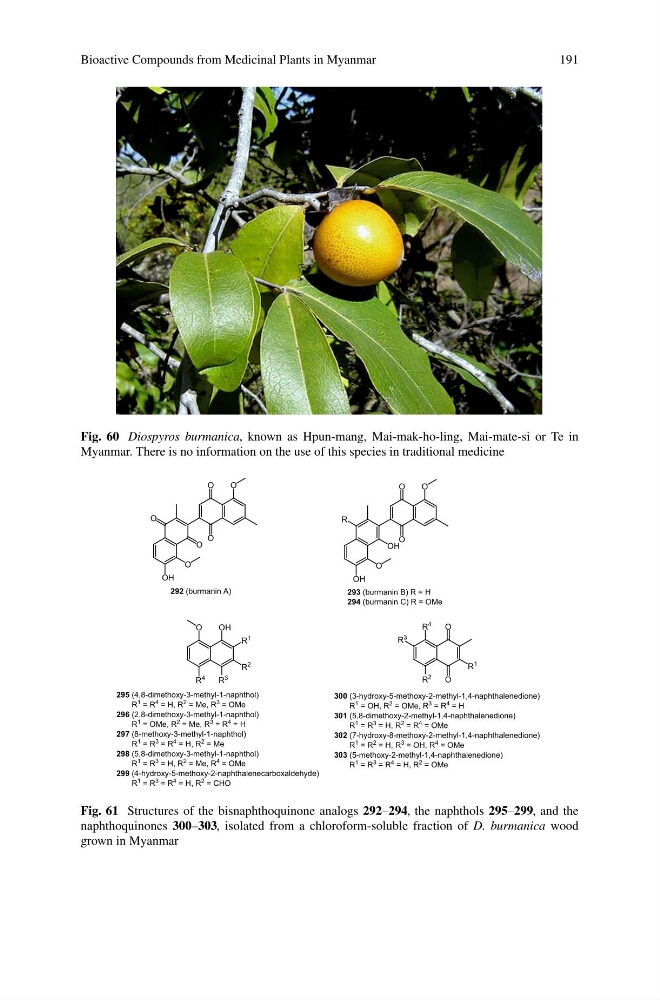
Fig. 60 Diospyros burmanica, known as Hpun-mang, Mai-mak-ho-ling, Mai-mate-si or Te in
Myanmar. There is no information on the use of this species in traditional medicine
O
O
O
O
O
OH
O
292 (burmanin A)
O
O
O
OH
OH
O
293 (burmanin B) R = H
294 (burmanin C) R = OMe
R
O
OH
R
2
R
1
R
3
R
4
295 (4,8-dimethoxy-3-methyl-1-naphthol)
R 1 = R 4 = H, R 2 = Me, R 3 = OMe
296 (2,8-dimethoxy-3-methyl-1-naphthol)
R 1 = OMe, R 2 = Me, R 3 = R 4 = H
297 (8-methoxy-3-methyl-1-naphthol)
R 1 = R 3 = R 4 = H, R 2 = Me
298 (5,8-dimethoxy-3-methyl-1-naphthol)
R 1 = R 3 = H, R 2 = Me, R 4 = OMe
299 (4-hydroxy-5-methoxy-2-naphthalenecarboxaldehyde)
R 1 = R 3 = R 4 = H, R 2 = CHO
R
4
O
R
1
R
2
O
R
3
300 (3-hydroxy-5-methoxy-2-methyl-1,4-naphthalenedione)
R 1 = OH, R 2 = OMe, R 3 = R 4 = H
301 (5,8-dimethoxy-2-methyl-1,4-naphthalenedione)
R 1 = R 3 = H, R 2 = R 4 = OMe
302 (7-hydroxy-8-methoxy-2-methyl-1,4-naphthalenedione)
R 1 = R 2 = H, R 3 = OH, R 4 = OMe
303 (5-methoxy-2-methyl-1,4-naphthalenedione)
R 1 = R 3 = R 4 = H, R 2 = OMe
Fig. 61 Structures of the bisnaphthoquinone analogs 292–294, the naphthols 295–299, and the
naphthoquinones 300–303, isolated from a chloroform-soluble fraction of D. burmanica wood
grown in Myanmar
191
Fig. 60 Diospyros burmanica, known as Hpun-mang, Mai-mak-ho-ling, Mai-mate-si or Te in
Myanmar. There is no information on the use of this species in traditional medicine
O
O
O
O
O
OH
O
292 (burmanin A)
O
O
O
OH
OH
O
293 (burmanin B) R = H
294 (burmanin C) R = OMe
R
O
OH
R
2
R
1
R
3
R
4
295 (4,8-dimethoxy-3-methyl-1-naphthol)
R 1 = R 4 = H, R 2 = Me, R 3 = OMe
296 (2,8-dimethoxy-3-methyl-1-naphthol)
R 1 = OMe, R 2 = Me, R 3 = R 4 = H
297 (8-methoxy-3-methyl-1-naphthol)
R 1 = R 3 = R 4 = H, R 2 = Me
298 (5,8-dimethoxy-3-methyl-1-naphthol)
R 1 = R 3 = H, R 2 = Me, R 4 = OMe
299 (4-hydroxy-5-methoxy-2-naphthalenecarboxaldehyde)
R 1 = R 3 = R 4 = H, R 2 = CHO
R
4
O
R
1
R
2
O
R
3
300 (3-hydroxy-5-methoxy-2-methyl-1,4-naphthalenedione)
R 1 = OH, R 2 = OMe, R 3 = R 4 = H
301 (5,8-dimethoxy-2-methyl-1,4-naphthalenedione)
R 1 = R 3 = H, R 2 = R 4 = OMe
302 (7-hydroxy-8-methoxy-2-methyl-1,4-naphthalenedione)
R 1 = R 2 = H, R 3 = OH, R 4 = OMe
303 (5-methoxy-2-methyl-1,4-naphthalenedione)
R 1 = R 3 = R 4 = H, R 2 = OMe
Fig. 61 Structures of the bisnaphthoquinone analogs 292–294, the naphthols 295–299, and the
naphthoquinones 300–303, isolated from a chloroform-soluble fraction of D. burmanica wood
grown in Myanmar