

Bioactive Compounds from Medicinal Plants in Myanmar
163
129 (1a,5,7a-trimethyl-1a,6a,7a,8,9,9a-hexahydrobisoxireno[4,5:8,9]cyclodeca[1,2-b]furan-6(2H)-one)
O
O
O
O
O
130 (3,6,10-trimethyl-7,8,11,11a-tetra-hydrocyclodeca[b]furan-2,5(4H,6H)-dione) R = H
131 (11a-hydroxy-3,6,10-trimethyl-7,8,11,11atetrahydrocyclodeca[b]furan-2,5(4H,6H)-dione-methane)
R = O
O
O
R
O
O
138 (curdione)
139 (zederone)
O
O
O
O
140 ((1S,4S,5S,10S)-germacrone1(10),4(5)-diepoxide)
O
O
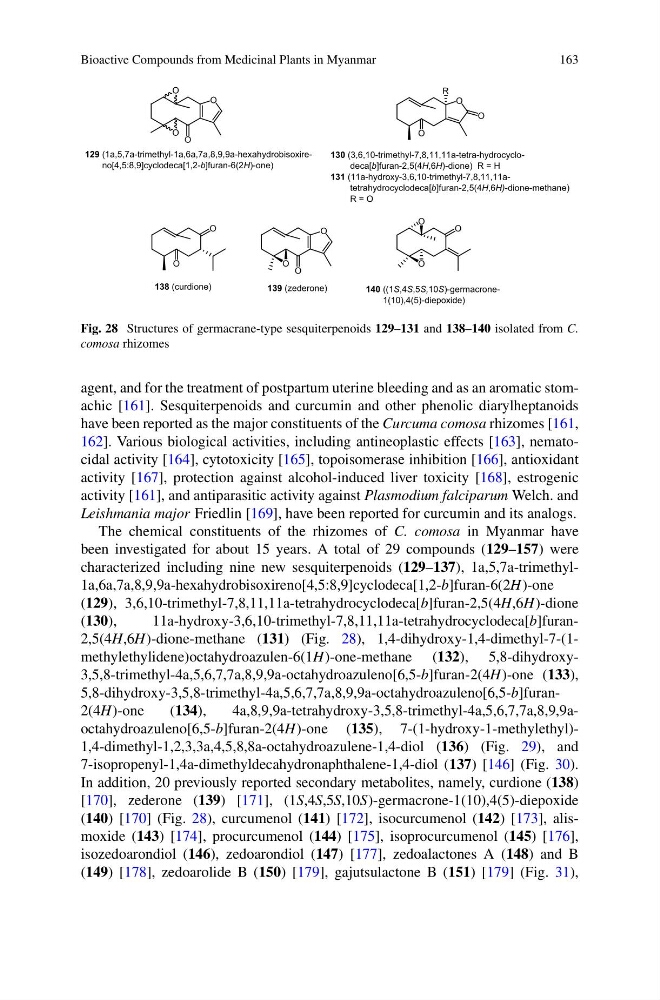
Fig. 28 Structures of germacrane-type sesquiterpenoids 129–131 and 138–140 isolated from C.
comosa rhizomes
agent, and for the treatment of postpartum uterine bleeding and as an aromatic stomachic [161]. Sesquiterpenoids and curcumin and other phenolic diarylheptanoids
have been reported as the major constituents of the Curcuma comosa rhizomes [161,
162]. Various biological activities, including antineoplastic effects [163], nematocidal activity [164], cytotoxicity [165], topoisomerase inhibition [166], antioxidant
activity [167], protection against alcohol-induced liver toxicity [168], estrogenic
activity [161], and antiparasitic activity against Plasmodium falciparum Welch. and
Leishmania major Friedlin [169], have been reported for curcumin and its analogs.
The chemical constituents of the rhizomes of C. comosa in Myanmar have
been investigated for about 15 years. A total of 29 compounds (129–157) were
characterized including nine new sesquiterpenoids (129–137), 1a,5,7a-trimethyl1a,6a,7a,8,9,9a-hexahydrobisoxireno[4,5:8,9]cyclodeca[1,2-b]furan-6(2H)-one
(129), 3,6,10-trimethyl-7,8,11,11a-tetrahydrocyclodeca[b]furan-2,5(4H,6H)-dione
(130),
11a-hydroxy-3,6,10-trimethyl-7,8,11,11a-tetrahydrocyclodeca[b]furan2,5(4H,6H)-dione-methane (131) (Fig. 28), 1,4-dihydroxy-1,4-dimethyl-7-(1methylethylidene)octahydroazulen-6(1H)-one-methane (132), 5,8-dihydroxy3,5,8-trimethyl-4a,5,6,7,7a,8,9,9a-octahydroazuleno[6,5-b]furan-2(4H)-one (133),
5,8-dihydroxy-3,5,8-trimethyl-4a,5,6,7,7a,8,9,9a-octahydroazuleno[6,5-b]furan2(4H)-one
(134),
4a,8,9,9a-tetrahydroxy-3,5,8-trimethyl-4a,5,6,7,7a,8,9,9aoctahydroazuleno[6,5-b]furan-2(4H)-one (135), 7-(1-hydroxy-1-methylethyl)1,4-dimethyl-1,2,3,3a,4,5,8,8a-octahydroazulene-1,4-diol (136) (Fig. 29), and
7-isopropenyl-1,4a-dimethyldecahydronaphthalene-1,4-diol (137) [146] (Fig. 30).
In addition, 20 previously reported secondary metabolites, namely, curdione (138)
[170], zederone (139) [171], (1S,4S,5S,10S)-germacrone-1(10),4(5)-diepoxide
(140) [170] (Fig. 28), curcumenol (141) [172], isocurcumenol (142) [173], alismoxide (143) [174], procurcumenol (144) [175], isoprocurcumenol (145) [176],
isozedoarondiol (146), zedoarondiol (147) [177], zedoalactones A (148) and B
(149) [178], zedoarolide B (150) [179], gajutsulactone B (151) [179] (Fig. 31),
163
129 (1a,5,7a-trimethyl-1a,6a,7a,8,9,9a-hexahydrobisoxireno[4,5:8,9]cyclodeca[1,2-b]furan-6(2H)-one)
O
O
O
O
O
130 (3,6,10-trimethyl-7,8,11,11a-tetra-hydrocyclodeca[b]furan-2,5(4H,6H)-dione) R = H
131 (11a-hydroxy-3,6,10-trimethyl-7,8,11,11atetrahydrocyclodeca[b]furan-2,5(4H,6H)-dione-methane)
R = O
O
O
R
O
O
138 (curdione)
139 (zederone)
O
O
O
O
140 ((1S,4S,5S,10S)-germacrone1(10),4(5)-diepoxide)
O
O
Fig. 28 Structures of germacrane-type sesquiterpenoids 129–131 and 138–140 isolated from C.
comosa rhizomes
agent, and for the treatment of postpartum uterine bleeding and as an aromatic stomachic [161]. Sesquiterpenoids and curcumin and other phenolic diarylheptanoids
have been reported as the major constituents of the Curcuma comosa rhizomes [161,
162]. Various biological activities, including antineoplastic effects [163], nematocidal activity [164], cytotoxicity [165], topoisomerase inhibition [166], antioxidant
activity [167], protection against alcohol-induced liver toxicity [168], estrogenic
activity [161], and antiparasitic activity against Plasmodium falciparum Welch. and
Leishmania major Friedlin [169], have been reported for curcumin and its analogs.
The chemical constituents of the rhizomes of C. comosa in Myanmar have
been investigated for about 15 years. A total of 29 compounds (129–157) were
characterized including nine new sesquiterpenoids (129–137), 1a,5,7a-trimethyl1a,6a,7a,8,9,9a-hexahydrobisoxireno[4,5:8,9]cyclodeca[1,2-b]furan-6(2H)-one
(129), 3,6,10-trimethyl-7,8,11,11a-tetrahydrocyclodeca[b]furan-2,5(4H,6H)-dione
(130),
11a-hydroxy-3,6,10-trimethyl-7,8,11,11a-tetrahydrocyclodeca[b]furan2,5(4H,6H)-dione-methane (131) (Fig. 28), 1,4-dihydroxy-1,4-dimethyl-7-(1methylethylidene)octahydroazulen-6(1H)-one-methane (132), 5,8-dihydroxy3,5,8-trimethyl-4a,5,6,7,7a,8,9,9a-octahydroazuleno[6,5-b]furan-2(4H)-one (133),
5,8-dihydroxy-3,5,8-trimethyl-4a,5,6,7,7a,8,9,9a-octahydroazuleno[6,5-b]furan2(4H)-one
(134),
4a,8,9,9a-tetrahydroxy-3,5,8-trimethyl-4a,5,6,7,7a,8,9,9aoctahydroazuleno[6,5-b]furan-2(4H)-one (135), 7-(1-hydroxy-1-methylethyl)1,4-dimethyl-1,2,3,3a,4,5,8,8a-octahydroazulene-1,4-diol (136) (Fig. 29), and
7-isopropenyl-1,4a-dimethyldecahydronaphthalene-1,4-diol (137) [146] (Fig. 30).
In addition, 20 previously reported secondary metabolites, namely, curdione (138)
[170], zederone (139) [171], (1S,4S,5S,10S)-germacrone-1(10),4(5)-diepoxide
(140) [170] (Fig. 28), curcumenol (141) [172], isocurcumenol (142) [173], alismoxide (143) [174], procurcumenol (144) [175], isoprocurcumenol (145) [176],
isozedoarondiol (146), zedoarondiol (147) [177], zedoalactones A (148) and B
(149) [178], zedoarolide B (150) [179], gajutsulactone B (151) [179] (Fig. 31),