

However, it is well-known that anaerobic digestion of oily wastes is not always
easy and straightforward, since anaerobic bacteria are very sensitive to lipid-rich
substances along with the intermediate compounds of oily waste degradation process. Therefore, a treatability study together with determination of BOD and COD
concentrations, pH, temperatures, and flow rates of the wastewaters is essential,
especially for the wastewaters containing low-soluble compounds such as fats, oils,
or greases or complex carbohydrates [56]. Still, lipids are attractive substrates for
anaerobic digestion and co-digestion due to the higher methane yield obtained when
compared to carbohydrates.
In addition, anaerobic digestion has some limitations. The rate-limiting step of
hydrolysis is the most important limitation of anaerobic digestion. In some wastewaters most of the organics are located in the microbial cell and the stable semi-rigid
structure of the cell walls protects the cell from lysis. Therefore, high resistance to
biodegradation leads to long HRT for the biological stabilization in digesters
[56]. Thus, anaerobic digestion is a slow process because of the rate-limiting step
of hydrolysis. However, the time required to initiate gas production can be reduced
by adapting the bacteria to waste. These methods are normally employed strictly as
pretreatment measures. Due to the slow microbial growth, there is no phosphorus
removal. No nitrification and denitrification occur so nitrogen cannot be removed by
anaerobic treatment. Some common operational problems experienced with anaerobic treatment processes are given in Table 8.7.
Foaming and bulking are other problems faced in anaerobic digesters. Some
certain filamentous microorganisms lead to foaming and bulking which cause
operational problems in anaerobic digesters such as reduced effective volume of
the digesters and shortened digestion periods [57].
Anaerobic digestion is sensitive to shock loads and toxic materials [56, 58]. Methane formers can be easily affected by the unfavorable conditions which lead to a poor
digestion. An anaerobic system alone would not satisfy a final wastewater quality
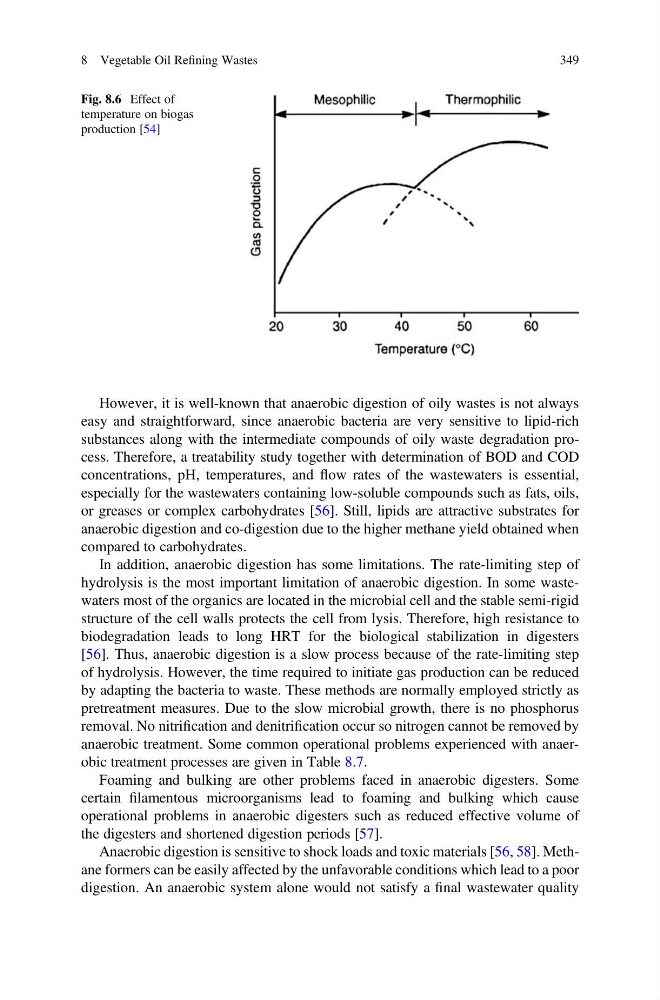
Fig. 8.6 Effect of
temperature on biogas
production [54]
8 Vegetable Oil Refining Wastes
349
easy and straightforward, since anaerobic bacteria are very sensitive to lipid-rich
substances along with the intermediate compounds of oily waste degradation process. Therefore, a treatability study together with determination of BOD and COD
concentrations, pH, temperatures, and flow rates of the wastewaters is essential,
especially for the wastewaters containing low-soluble compounds such as fats, oils,
or greases or complex carbohydrates [56]. Still, lipids are attractive substrates for
anaerobic digestion and co-digestion due to the higher methane yield obtained when
compared to carbohydrates.
In addition, anaerobic digestion has some limitations. The rate-limiting step of
hydrolysis is the most important limitation of anaerobic digestion. In some wastewaters most of the organics are located in the microbial cell and the stable semi-rigid
structure of the cell walls protects the cell from lysis. Therefore, high resistance to
biodegradation leads to long HRT for the biological stabilization in digesters
[56]. Thus, anaerobic digestion is a slow process because of the rate-limiting step
of hydrolysis. However, the time required to initiate gas production can be reduced
by adapting the bacteria to waste. These methods are normally employed strictly as
pretreatment measures. Due to the slow microbial growth, there is no phosphorus
removal. No nitrification and denitrification occur so nitrogen cannot be removed by
anaerobic treatment. Some common operational problems experienced with anaerobic treatment processes are given in Table 8.7.
Foaming and bulking are other problems faced in anaerobic digesters. Some
certain filamentous microorganisms lead to foaming and bulking which cause
operational problems in anaerobic digesters such as reduced effective volume of
the digesters and shortened digestion periods [57].
Anaerobic digestion is sensitive to shock loads and toxic materials [56, 58]. Methane formers can be easily affected by the unfavorable conditions which lead to a poor
digestion. An anaerobic system alone would not satisfy a final wastewater quality
Fig. 8.6 Effect of
temperature on biogas
production [54]
8 Vegetable Oil Refining Wastes
349