

The most important factor causing evaporation is the amount of solar radiation.
Indirectly, other factors affecting evaporation are also related to solar energy. The
vapor pressure of the air controls the relative humidity; the lower the vapor pressure,
the greater the evaporation. The temperature of both the water and the overlying air
affects the vapor pressure. The higher the temperature, the greater will be the
evaporation. Wind is very important in creating evaporation in that it carries away
the saturated monolayer of water vapor immediately above a body of water. This
brings in fresh air with a lower vapor pressure, thereby allowing increased evaporation to occur. An increase in the barometric pressure decreases evaporation. Thus,
the lower pressure at greater elevations would be expected to result in increased
evaporation. However, this effect is generally small and is exceeded by those from
the temperature differential and the wind velocity, each of which has a greater effect
upon evaporation at higher altitudes. The greater the quantity of dissolved salts in the
water, the less evaporation occurs. Thus, slightly less evaporation occurs over
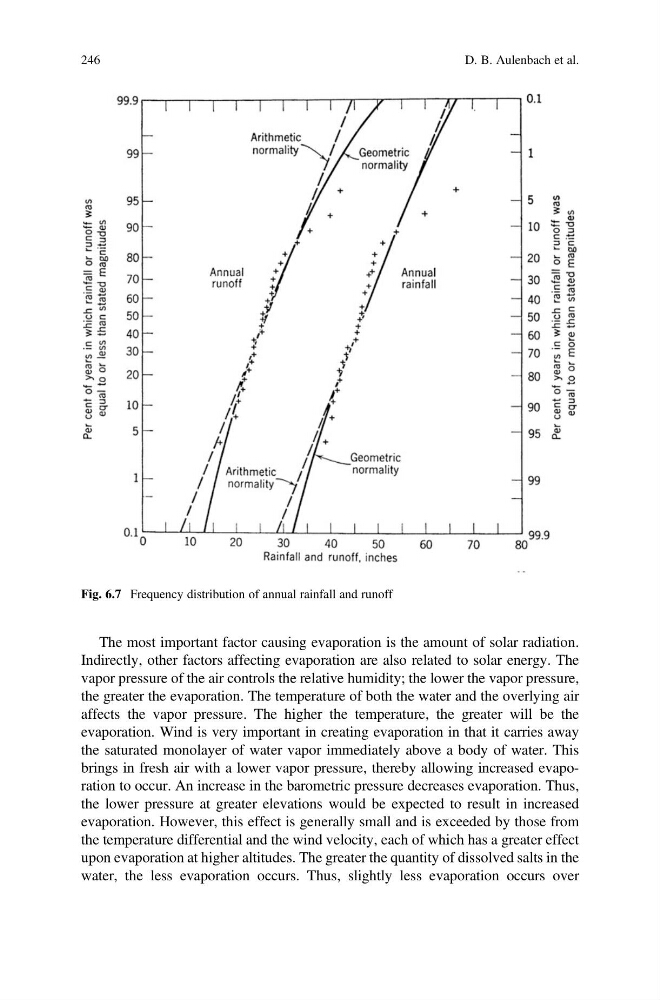
Fig. 6.7 Frequency distribution of annual rainfall and runoff
246
D. B. Aulenbach et al.
Indirectly, other factors affecting evaporation are also related to solar energy. The
vapor pressure of the air controls the relative humidity; the lower the vapor pressure,
the greater the evaporation. The temperature of both the water and the overlying air
affects the vapor pressure. The higher the temperature, the greater will be the
evaporation. Wind is very important in creating evaporation in that it carries away
the saturated monolayer of water vapor immediately above a body of water. This
brings in fresh air with a lower vapor pressure, thereby allowing increased evaporation to occur. An increase in the barometric pressure decreases evaporation. Thus,
the lower pressure at greater elevations would be expected to result in increased
evaporation. However, this effect is generally small and is exceeded by those from
the temperature differential and the wind velocity, each of which has a greater effect
upon evaporation at higher altitudes. The greater the quantity of dissolved salts in the
water, the less evaporation occurs. Thus, slightly less evaporation occurs over
Fig. 6.7 Frequency distribution of annual rainfall and runoff
246
D. B. Aulenbach et al.