

202
R. Barrett and P. P. Delsanto
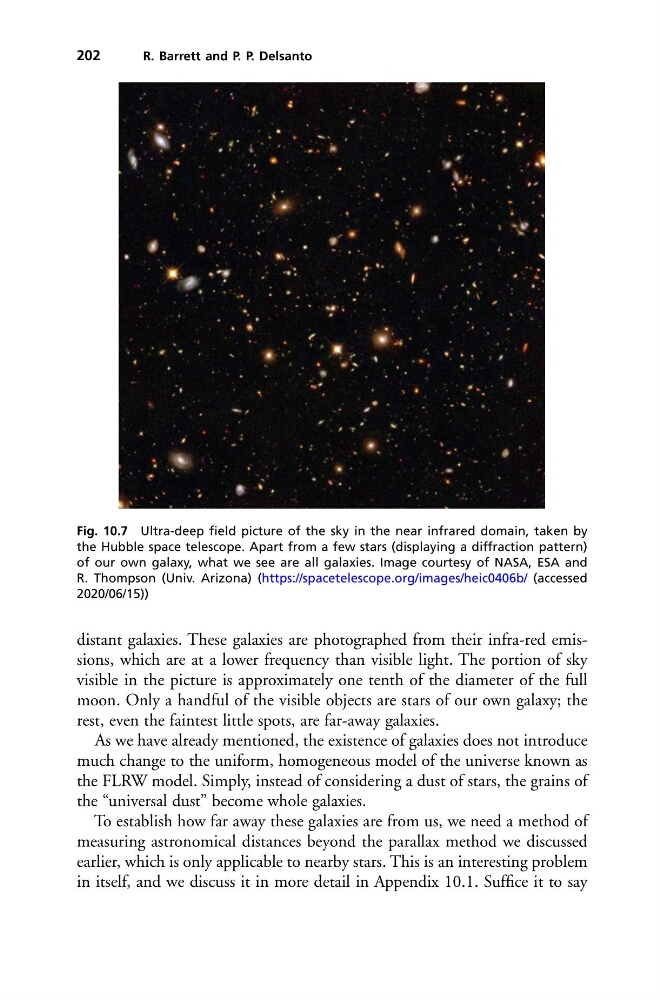
Fig. 10.7 Ultra-deep field picture of the sky in the near infrared domain, taken by
the Hubble space telescope. Apart from a few stars (displaying a diffraction pattern)
of our own galaxy, what we see are all galaxies. Image courtesy of NASA, ESA and
R. Thompson (Univ. Arizona) (https://spacetelescope.org/images/heic0406b/ (accessed
2020/06/15))
distant galaxies. These galaxies are photographed from their infra-red emissions, which are at a lower frequency than visible light. The portion of sky
visible in the picture is approximately one tenth of the diameter of the full
moon. Only a handful of the visible objects are stars of our own galaxy; the
rest, even the faintest little spots, are far-away galaxies.
As we have already mentioned, the existence of galaxies does not introduce
much change to the uniform, homogeneous model of the universe known as
the FLRW model. Simply, instead of considering a dust of stars, the grains of
the “universal dust” become whole galaxies.
To establish how far away these galaxies are from us, we need a method of
measuring astronomical distances beyond the parallax method we discussed
earlier, which is only applicable to nearby stars. This is an interesting problem
in itself, and we discuss it in more detail in Appendix 10.1. Suffice it to say
R. Barrett and P. P. Delsanto
Fig. 10.7 Ultra-deep field picture of the sky in the near infrared domain, taken by
the Hubble space telescope. Apart from a few stars (displaying a diffraction pattern)
of our own galaxy, what we see are all galaxies. Image courtesy of NASA, ESA and
R. Thompson (Univ. Arizona) (https://spacetelescope.org/images/heic0406b/ (accessed
2020/06/15))
distant galaxies. These galaxies are photographed from their infra-red emissions, which are at a lower frequency than visible light. The portion of sky
visible in the picture is approximately one tenth of the diameter of the full
moon. Only a handful of the visible objects are stars of our own galaxy; the
rest, even the faintest little spots, are far-away galaxies.
As we have already mentioned, the existence of galaxies does not introduce
much change to the uniform, homogeneous model of the universe known as
the FLRW model. Simply, instead of considering a dust of stars, the grains of
the “universal dust” become whole galaxies.
To establish how far away these galaxies are from us, we need a method of
measuring astronomical distances beyond the parallax method we discussed
earlier, which is only applicable to nearby stars. This is an interesting problem
in itself, and we discuss it in more detail in Appendix 10.1. Suffice it to say