

8 The Most Accurate Theory in Physics
153
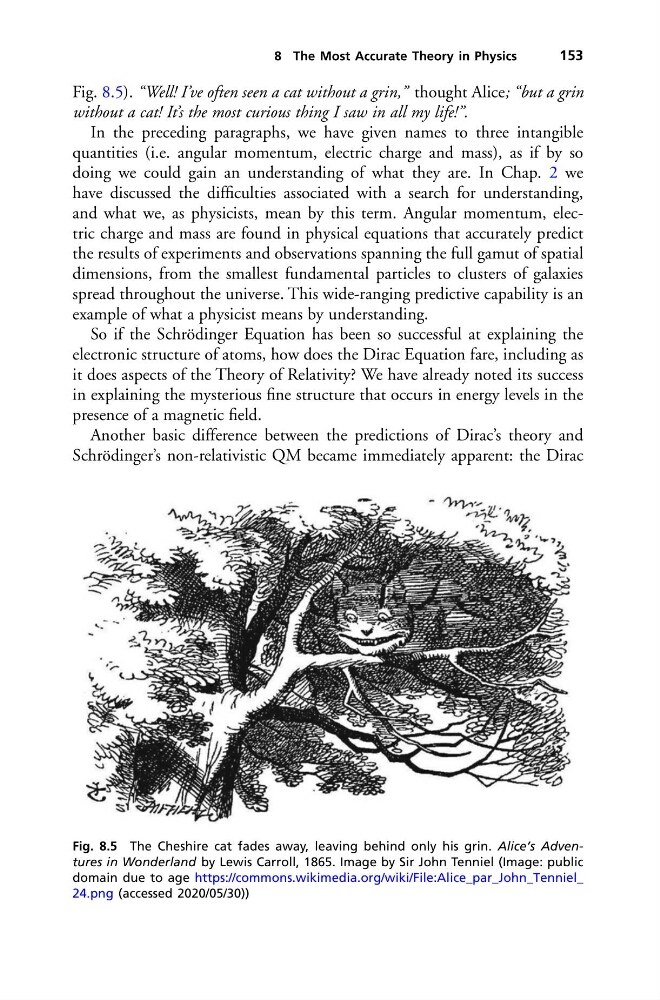
Fig. 8.5). “Well! I’ve often seen a cat without a grin,” thought Alice; “but a grin
without a cat! It’s the most curious thing I saw in all my life!”.
In the preceding paragraphs, we have given names to three intangible
quantities (i.e. angular momentum, electric charge and mass), as if by so
doing we could gain an understanding of what they are. In Chap. 2 we
have discussed the difficulties associated with a search for understanding,
and what we, as physicists, mean by this term. Angular momentum, electric charge and mass are found in physical equations that accurately predict
the results of experiments and observations spanning the full gamut of spatial
dimensions, from the smallest fundamental particles to clusters of galaxies
spread throughout the universe. This wide-ranging predictive capability is an
example of what a physicist means by understanding.
So if the Schrödinger Equation has been so successful at explaining the
electronic structure of atoms, how does the Dirac Equation fare, including as
it does aspects of the Theory of Relativity? We have already noted its success
in explaining the mysterious fine structure that occurs in energy levels in the
presence of a magnetic field.
Another basic difference between the predictions of Dirac’s theory and
Schrödinger’s non-relativistic QM became immediately apparent: the Dirac
Fig. 8.5 The Cheshire cat fades away, leaving behind only his grin. Alice’s Adventures in Wonderland by Lewis Carroll, 1865. Image by Sir John Tenniel (Image: public
domain due to age https://commons.wikimedia.org/wiki/File:Alice_par_John_Tenniel_
24.png (accessed 2020/05/30))
153
Fig. 8.5). “Well! I’ve often seen a cat without a grin,” thought Alice; “but a grin
without a cat! It’s the most curious thing I saw in all my life!”.
In the preceding paragraphs, we have given names to three intangible
quantities (i.e. angular momentum, electric charge and mass), as if by so
doing we could gain an understanding of what they are. In Chap. 2 we
have discussed the difficulties associated with a search for understanding,
and what we, as physicists, mean by this term. Angular momentum, electric charge and mass are found in physical equations that accurately predict
the results of experiments and observations spanning the full gamut of spatial
dimensions, from the smallest fundamental particles to clusters of galaxies
spread throughout the universe. This wide-ranging predictive capability is an
example of what a physicist means by understanding.
So if the Schrödinger Equation has been so successful at explaining the
electronic structure of atoms, how does the Dirac Equation fare, including as
it does aspects of the Theory of Relativity? We have already noted its success
in explaining the mysterious fine structure that occurs in energy levels in the
presence of a magnetic field.
Another basic difference between the predictions of Dirac’s theory and
Schrödinger’s non-relativistic QM became immediately apparent: the Dirac
Fig. 8.5 The Cheshire cat fades away, leaving behind only his grin. Alice’s Adventures in Wonderland by Lewis Carroll, 1865. Image by Sir John Tenniel (Image: public
domain due to age https://commons.wikimedia.org/wiki/File:Alice_par_John_Tenniel_
24.png (accessed 2020/05/30))