

and cyclododecene). Since the pore size of the zeolite is large enough (31 Å) to allow
diffusion of all substrates without hindrance, the differences in activity were mainly
caused by the alkene strain energy. For instance, the conversion of norbornene was
much higher than that of the other substrates because the hydrogenation of the
norbornene structure is energetically more favoured. Comparing the different metals,
[Rh]x-MCM-41 showed the highest activity, followed by Ir and Pd.
6.5 Ir NPs Supported on Metal-Organic Frameworks
(MOFs)
In addition to the aforementioned supports, metal-organic frameworks (MOFs) have
emerged as a significant group of porous materials for MNP stabilisation. These
hybrid crystalline materials based on 3D networks of metal ions coordinated to
organic ligands are suitable host-guest systems for the stabilisation of ligand-free
metal nanoparticles. Moreover, they present a pore structure easily tuneable by the
selection of the proper organic linker. In this context, Zahmakiran generated Ir NPs
on the structure of a zeolitic imidazole framework ZIF-8 (Zn(MeIM); MeIM ¼ 2methylimidazole) by hydrogenolysis of the organometallic precursor Ir(COD)
(MeCp) which was previously impregnated into ZIF-8 [137]. The resultant material,
IrNPs@ZIF-8, demonstrated to be an efficient catalyst in the hydrogenation of
cyclohexene and phenylacetylene in terms of activity, selectivity and durability.
Apart from showing a great stability (reused up to five times), it hydrogenates
cyclohexene in solvent-free conditions (25
C, 3 bar H 2 ) with an initial TOF ¼ 370 h
À1
and phenylacetylene to styrene with high selectivity (! 90% at full conversion under
mild conditions (40
C, 3 bar H 2 )). A similar gas-phase loading was employed by
Kempe et al. to generate crystalline Ir NPs (1.7 nm) inside the pores of the chromium
terephthalate metal-organic framework [MIL-101 (Cr); Fig. 26], which showed a
high activity in the hydrogenation of cyclohexene (full conversion with only 10 ppm
of Ir) [138].
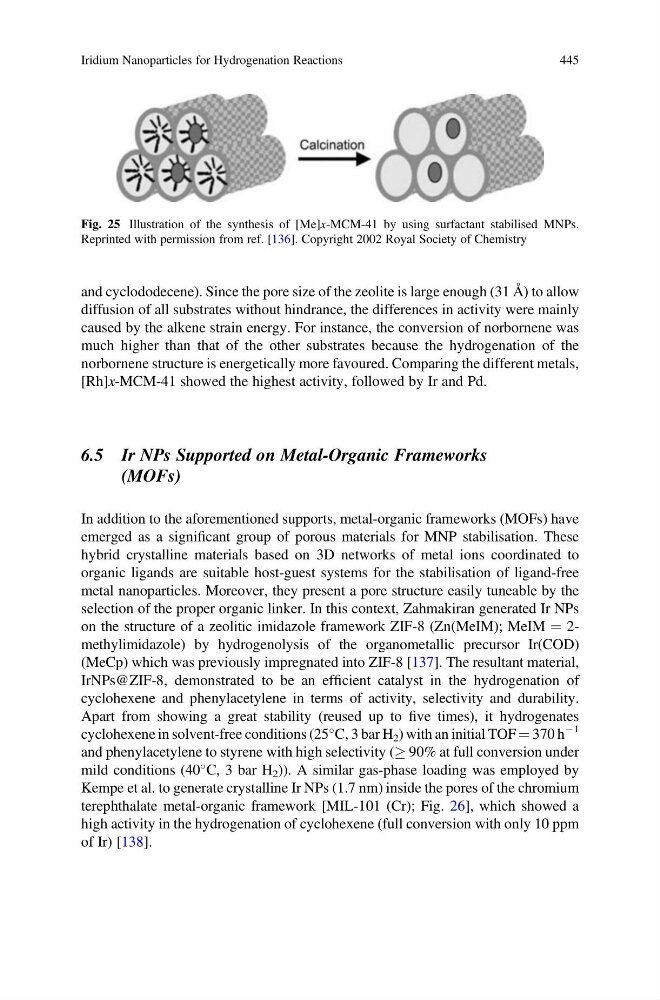
Fig. 25 Illustration of the synthesis of [Me]x-MCM-41 by using surfactant stabilised MNPs.
Reprinted with permission from ref. [136]. Copyright 2002 Royal Society of Chemistry
Iridium Nanoparticles for Hydrogenation Reactions
445
diffusion of all substrates without hindrance, the differences in activity were mainly
caused by the alkene strain energy. For instance, the conversion of norbornene was
much higher than that of the other substrates because the hydrogenation of the
norbornene structure is energetically more favoured. Comparing the different metals,
[Rh]x-MCM-41 showed the highest activity, followed by Ir and Pd.
6.5 Ir NPs Supported on Metal-Organic Frameworks
(MOFs)
In addition to the aforementioned supports, metal-organic frameworks (MOFs) have
emerged as a significant group of porous materials for MNP stabilisation. These
hybrid crystalline materials based on 3D networks of metal ions coordinated to
organic ligands are suitable host-guest systems for the stabilisation of ligand-free
metal nanoparticles. Moreover, they present a pore structure easily tuneable by the
selection of the proper organic linker. In this context, Zahmakiran generated Ir NPs
on the structure of a zeolitic imidazole framework ZIF-8 (Zn(MeIM); MeIM ¼ 2methylimidazole) by hydrogenolysis of the organometallic precursor Ir(COD)
(MeCp) which was previously impregnated into ZIF-8 [137]. The resultant material,
IrNPs@ZIF-8, demonstrated to be an efficient catalyst in the hydrogenation of
cyclohexene and phenylacetylene in terms of activity, selectivity and durability.
Apart from showing a great stability (reused up to five times), it hydrogenates
cyclohexene in solvent-free conditions (25
C, 3 bar H 2 ) with an initial TOF ¼ 370 h
À1
and phenylacetylene to styrene with high selectivity (! 90% at full conversion under
mild conditions (40
C, 3 bar H 2 )). A similar gas-phase loading was employed by
Kempe et al. to generate crystalline Ir NPs (1.7 nm) inside the pores of the chromium
terephthalate metal-organic framework [MIL-101 (Cr); Fig. 26], which showed a
high activity in the hydrogenation of cyclohexene (full conversion with only 10 ppm
of Ir) [138].
Fig. 25 Illustration of the synthesis of [Me]x-MCM-41 by using surfactant stabilised MNPs.
Reprinted with permission from ref. [136]. Copyright 2002 Royal Society of Chemistry
Iridium Nanoparticles for Hydrogenation Reactions
445