

Sakaki and co-workers have recently studied the iridium-catalyzed sp
3 CÀH
borylation of THF using DFT [42]. They suggested that the active species is an
iridium(III) trisboryl complex, and the catalytic cycle consists of the CÀH activation
through oxidative addition of the CÀH bond to the iridium(III) atom and reductive
elimination between boryl and oxolanyl groups, which is the same as that proposed
for sp
2 CÀH borylation of benzene. The reductive elimination of BÀC bond is ratedetermining step, and the β-regioselectivity is determined at this reductive
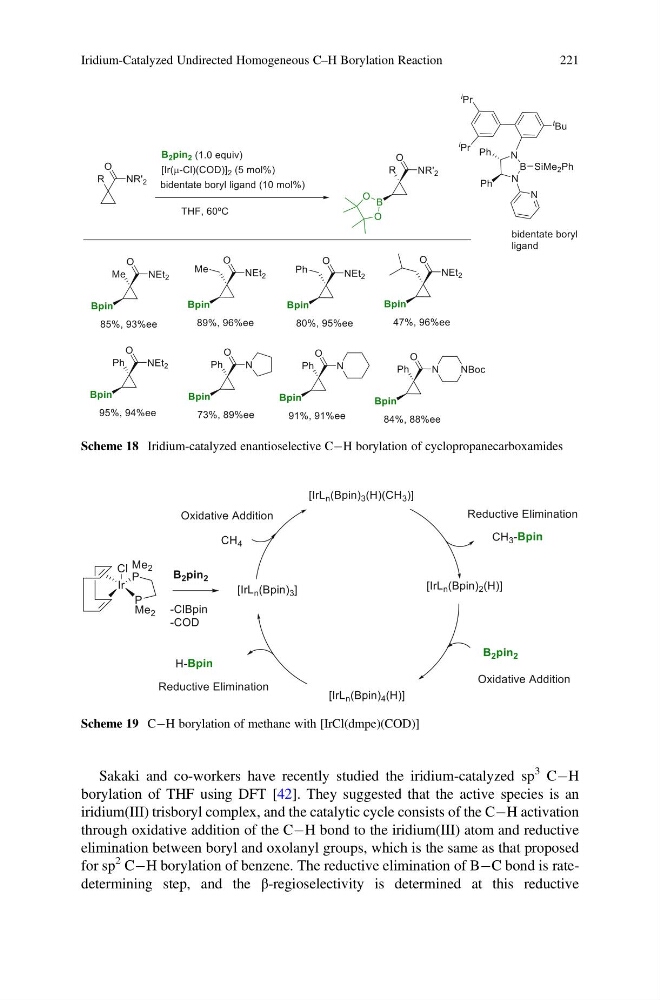
Scheme 18 Iridium-catalyzed enantioselective CÀH borylation of cyclopropanecarboxamides
Scheme 19 CÀH borylation of methane with [IrCl(dmpe)(COD)]
Iridium-Catalyzed Undirected Homogeneous C–H Borylation Reaction
221
3 CÀH
borylation of THF using DFT [42]. They suggested that the active species is an
iridium(III) trisboryl complex, and the catalytic cycle consists of the CÀH activation
through oxidative addition of the CÀH bond to the iridium(III) atom and reductive
elimination between boryl and oxolanyl groups, which is the same as that proposed
for sp
2 CÀH borylation of benzene. The reductive elimination of BÀC bond is ratedetermining step, and the β-regioselectivity is determined at this reductive
Scheme 18 Iridium-catalyzed enantioselective CÀH borylation of cyclopropanecarboxamides
Scheme 19 CÀH borylation of methane with [IrCl(dmpe)(COD)]
Iridium-Catalyzed Undirected Homogeneous C–H Borylation Reaction
221