

3 C–H Borylation of Arenes
The advantage of C–H borylation of arenes is highlighted by its ability to produce
highly versatile aryl organoboronate ester intermediates from abundant substrates
without the need for reactive groups, such as halides or sulfonates.
The origins of regioselectivity in iridium-catalyzed CÀH borylation reaction of
substituted benzene rings have been studied by Merlic, Houk, and co-workers
[27]. Distortion/interaction analyses show that regioselectivity is determined primarily
by the interaction energy between the iridium catalyst and the substrate in the oxidative
addition transition state. As a result, IrÀC bond energies in the aryl iridium hydride
intermediates or in the CÀH oxidative addition transition states both correlate well
with the activation energy and can be used to determine the regioselectivity of the
CÀH activation reaction. Musaev, Itami, and co-workers used DFT calculations to
elucidate the mechanism and source of regioselectivity for Ir-catalyzed para-selective
CÀH borylation with the bulky Xyl-MeO-BIPHEP((6,6
0 -Dimethoxybiphenyl2,2
0 -diyl)bis[bis(3,5-dimethylphenyl)phosphine]) diphosphine ligand. They found
that the bulky diphosphineÀIr complex forms a flexible reaction pocket that roughly
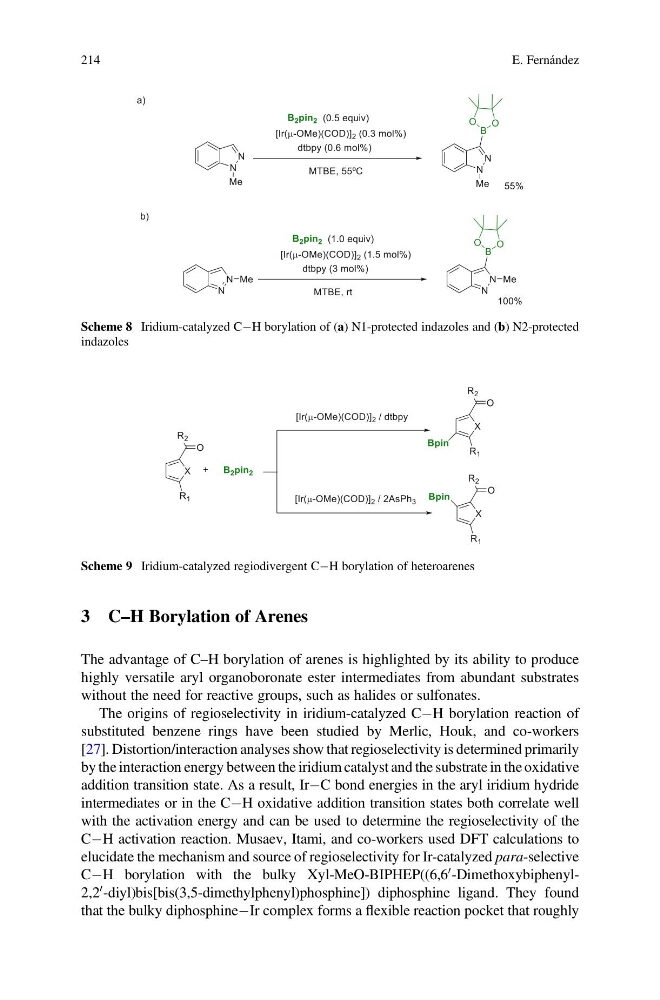
Scheme 9 Iridium-catalyzed regiodivergent CÀH borylation of heteroarenes
Scheme 8 Iridium-catalyzed CÀH borylation of (a) N1-protected indazoles and (b) N2-protected
indazoles
214
E. Fernández
The advantage of C–H borylation of arenes is highlighted by its ability to produce
highly versatile aryl organoboronate ester intermediates from abundant substrates
without the need for reactive groups, such as halides or sulfonates.
The origins of regioselectivity in iridium-catalyzed CÀH borylation reaction of
substituted benzene rings have been studied by Merlic, Houk, and co-workers
[27]. Distortion/interaction analyses show that regioselectivity is determined primarily
by the interaction energy between the iridium catalyst and the substrate in the oxidative
addition transition state. As a result, IrÀC bond energies in the aryl iridium hydride
intermediates or in the CÀH oxidative addition transition states both correlate well
with the activation energy and can be used to determine the regioselectivity of the
CÀH activation reaction. Musaev, Itami, and co-workers used DFT calculations to
elucidate the mechanism and source of regioselectivity for Ir-catalyzed para-selective
CÀH borylation with the bulky Xyl-MeO-BIPHEP((6,6
0 -Dimethoxybiphenyl2,2
0 -diyl)bis[bis(3,5-dimethylphenyl)phosphine]) diphosphine ligand. They found
that the bulky diphosphineÀIr complex forms a flexible reaction pocket that roughly
Scheme 9 Iridium-catalyzed regiodivergent CÀH borylation of heteroarenes
Scheme 8 Iridium-catalyzed CÀH borylation of (a) N1-protected indazoles and (b) N2-protected
indazoles
214
E. Fernández