

Neutral complexes are generated from [{Ir(μ-Cl)(cod)} 2 ] precursor and are usually
combined with diphosphine, monophosphoramidite, or phosphoramidite-N ligands.
Some additives are also usually added, such as I 2 and KI. Cationic complexes are
prepared from [Ir(cod) 2 ]X catalyst precursor and P-oxazoline ligands. Although
cheaper counterions (X
À
) were studied [217], usually BAr F has been the most
used counterion.
4.1 Asymmetric Hydrogenation Using Cationic Catalyst
Precursors
Phosphine-oxazoline PHOX ligands L1 (Fig. 1) and L8 (Fig. 3) are among the most
efficient ligands for the enantioselective hydrogenation of acyclic N-aryl imines.
Excellent activities and enantioselectivities (up to 96% ee; Fig. 33) were obtained by
using low catalyst loadings (0.1–0.5 mol%) at À20
C and 5–50 bar hydrogen
pressure in the reduction of aryl/alkyl N-aryl ketimines (Fig. 33a) [218]. Other
related P,N-ligands, such as L6 (Fig. 3) and L16 (Fig. 6), have also been applied
albeit with moderate success [73, 122]. A few years later, the success of PHOXbased catalytic systems was extended to dialkyl ketimines [219]. A key to this
improvement was the addition of the appropriate imine as additive. Mechanistic
investigation revealed that the active species is a cyclometalated complex 9
(Fig. 33b). Thus, a range of N-aryl dialkyl imines were hydrogenated in high
enantioselectivities (up to 92% ee; Fig. 33a). Nevertheless, N-alkyl aliphatic imines
were only hydrogenated in moderate ees (up to 77%; Fig. 33a).
Recently, cyclometalated complex 10 containing the P-stereogenic-oxazoline
ligand L36 proved to be successful in the asymmetry of a wide range of N-alkyl
amines, including the more challenging N-methylated ones (ees up to 94%; Fig. 34)
[220]. Interestingly, high ees (up to 96%) were also achieved in the reduction of
N-aryl ketimines (Fig. 34) [221].
Cationic iridium complexes based on the already mentioned L9 ligands (Fig. 3)
were found to be highly efficient in the hydrogenation of a broad range of aryl alkyl
N-benzyl imines (ees up to 93%). Importantly, even higher enantioselectivities
were obtained for various exocyclic N-alkyl imines (ees up to 98%) [222]. The
protocol was successfully employed in the synthesis of the antidepressant
chiral drug sertraline [223]. High enantioselectivities in the reduction of some
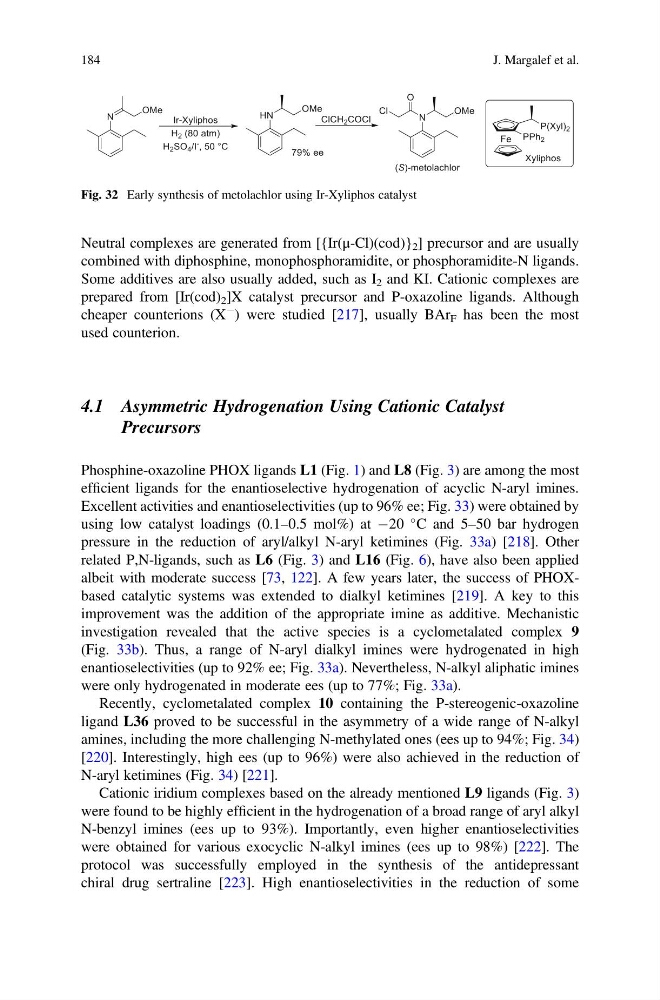
Fig. 32 Early synthesis of metolachlor using Ir-Xyliphos catalyst
184
J. Margalef et al.
combined with diphosphine, monophosphoramidite, or phosphoramidite-N ligands.
Some additives are also usually added, such as I 2 and KI. Cationic complexes are
prepared from [Ir(cod) 2 ]X catalyst precursor and P-oxazoline ligands. Although
cheaper counterions (X
À
) were studied [217], usually BAr F has been the most
used counterion.
4.1 Asymmetric Hydrogenation Using Cationic Catalyst
Precursors
Phosphine-oxazoline PHOX ligands L1 (Fig. 1) and L8 (Fig. 3) are among the most
efficient ligands for the enantioselective hydrogenation of acyclic N-aryl imines.
Excellent activities and enantioselectivities (up to 96% ee; Fig. 33) were obtained by
using low catalyst loadings (0.1–0.5 mol%) at À20
C and 5–50 bar hydrogen
pressure in the reduction of aryl/alkyl N-aryl ketimines (Fig. 33a) [218]. Other
related P,N-ligands, such as L6 (Fig. 3) and L16 (Fig. 6), have also been applied
albeit with moderate success [73, 122]. A few years later, the success of PHOXbased catalytic systems was extended to dialkyl ketimines [219]. A key to this
improvement was the addition of the appropriate imine as additive. Mechanistic
investigation revealed that the active species is a cyclometalated complex 9
(Fig. 33b). Thus, a range of N-aryl dialkyl imines were hydrogenated in high
enantioselectivities (up to 92% ee; Fig. 33a). Nevertheless, N-alkyl aliphatic imines
were only hydrogenated in moderate ees (up to 77%; Fig. 33a).
Recently, cyclometalated complex 10 containing the P-stereogenic-oxazoline
ligand L36 proved to be successful in the asymmetry of a wide range of N-alkyl
amines, including the more challenging N-methylated ones (ees up to 94%; Fig. 34)
[220]. Interestingly, high ees (up to 96%) were also achieved in the reduction of
N-aryl ketimines (Fig. 34) [221].
Cationic iridium complexes based on the already mentioned L9 ligands (Fig. 3)
were found to be highly efficient in the hydrogenation of a broad range of aryl alkyl
N-benzyl imines (ees up to 93%). Importantly, even higher enantioselectivities
were obtained for various exocyclic N-alkyl imines (ees up to 98%) [222]. The
protocol was successfully employed in the synthesis of the antidepressant
chiral drug sertraline [223]. High enantioselectivities in the reduction of some
Fig. 32 Early synthesis of metolachlor using Ir-Xyliphos catalyst
184
J. Margalef et al.