

others [6–9]. However, in the last decade, Ir-based catalysts appear as a good
alternative in the reduction of challenging functionalized olefins, providing higher
catalytic performance than the Rh- and Ru-catalysts. In this respect, we next show
the improved catalytic performance in the reduction of carboxylic acids and
nitroolefins using Ir-catalyst. Chiral carboxylic acids are important intermediates
for the preparation of biologically active compounds ([161], for a review, see
[162]; for selected examples, see [163–166]). On the other hand, enantiomerically
pure nitroalkanes can be easily converted to other versatile building blocks, such as
amines, aldehydes, carboxylic acids, nitrile oxides, and denitrated compounds
[167, 168].
3.1 Ir-Catalyzed Asymmetric Hydrogenation of Carboxylic
Acids
Although only few Ir-catalysts have been studied for this transformation, they have
allowed to overcome the limitations of most studied Rh- and Ru-catalysts. Indeed,
most of the reported Rh- and Ru-catalysts showed a scope limited to acrylic and
cinnamic acids, and especially with Ru-catalysts, high pressures and catalyst loadings are usually needed [6–9]. Scrivanti and co-workers explored for the first time
the Ir-PHOX catalyst in the hydrogenation of 2-phenethylacrylic acid, recording
enantioselectivities not higher than 81% ee [169]. Later, Burgess applied a chiral
N-heterocyclic carbene-oxazoline L31 (Fig. 14) in the hydrogenation of tiglic acid
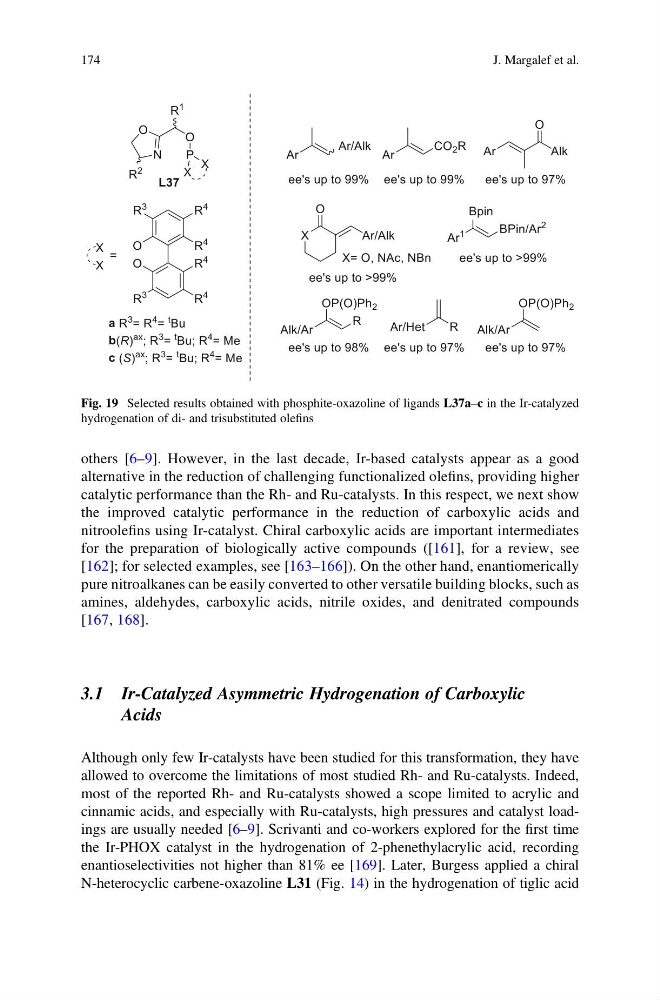
Fig. 19 Selected results obtained with phosphite-oxazoline of ligands L37a–c in the Ir-catalyzed
hydrogenation of di- and trisubstituted olefins
174
J. Margalef et al.
alternative in the reduction of challenging functionalized olefins, providing higher
catalytic performance than the Rh- and Ru-catalysts. In this respect, we next show
the improved catalytic performance in the reduction of carboxylic acids and
nitroolefins using Ir-catalyst. Chiral carboxylic acids are important intermediates
for the preparation of biologically active compounds ([161], for a review, see
[162]; for selected examples, see [163–166]). On the other hand, enantiomerically
pure nitroalkanes can be easily converted to other versatile building blocks, such as
amines, aldehydes, carboxylic acids, nitrile oxides, and denitrated compounds
[167, 168].
3.1 Ir-Catalyzed Asymmetric Hydrogenation of Carboxylic
Acids
Although only few Ir-catalysts have been studied for this transformation, they have
allowed to overcome the limitations of most studied Rh- and Ru-catalysts. Indeed,
most of the reported Rh- and Ru-catalysts showed a scope limited to acrylic and
cinnamic acids, and especially with Ru-catalysts, high pressures and catalyst loadings are usually needed [6–9]. Scrivanti and co-workers explored for the first time
the Ir-PHOX catalyst in the hydrogenation of 2-phenethylacrylic acid, recording
enantioselectivities not higher than 81% ee [169]. Later, Burgess applied a chiral
N-heterocyclic carbene-oxazoline L31 (Fig. 14) in the hydrogenation of tiglic acid
Fig. 19 Selected results obtained with phosphite-oxazoline of ligands L37a–c in the Ir-catalyzed
hydrogenation of di- and trisubstituted olefins
174
J. Margalef et al.