

carotenoids of cold-pressed hempseed oil (Aachary et al. 2016). The presence of
chlorophyll is known to trigger lipid oxidation that deteriorates the quality of
hempseed oil during storage conditions. Simultaneous application of ultrasound
was studied on cold-processed hempseed oil and compared with conventional
bleaching techniques (Aachary et al. 2016). Conventional methods (clay bleaching)
were observed to possess drawbacks such as increased treatment time and higher
amount of clay used. These existing drawbacks of bleaching clay necessitated
devising an alternate approach which is more sustainable and eco-friendly. Hence,
ultrasonic treatment was brought in use, although its use in bleaching of vegetable oil
is limited (Abedi et al. 2015).
15.3 Chemical Composition
The superior-quality hempseed oil obtained through cold pressing is clear and olive
green in colour (Callaway and Pate 2009). It is observed to possess a characteristic
fresh nutty taste (Blade et al. 2006) and is examined as a predominant source of
polyunsaturated fatty acids with its concentration ranging from 75 to 85% of the total
oil content (Blade et al. 2006; Matthäus et al. 2006).
2%
28%
70%
America
Asia
Europe
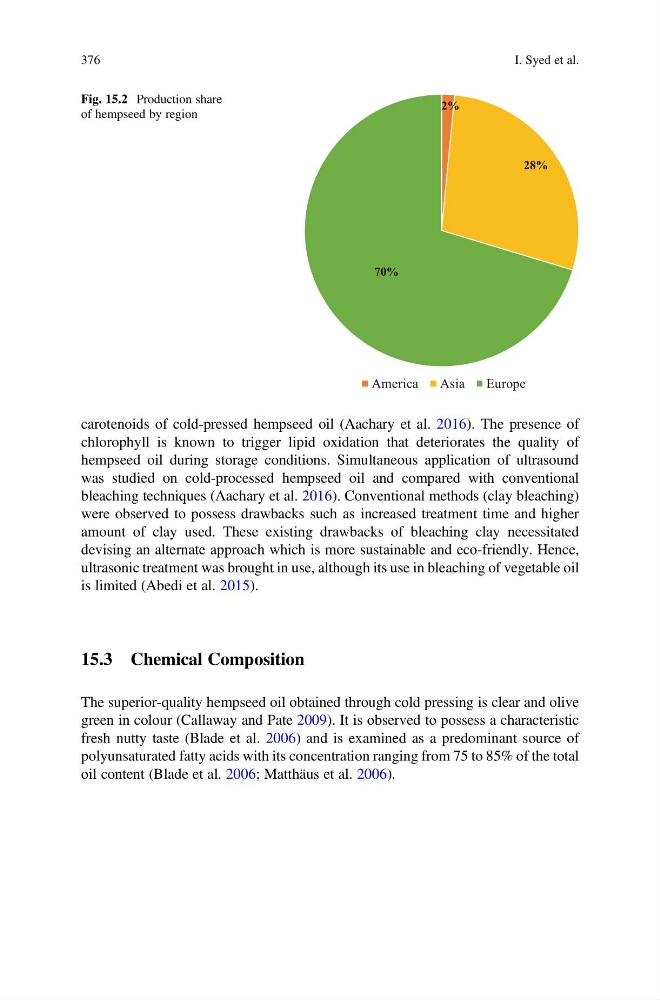
Fig. 15.2 Production share
of hempseed by region
376
I. Syed et al.
chlorophyll is known to trigger lipid oxidation that deteriorates the quality of
hempseed oil during storage conditions. Simultaneous application of ultrasound
was studied on cold-processed hempseed oil and compared with conventional
bleaching techniques (Aachary et al. 2016). Conventional methods (clay bleaching)
were observed to possess drawbacks such as increased treatment time and higher
amount of clay used. These existing drawbacks of bleaching clay necessitated
devising an alternate approach which is more sustainable and eco-friendly. Hence,
ultrasonic treatment was brought in use, although its use in bleaching of vegetable oil
is limited (Abedi et al. 2015).
15.3 Chemical Composition
The superior-quality hempseed oil obtained through cold pressing is clear and olive
green in colour (Callaway and Pate 2009). It is observed to possess a characteristic
fresh nutty taste (Blade et al. 2006) and is examined as a predominant source of
polyunsaturated fatty acids with its concentration ranging from 75 to 85% of the total
oil content (Blade et al. 2006; Matthäus et al. 2006).
2%
28%
70%
America
Asia
Europe
Fig. 15.2 Production share
of hempseed by region
376
I. Syed et al.