

concern. Various safety measures are undertaken for maintaining the quality of the
oil produced (Oomah et al. 2002).
The consumable hempseed oil is extracted by cold-pressing the seeds using
small-scale screw presses. Further, the oil is stored in vessels made up of ceramic,
glass or glazed steel. In addition, it is allowed to settle for 1 or 2 weeks following
which decantation is carried out into small containers which are then transported to
retail stores around the globe.
Industrial processing demands the use of larger screw presses and advanced
filtering operations that conveniently segregate the final sediments. Similarly, monitoring suitable inert atmosphere during the processing of the oil is one among the
prerequisites for maintaining the quality of oil (Callaway and Pate 2009; Kostić et al.
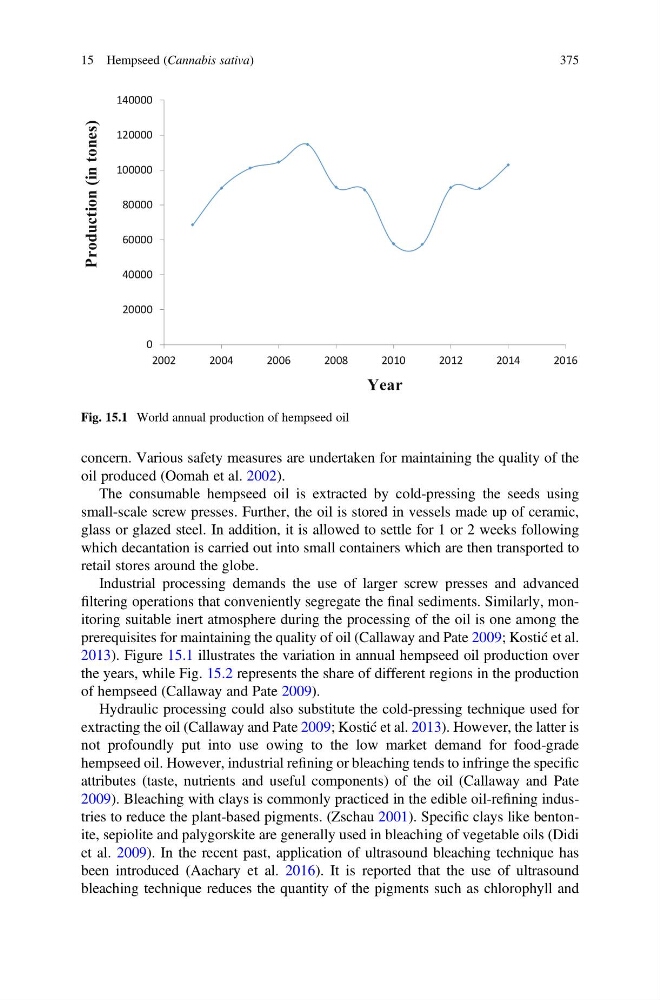
2013). Figure 15.1 illustrates the variation in annual hempseed oil production over
the years, while Fig. 15.2 represents the share of different regions in the production
of hempseed (Callaway and Pate 2009).
Hydraulic processing could also substitute the cold-pressing technique used for
extracting the oil (Callaway and Pate 2009; Kostić et al. 2013). However, the latter is
not profoundly put into use owing to the low market demand for food-grade
hempseed oil. However, industrial refining or bleaching tends to infringe the specific
attributes (taste, nutrients and useful components) of the oil (Callaway and Pate
2009). Bleaching with clays is commonly practiced in the edible oil-refining industries to reduce the plant-based pigments. (Zschau 2001). Specific clays like bentonite, sepiolite and palygorskite are generally used in bleaching of vegetable oils (Didi
et al. 2009). In the recent past, application of ultrasound bleaching technique has
been introduced (Aachary et al. 2016). It is reported that the use of ultrasound
bleaching technique reduces the quantity of the pigments such as chlorophyll and
0
20000
40000
60000
80000
100000
120000
140000
2002
2004
2006
2008
2010
2012
2014
2016
Year
Production (in tones)
Fig. 15.1 World annual production of hempseed oil
15 Hempseed (Cannabis sativa)
375
oil produced (Oomah et al. 2002).
The consumable hempseed oil is extracted by cold-pressing the seeds using
small-scale screw presses. Further, the oil is stored in vessels made up of ceramic,
glass or glazed steel. In addition, it is allowed to settle for 1 or 2 weeks following
which decantation is carried out into small containers which are then transported to
retail stores around the globe.
Industrial processing demands the use of larger screw presses and advanced
filtering operations that conveniently segregate the final sediments. Similarly, monitoring suitable inert atmosphere during the processing of the oil is one among the
prerequisites for maintaining the quality of oil (Callaway and Pate 2009; Kostić et al.
2013). Figure 15.1 illustrates the variation in annual hempseed oil production over
the years, while Fig. 15.2 represents the share of different regions in the production
of hempseed (Callaway and Pate 2009).
Hydraulic processing could also substitute the cold-pressing technique used for
extracting the oil (Callaway and Pate 2009; Kostić et al. 2013). However, the latter is
not profoundly put into use owing to the low market demand for food-grade
hempseed oil. However, industrial refining or bleaching tends to infringe the specific
attributes (taste, nutrients and useful components) of the oil (Callaway and Pate
2009). Bleaching with clays is commonly practiced in the edible oil-refining industries to reduce the plant-based pigments. (Zschau 2001). Specific clays like bentonite, sepiolite and palygorskite are generally used in bleaching of vegetable oils (Didi
et al. 2009). In the recent past, application of ultrasound bleaching technique has
been introduced (Aachary et al. 2016). It is reported that the use of ultrasound
bleaching technique reduces the quantity of the pigments such as chlorophyll and
0
20000
40000
60000
80000
100000
120000
140000
2002
2004
2006
2008
2010
2012
2014
2016
Year
Production (in tones)
Fig. 15.1 World annual production of hempseed oil
15 Hempseed (Cannabis sativa)
375