

5.5 The Predicament of Biomass-Based Fuel
177
0
0.5
1
1.5
2
2.5
3
3.5
4
Fuelwood
(kg/capita/day)
Dung
(kg/capita/day)
Crop residue
(kg/capita/day)
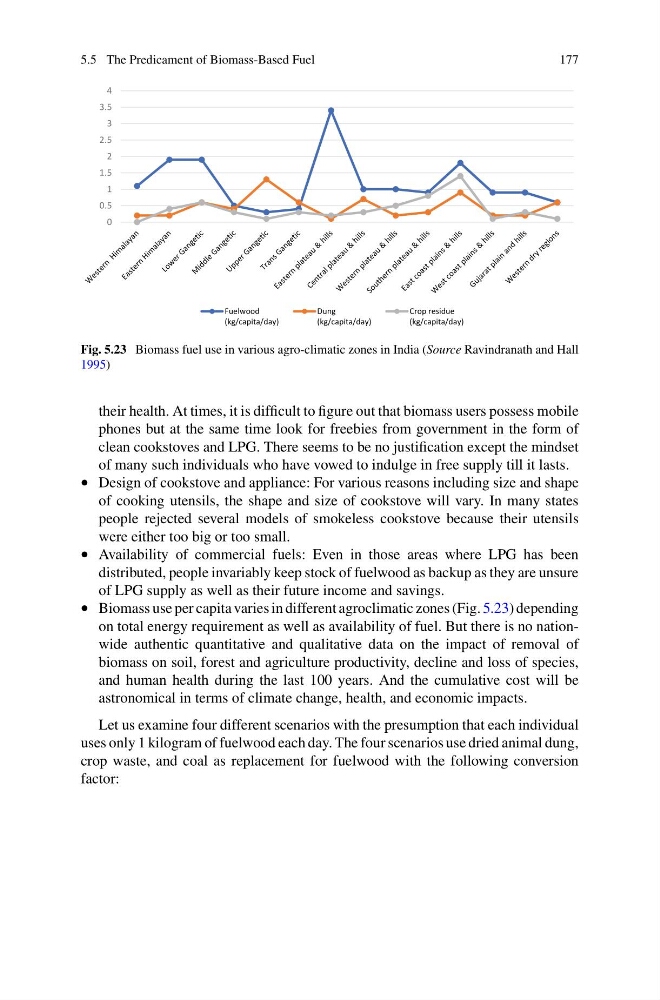
Fig. 5.23 Biomass fuel use in various agro-climatic zones in India (Source Ravindranath and Hall
1995)
their health. At times, it is difficult to figure out that biomass users possess mobile
phones but at the same time look for freebies from government in the form of
clean cookstoves and LPG. There seems to be no justification except the mindset
of many such individuals who have vowed to indulge in free supply till it lasts.
• Design of cookstove and appliance: For various reasons including size and shape
of cooking utensils, the shape and size of cookstove will vary. In many states
people rejected several models of smokeless cookstove because their utensils
were either too big or too small.
• Availability of commercial fuels: Even in those areas where LPG has been
distributed, people invariably keep stock of fuelwood as backup as they are unsure
of LPG supply as well as their future income and savings.
• Biomass use per capita varies in different agroclimatic zones (Fig. 5.23) depending
on total energy requirement as well as availability of fuel. But there is no nationwide authentic quantitative and qualitative data on the impact of removal of
biomass on soil, forest and agriculture productivity, decline and loss of species,
and human health during the last 100 years. And the cumulative cost will be
astronomical in terms of climate change, health, and economic impacts.
Let us examine four different scenarios with the presumption that each individual
uses only 1 kilogram of fuelwood each day. The four scenarios use dried animal dung,
crop waste, and coal as replacement for fuelwood with the following conversion
factor:
177
0
0.5
1
1.5
2
2.5
3
3.5
4
Fuelwood
(kg/capita/day)
Dung
(kg/capita/day)
Crop residue
(kg/capita/day)
Fig. 5.23 Biomass fuel use in various agro-climatic zones in India (Source Ravindranath and Hall
1995)
their health. At times, it is difficult to figure out that biomass users possess mobile
phones but at the same time look for freebies from government in the form of
clean cookstoves and LPG. There seems to be no justification except the mindset
of many such individuals who have vowed to indulge in free supply till it lasts.
• Design of cookstove and appliance: For various reasons including size and shape
of cooking utensils, the shape and size of cookstove will vary. In many states
people rejected several models of smokeless cookstove because their utensils
were either too big or too small.
• Availability of commercial fuels: Even in those areas where LPG has been
distributed, people invariably keep stock of fuelwood as backup as they are unsure
of LPG supply as well as their future income and savings.
• Biomass use per capita varies in different agroclimatic zones (Fig. 5.23) depending
on total energy requirement as well as availability of fuel. But there is no nationwide authentic quantitative and qualitative data on the impact of removal of
biomass on soil, forest and agriculture productivity, decline and loss of species,
and human health during the last 100 years. And the cumulative cost will be
astronomical in terms of climate change, health, and economic impacts.
Let us examine four different scenarios with the presumption that each individual
uses only 1 kilogram of fuelwood each day. The four scenarios use dried animal dung,
crop waste, and coal as replacement for fuelwood with the following conversion
factor: