

176
5 Fourth Industrial Revolution and India
175.096
0
20
40
60
80
100
120
140
160
180
200
Andhra Pradesh
Arunachal Pradesh
Assam
Bihar
Chha
Gujarat
Haryana
Himachal Pradesh
J & K
Jharkhand
Karnataka
Kerala
Madhya Pradesh
Maharashtra
Odisha
Punjab
Rajasthan
Tamil Nadu
Uar Pradesh
Uarakhand
West Bengal
North Eastern States
Union Territories
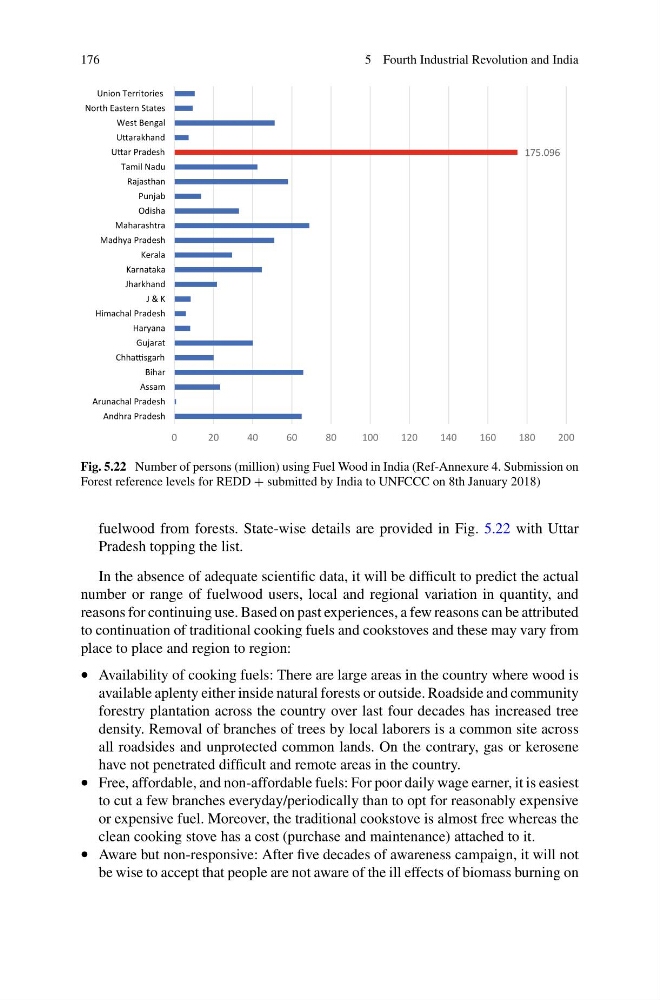
Fig. 5.22 Number of persons (million) using Fuel Wood in India (Ref-Annexure 4. Submission on
Forest reference levels for REDD + submitted by India to UNFCCC on 8th January 2018)
fuelwood from forests. State-wise details are provided in Fig. 5.22 with Uttar
Pradesh topping the list.
In the absence of adequate scientific data, it will be difficult to predict the actual
number or range of fuelwood users, local and regional variation in quantity, and
reasons for continuing use. Based on past experiences, a few reasons can be attributed
to continuation of traditional cooking fuels and cookstoves and these may vary from
place to place and region to region:
• Availability of cooking fuels: There are large areas in the country where wood is
available aplenty either inside natural forests or outside. Roadside and community
forestry plantation across the country over last four decades has increased tree
density. Removal of branches of trees by local laborers is a common site across
all roadsides and unprotected common lands. On the contrary, gas or kerosene
have not penetrated difficult and remote areas in the country.
• Free, affordable, and non-affordable fuels: For poor daily wage earner, it is easiest
to cut a few branches everyday/periodically than to opt for reasonably expensive
or expensive fuel. Moreover, the traditional cookstove is almost free whereas the
clean cooking stove has a cost (purchase and maintenance) attached to it.
• Aware but non-responsive: After five decades of awareness campaign, it will not
be wise to accept that people are not aware of the ill effects of biomass burning on
5 Fourth Industrial Revolution and India
175.096
0
20
40
60
80
100
120
140
160
180
200
Andhra Pradesh
Arunachal Pradesh
Assam
Bihar
Chha
Gujarat
Haryana
Himachal Pradesh
J & K
Jharkhand
Karnataka
Kerala
Madhya Pradesh
Maharashtra
Odisha
Punjab
Rajasthan
Tamil Nadu
Uar Pradesh
Uarakhand
West Bengal
North Eastern States
Union Territories
Fig. 5.22 Number of persons (million) using Fuel Wood in India (Ref-Annexure 4. Submission on
Forest reference levels for REDD + submitted by India to UNFCCC on 8th January 2018)
fuelwood from forests. State-wise details are provided in Fig. 5.22 with Uttar
Pradesh topping the list.
In the absence of adequate scientific data, it will be difficult to predict the actual
number or range of fuelwood users, local and regional variation in quantity, and
reasons for continuing use. Based on past experiences, a few reasons can be attributed
to continuation of traditional cooking fuels and cookstoves and these may vary from
place to place and region to region:
• Availability of cooking fuels: There are large areas in the country where wood is
available aplenty either inside natural forests or outside. Roadside and community
forestry plantation across the country over last four decades has increased tree
density. Removal of branches of trees by local laborers is a common site across
all roadsides and unprotected common lands. On the contrary, gas or kerosene
have not penetrated difficult and remote areas in the country.
• Free, affordable, and non-affordable fuels: For poor daily wage earner, it is easiest
to cut a few branches everyday/periodically than to opt for reasonably expensive
or expensive fuel. Moreover, the traditional cookstove is almost free whereas the
clean cooking stove has a cost (purchase and maintenance) attached to it.
• Aware but non-responsive: After five decades of awareness campaign, it will not
be wise to accept that people are not aware of the ill effects of biomass burning on