

5.4 Renewable Energy Assessment—India
169
44229
77
1
84431
55857
1700
10484
45394
3093
18770
33800
4244
2
8
8
153
Andhra Pradesh
Chhasgarh
Goa
Gujarat
Karnataka
Kerala
Madhya Pradesh
Maharashtra
Odisha
Rajasthan
Tamil Nadu
Telangana
West Bengal
Andaman & Nicobar
Lakshadweep
Puducherry
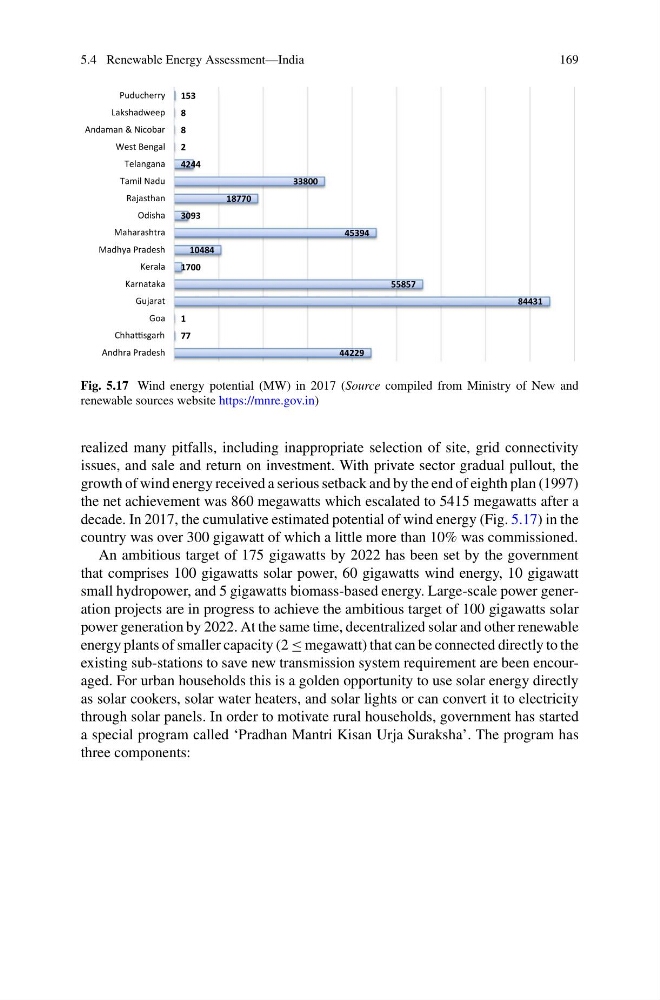
Fig. 5.17 Wind energy potential (MW) in 2017 (Source compiled from Ministry of New and
renewable sources website https://mnre.gov.in)
realized many pitfalls, including inappropriate selection of site, grid connectivity
issues, and sale and return on investment. With private sector gradual pullout, the
growth of wind energy received a serious setback and by the end of eighth plan (1997)
the net achievement was 860 megawatts which escalated to 5415 megawatts after a
decade. In 2017, the cumulative estimated potential of wind energy (Fig. 5.17) in the
country was over 300 gigawatt of which a little more than 10% was commissioned.
An ambitious target of 175 gigawatts by 2022 has been set by the government
that comprises 100 gigawatts solar power, 60 gigawatts wind energy, 10 gigawatt
small hydropower, and 5 gigawatts biomass-based energy. Large-scale power generation projects are in progress to achieve the ambitious target of 100 gigawatts solar
power generation by 2022. At the same time, decentralized solar and other renewable
energy plants of smaller capacity (2 ≤ megawatt) that can be connected directly to the
existing sub-stations to save new transmission system requirement are been encouraged. For urban households this is a golden opportunity to use solar energy directly
as solar cookers, solar water heaters, and solar lights or can convert it to electricity
through solar panels. In order to motivate rural households, government has started
a special program called ‘Pradhan Mantri Kisan Urja Suraksha’. The program has
three components:
169
44229
77
1
84431
55857
1700
10484
45394
3093
18770
33800
4244
2
8
8
153
Andhra Pradesh
Chhasgarh
Goa
Gujarat
Karnataka
Kerala
Madhya Pradesh
Maharashtra
Odisha
Rajasthan
Tamil Nadu
Telangana
West Bengal
Andaman & Nicobar
Lakshadweep
Puducherry
Fig. 5.17 Wind energy potential (MW) in 2017 (Source compiled from Ministry of New and
renewable sources website https://mnre.gov.in)
realized many pitfalls, including inappropriate selection of site, grid connectivity
issues, and sale and return on investment. With private sector gradual pullout, the
growth of wind energy received a serious setback and by the end of eighth plan (1997)
the net achievement was 860 megawatts which escalated to 5415 megawatts after a
decade. In 2017, the cumulative estimated potential of wind energy (Fig. 5.17) in the
country was over 300 gigawatt of which a little more than 10% was commissioned.
An ambitious target of 175 gigawatts by 2022 has been set by the government
that comprises 100 gigawatts solar power, 60 gigawatts wind energy, 10 gigawatt
small hydropower, and 5 gigawatts biomass-based energy. Large-scale power generation projects are in progress to achieve the ambitious target of 100 gigawatts solar
power generation by 2022. At the same time, decentralized solar and other renewable
energy plants of smaller capacity (2 ≤ megawatt) that can be connected directly to the
existing sub-stations to save new transmission system requirement are been encouraged. For urban households this is a golden opportunity to use solar energy directly
as solar cookers, solar water heaters, and solar lights or can convert it to electricity
through solar panels. In order to motivate rural households, government has started
a special program called ‘Pradhan Mantri Kisan Urja Suraksha’. The program has
three components: