

138
4 Climate Mitigation and India’s Commitment to Global Community
Emission in GigaGram ( Ref India Biennial Report 2018)
2015107
319860
1695247
20053
476
Carbon Dioxide Emission
Carbon Dioxide Removal
Net Carbon Dioxide Emission
Methane
Nitrous Oxide
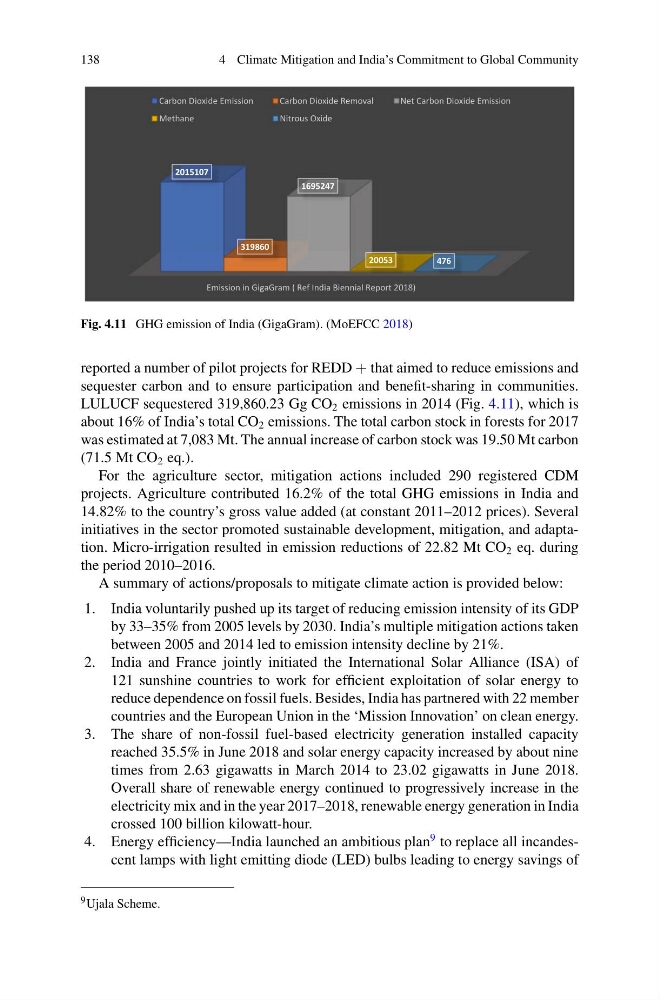
Fig. 4.11 GHG emission of India (GigaGram). (MoEFCC 2018)
reported a number of pilot projects for REDD + that aimed to reduce emissions and
sequester carbon and to ensure participation and benefit-sharing in communities.
LULUCF sequestered 319,860.23 Gg CO 2 emissions in 2014 (Fig. 4.11), which is
about 16% of India’s total CO 2 emissions. The total carbon stock in forests for 2017
was estimated at 7,083 Mt. The annual increase of carbon stock was 19.50 Mt carbon
(71.5 Mt CO 2 eq.).
For the agriculture sector, mitigation actions included 290 registered CDM
projects. Agriculture contributed 16.2% of the total GHG emissions in India and
14.82% to the country’s gross value added (at constant 2011–2012 prices). Several
initiatives in the sector promoted sustainable development, mitigation, and adaptation. Micro-irrigation resulted in emission reductions of 22.82 Mt CO 2 eq. during
the period 2010–2016.
A summary of actions/proposals to mitigate climate action is provided below:
1. India voluntarily pushed up its target of reducing emission intensity of its GDP
by 33–35% from 2005 levels by 2030. India’s multiple mitigation actions taken
between 2005 and 2014 led to emission intensity decline by 21%.
2. India and France jointly initiated the International Solar Alliance (ISA) of
121 sunshine countries to work for efficient exploitation of solar energy to
reduce dependence on fossil fuels. Besides, India has partnered with 22 member
countries and the European Union in the ‘Mission Innovation’ on clean energy.
3. The share of non-fossil fuel-based electricity generation installed capacity
reached 35.5% in June 2018 and solar energy capacity increased by about nine
times from 2.63 gigawatts in March 2014 to 23.02 gigawatts in June 2018.
Overall share of renewable energy continued to progressively increase in the
electricity mix and in the year 2017–2018, renewable energy generation in India
crossed 100 billion kilowatt-hour.
4. Energy efficiency—India launched an ambitious plan
9 to replace all incandescent lamps with light emitting diode (LED) bulbs leading to energy savings of
9 Ujala Scheme.
4 Climate Mitigation and India’s Commitment to Global Community
Emission in GigaGram ( Ref India Biennial Report 2018)
2015107
319860
1695247
20053
476
Carbon Dioxide Emission
Carbon Dioxide Removal
Net Carbon Dioxide Emission
Methane
Nitrous Oxide
Fig. 4.11 GHG emission of India (GigaGram). (MoEFCC 2018)
reported a number of pilot projects for REDD + that aimed to reduce emissions and
sequester carbon and to ensure participation and benefit-sharing in communities.
LULUCF sequestered 319,860.23 Gg CO 2 emissions in 2014 (Fig. 4.11), which is
about 16% of India’s total CO 2 emissions. The total carbon stock in forests for 2017
was estimated at 7,083 Mt. The annual increase of carbon stock was 19.50 Mt carbon
(71.5 Mt CO 2 eq.).
For the agriculture sector, mitigation actions included 290 registered CDM
projects. Agriculture contributed 16.2% of the total GHG emissions in India and
14.82% to the country’s gross value added (at constant 2011–2012 prices). Several
initiatives in the sector promoted sustainable development, mitigation, and adaptation. Micro-irrigation resulted in emission reductions of 22.82 Mt CO 2 eq. during
the period 2010–2016.
A summary of actions/proposals to mitigate climate action is provided below:
1. India voluntarily pushed up its target of reducing emission intensity of its GDP
by 33–35% from 2005 levels by 2030. India’s multiple mitigation actions taken
between 2005 and 2014 led to emission intensity decline by 21%.
2. India and France jointly initiated the International Solar Alliance (ISA) of
121 sunshine countries to work for efficient exploitation of solar energy to
reduce dependence on fossil fuels. Besides, India has partnered with 22 member
countries and the European Union in the ‘Mission Innovation’ on clean energy.
3. The share of non-fossil fuel-based electricity generation installed capacity
reached 35.5% in June 2018 and solar energy capacity increased by about nine
times from 2.63 gigawatts in March 2014 to 23.02 gigawatts in June 2018.
Overall share of renewable energy continued to progressively increase in the
electricity mix and in the year 2017–2018, renewable energy generation in India
crossed 100 billion kilowatt-hour.
4. Energy efficiency—India launched an ambitious plan
9 to replace all incandescent lamps with light emitting diode (LED) bulbs leading to energy savings of
9 Ujala Scheme.