

4.6 Second Biennial Report by India—2018
137
CO2 emission
CO2
removal
Methane
Nitrogen
Oxides
HFC 23
CF4
C2F6 SF6
TOTAL without LULUCF (Gg)
1997891.85
-
20005.35
475.29
1.59
2.61 0.71
0.004
TOTAL with LULUCF (Gg)
2015107.88
319860.23
20053.54
476.71
1.59
2.61 0.71
0.004
Energy
1844705.03
-
2133.37
65.35
-
-
-
-
Industrial Processes and
Product Use
153186.81
-
177.85
10.36
1.59
2.61 0.71
0.004
Agriculture
-
-
14709.78
349.39
-
-
-
-
LULUCF
17216.04
319860.23
48.19
1.42
-
-
-
-
Carbon di oxide from Biomass
807087.06
-
-
-
-
-
-
-
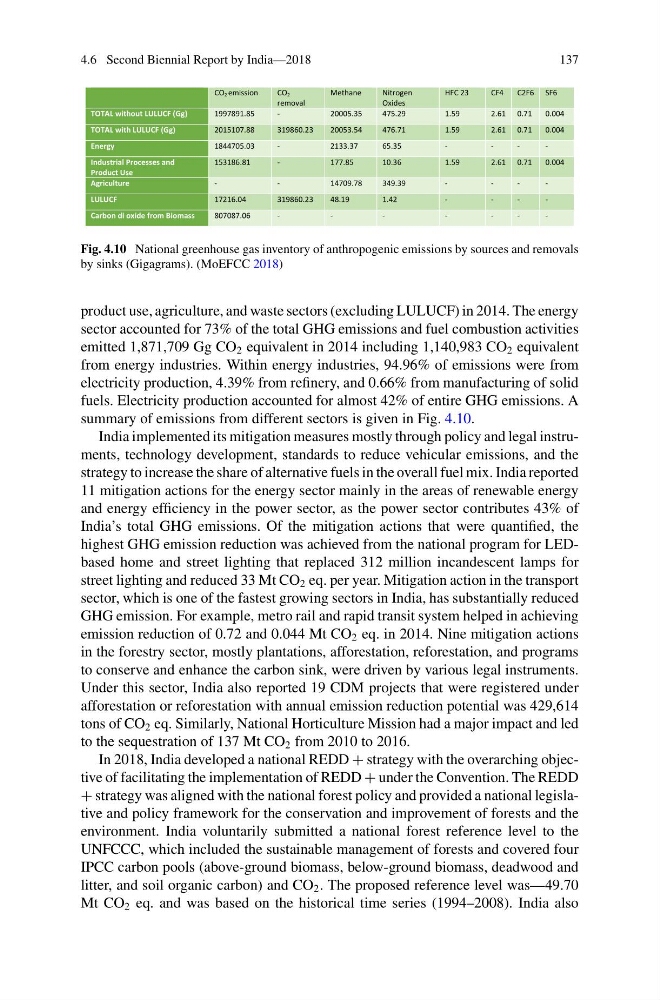
Fig. 4.10 National greenhouse gas inventory of anthropogenic emissions by sources and removals
by sinks (Gigagrams). (MoEFCC 2018)
product use, agriculture, and waste sectors (excluding LULUCF) in 2014. The energy
sector accounted for 73% of the total GHG emissions and fuel combustion activities
emitted 1,871,709 Gg CO 2 equivalent in 2014 including 1,140,983 CO 2 equivalent
from energy industries. Within energy industries, 94.96% of emissions were from
electricity production, 4.39% from refinery, and 0.66% from manufacturing of solid
fuels. Electricity production accounted for almost 42% of entire GHG emissions. A
summary of emissions from different sectors is given in Fig. 4.10.
India implemented its mitigation measures mostly through policy and legal instruments, technology development, standards to reduce vehicular emissions, and the
strategy to increase the share of alternative fuels in the overall fuel mix. India reported
11 mitigation actions for the energy sector mainly in the areas of renewable energy
and energy efficiency in the power sector, as the power sector contributes 43% of
India’s total GHG emissions. Of the mitigation actions that were quantified, the
highest GHG emission reduction was achieved from the national program for LEDbased home and street lighting that replaced 312 million incandescent lamps for
street lighting and reduced 33 Mt CO 2 eq. per year. Mitigation action in the transport
sector, which is one of the fastest growing sectors in India, has substantially reduced
GHG emission. For example, metro rail and rapid transit system helped in achieving
emission reduction of 0.72 and 0.044 Mt CO 2 eq. in 2014. Nine mitigation actions
in the forestry sector, mostly plantations, afforestation, reforestation, and programs
to conserve and enhance the carbon sink, were driven by various legal instruments.
Under this sector, India also reported 19 CDM projects that were registered under
afforestation or reforestation with annual emission reduction potential was 429,614
tons of CO 2 eq. Similarly, National Horticulture Mission had a major impact and led
to the sequestration of 137 Mt CO 2 from 2010 to 2016.
In 2018, India developed a national REDD + strategy with the overarching objective of facilitating the implementation of REDD + under the Convention. The REDD
+ strategy was aligned with the national forest policy and provided a national legislative and policy framework for the conservation and improvement of forests and the
environment. India voluntarily submitted a national forest reference level to the
UNFCCC, which included the sustainable management of forests and covered four
IPCC carbon pools (above-ground biomass, below-ground biomass, deadwood and
litter, and soil organic carbon) and CO 2 . The proposed reference level was—49.70
Mt CO 2 eq. and was based on the historical time series (1994–2008). India also
137
CO2 emission
CO2
removal
Methane
Nitrogen
Oxides
HFC 23
CF4
C2F6 SF6
TOTAL without LULUCF (Gg)
1997891.85
-
20005.35
475.29
1.59
2.61 0.71
0.004
TOTAL with LULUCF (Gg)
2015107.88
319860.23
20053.54
476.71
1.59
2.61 0.71
0.004
Energy
1844705.03
-
2133.37
65.35
-
-
-
-
Industrial Processes and
Product Use
153186.81
-
177.85
10.36
1.59
2.61 0.71
0.004
Agriculture
-
-
14709.78
349.39
-
-
-
-
LULUCF
17216.04
319860.23
48.19
1.42
-
-
-
-
Carbon di oxide from Biomass
807087.06
-
-
-
-
-
-
-
Fig. 4.10 National greenhouse gas inventory of anthropogenic emissions by sources and removals
by sinks (Gigagrams). (MoEFCC 2018)
product use, agriculture, and waste sectors (excluding LULUCF) in 2014. The energy
sector accounted for 73% of the total GHG emissions and fuel combustion activities
emitted 1,871,709 Gg CO 2 equivalent in 2014 including 1,140,983 CO 2 equivalent
from energy industries. Within energy industries, 94.96% of emissions were from
electricity production, 4.39% from refinery, and 0.66% from manufacturing of solid
fuels. Electricity production accounted for almost 42% of entire GHG emissions. A
summary of emissions from different sectors is given in Fig. 4.10.
India implemented its mitigation measures mostly through policy and legal instruments, technology development, standards to reduce vehicular emissions, and the
strategy to increase the share of alternative fuels in the overall fuel mix. India reported
11 mitigation actions for the energy sector mainly in the areas of renewable energy
and energy efficiency in the power sector, as the power sector contributes 43% of
India’s total GHG emissions. Of the mitigation actions that were quantified, the
highest GHG emission reduction was achieved from the national program for LEDbased home and street lighting that replaced 312 million incandescent lamps for
street lighting and reduced 33 Mt CO 2 eq. per year. Mitigation action in the transport
sector, which is one of the fastest growing sectors in India, has substantially reduced
GHG emission. For example, metro rail and rapid transit system helped in achieving
emission reduction of 0.72 and 0.044 Mt CO 2 eq. in 2014. Nine mitigation actions
in the forestry sector, mostly plantations, afforestation, reforestation, and programs
to conserve and enhance the carbon sink, were driven by various legal instruments.
Under this sector, India also reported 19 CDM projects that were registered under
afforestation or reforestation with annual emission reduction potential was 429,614
tons of CO 2 eq. Similarly, National Horticulture Mission had a major impact and led
to the sequestration of 137 Mt CO 2 from 2010 to 2016.
In 2018, India developed a national REDD + strategy with the overarching objective of facilitating the implementation of REDD + under the Convention. The REDD
+ strategy was aligned with the national forest policy and provided a national legislative and policy framework for the conservation and improvement of forests and the
environment. India voluntarily submitted a national forest reference level to the
UNFCCC, which included the sustainable management of forests and covered four
IPCC carbon pools (above-ground biomass, below-ground biomass, deadwood and
litter, and soil organic carbon) and CO 2 . The proposed reference level was—49.70
Mt CO 2 eq. and was based on the historical time series (1994–2008). India also