

130
4 Climate Mitigation and India’s Commitment to Global Community
Process
Emission (Giga gram) in
1994
Cement
30767
Lime
1901
Limestone and Dolomite use
5751
Soda ash use
273
Ammonia production
14395
Carbide production
302
Aluminum production
749
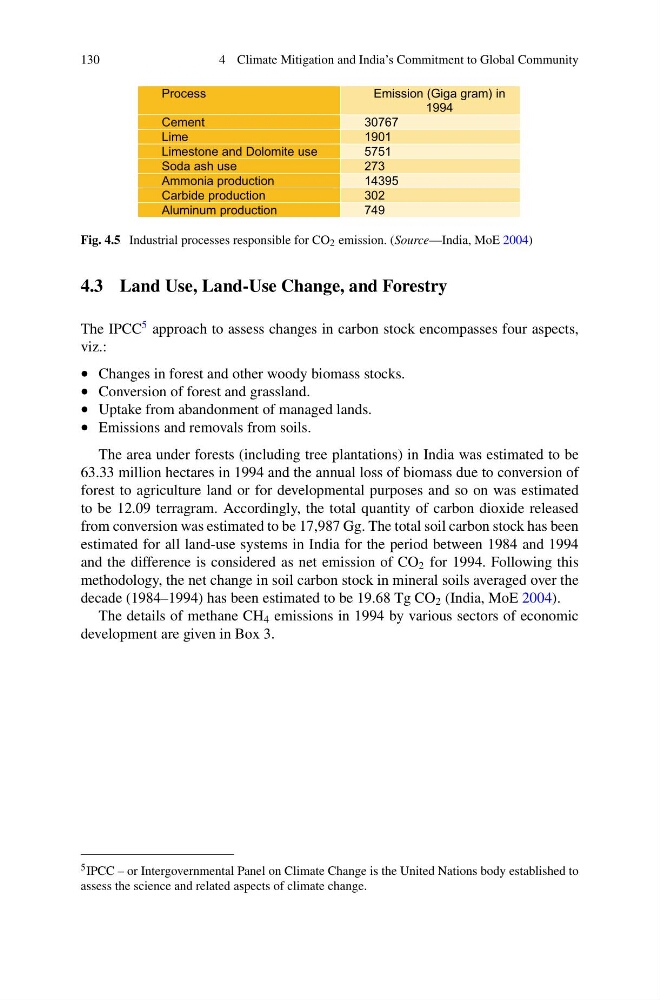
Fig. 4.5 Industrial processes responsible for CO 2 emission. (Source—India, MoE 2004)
4.3 Land Use, Land-Use Change, and Forestry
The IPCC
5 approach to assess changes in carbon stock encompasses four aspects,
viz.:
• Changes in forest and other woody biomass stocks.
• Conversion of forest and grassland.
• Uptake from abandonment of managed lands.
• Emissions and removals from soils.
The area under forests (including tree plantations) in India was estimated to be
63.33 million hectares in 1994 and the annual loss of biomass due to conversion of
forest to agriculture land or for developmental purposes and so on was estimated
to be 12.09 terragram. Accordingly, the total quantity of carbon dioxide released
from conversion was estimated to be 17,987 Gg. The total soil carbon stock has been
estimated for all land-use systems in India for the period between 1984 and 1994
and the difference is considered as net emission of CO 2 for 1994. Following this
methodology, the net change in soil carbon stock in mineral soils averaged over the
decade (1984–1994) has been estimated to be 19.68 Tg CO 2 (India, MoE 2004).
The details of methane CH 4 emissions in 1994 by various sectors of economic
development are given in Box 3.
5 IPCC – or Intergovernmental Panel on Climate Change is the United Nations body established to
assess the science and related aspects of climate change.
4 Climate Mitigation and India’s Commitment to Global Community
Process
Emission (Giga gram) in
1994
Cement
30767
Lime
1901
Limestone and Dolomite use
5751
Soda ash use
273
Ammonia production
14395
Carbide production
302
Aluminum production
749
Fig. 4.5 Industrial processes responsible for CO 2 emission. (Source—India, MoE 2004)
4.3 Land Use, Land-Use Change, and Forestry
The IPCC
5 approach to assess changes in carbon stock encompasses four aspects,
viz.:
• Changes in forest and other woody biomass stocks.
• Conversion of forest and grassland.
• Uptake from abandonment of managed lands.
• Emissions and removals from soils.
The area under forests (including tree plantations) in India was estimated to be
63.33 million hectares in 1994 and the annual loss of biomass due to conversion of
forest to agriculture land or for developmental purposes and so on was estimated
to be 12.09 terragram. Accordingly, the total quantity of carbon dioxide released
from conversion was estimated to be 17,987 Gg. The total soil carbon stock has been
estimated for all land-use systems in India for the period between 1984 and 1994
and the difference is considered as net emission of CO 2 for 1994. Following this
methodology, the net change in soil carbon stock in mineral soils averaged over the
decade (1984–1994) has been estimated to be 19.68 Tg CO 2 (India, MoE 2004).
The details of methane CH 4 emissions in 1994 by various sectors of economic
development are given in Box 3.
5 IPCC – or Intergovernmental Panel on Climate Change is the United Nations body established to
assess the science and related aspects of climate change.