

3.5 Impediments to Electricity Generation
105
11125.41
13242.41
15521.11
18454.52
24503.45
27541.70
34988.00
38959.16
45924.04
57244.23
2008
2009
2010
2011
2012
2013
2014
2015
2016
2017
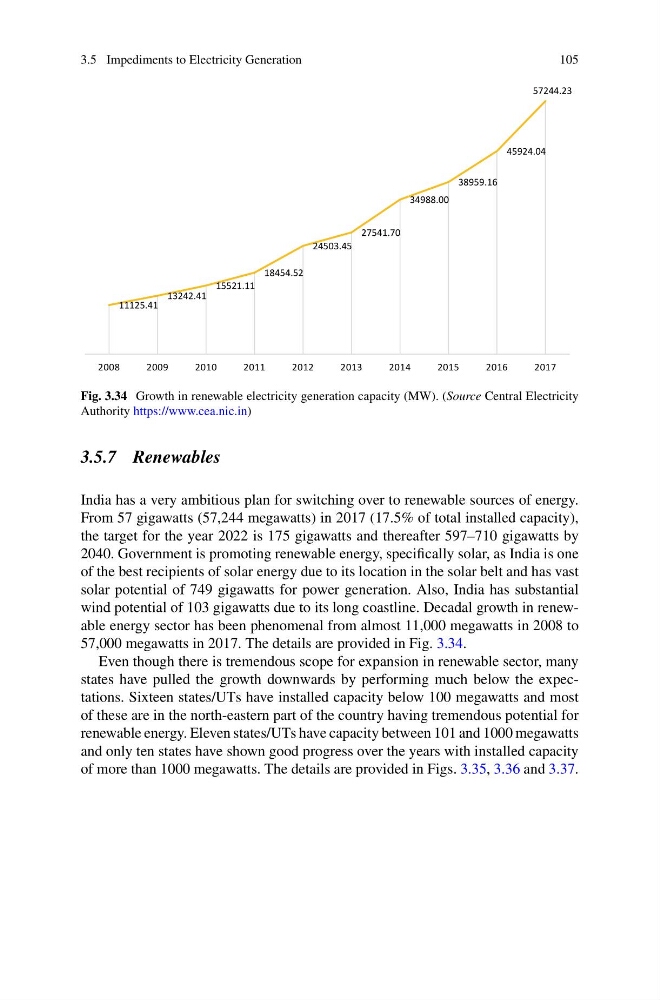
Fig. 3.34 Growth in renewable electricity generation capacity (MW). (Source Central Electricity
Authority https://www.cea.nic.in)
3.5.7 Renewables
India has a very ambitious plan for switching over to renewable sources of energy.
From 57 gigawatts (57,244 megawatts) in 2017 (17.5% of total installed capacity),
the target for the year 2022 is 175 gigawatts and thereafter 597–710 gigawatts by
2040. Government is promoting renewable energy, specifically solar, as India is one
of the best recipients of solar energy due to its location in the solar belt and has vast
solar potential of 749 gigawatts for power generation. Also, India has substantial
wind potential of 103 gigawatts due to its long coastline. Decadal growth in renewable energy sector has been phenomenal from almost 11,000 megawatts in 2008 to
57,000 megawatts in 2017. The details are provided in Fig. 3.34.
Even though there is tremendous scope for expansion in renewable sector, many
states have pulled the growth downwards by performing much below the expectations. Sixteen states/UTs have installed capacity below 100 megawatts and most
of these are in the north-eastern part of the country having tremendous potential for
renewable energy. Eleven states/UTs have capacity between 101 and 1000 megawatts
and only ten states have shown good progress over the years with installed capacity
of more than 1000 megawatts. The details are provided in Figs. 3.35, 3.36 and 3.37.
105
11125.41
13242.41
15521.11
18454.52
24503.45
27541.70
34988.00
38959.16
45924.04
57244.23
2008
2009
2010
2011
2012
2013
2014
2015
2016
2017
Fig. 3.34 Growth in renewable electricity generation capacity (MW). (Source Central Electricity
Authority https://www.cea.nic.in)
3.5.7 Renewables
India has a very ambitious plan for switching over to renewable sources of energy.
From 57 gigawatts (57,244 megawatts) in 2017 (17.5% of total installed capacity),
the target for the year 2022 is 175 gigawatts and thereafter 597–710 gigawatts by
2040. Government is promoting renewable energy, specifically solar, as India is one
of the best recipients of solar energy due to its location in the solar belt and has vast
solar potential of 749 gigawatts for power generation. Also, India has substantial
wind potential of 103 gigawatts due to its long coastline. Decadal growth in renewable energy sector has been phenomenal from almost 11,000 megawatts in 2008 to
57,000 megawatts in 2017. The details are provided in Fig. 3.34.
Even though there is tremendous scope for expansion in renewable sector, many
states have pulled the growth downwards by performing much below the expectations. Sixteen states/UTs have installed capacity below 100 megawatts and most
of these are in the north-eastern part of the country having tremendous potential for
renewable energy. Eleven states/UTs have capacity between 101 and 1000 megawatts
and only ten states have shown good progress over the years with installed capacity
of more than 1000 megawatts. The details are provided in Figs. 3.35, 3.36 and 3.37.