

106
3 The Challenges of Energy Supply
0
10
20
30
40
50
60
70
80
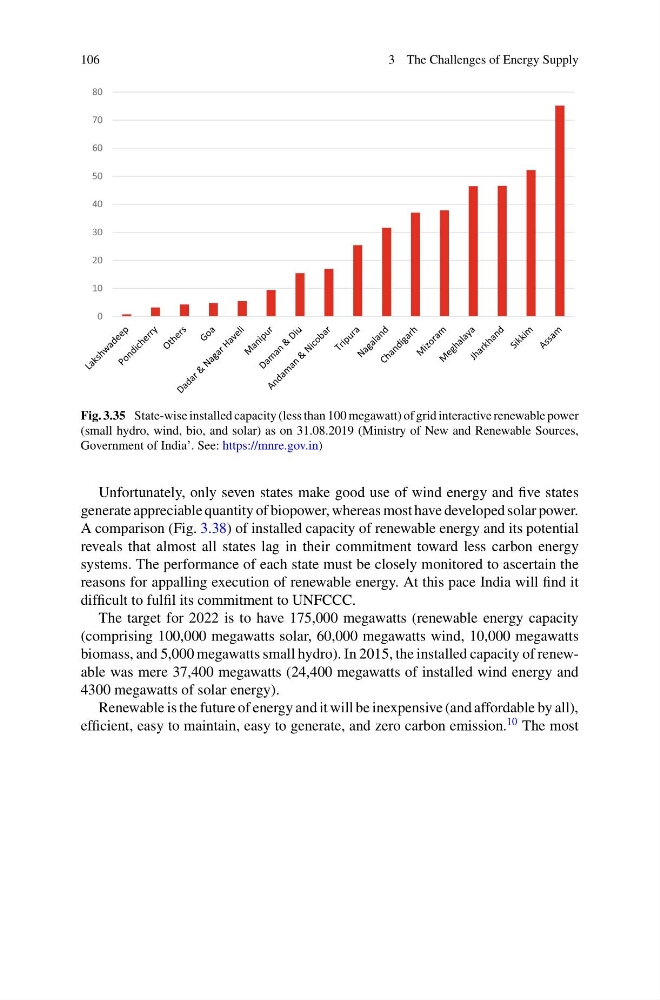
Fig. 3.35 State-wise installed capacity (less than 100 megawatt) of grid interactive renewable power
(small hydro, wind, bio, and solar) as on 31.08.2019 (Ministry of New and Renewable Sources,
Government of India’. See: https://mnre.gov.in)
Unfortunately, only seven states make good use of wind energy and five states
generate appreciable quantity of biopower, whereas most have developed solar power.
A comparison (Fig. 3.38) of installed capacity of renewable energy and its potential
reveals that almost all states lag in their commitment toward less carbon energy
systems. The performance of each state must be closely monitored to ascertain the
reasons for appalling execution of renewable energy. At this pace India will find it
difficult to fulfil its commitment to UNFCCC.
The target for 2022 is to have 175,000 megawatts (renewable energy capacity
(comprising 100,000 megawatts solar, 60,000 megawatts wind, 10,000 megawatts
biomass, and 5,000 megawatts small hydro). In 2015, the installed capacity of renewable was mere 37,400 megawatts (24,400 megawatts of installed wind energy and
4300 megawatts of solar energy).
Renewable is the future of energy and it will be inexpensive (and affordable by all),
efficient, easy to maintain, easy to generate, and zero carbon emission.
10 The most
3 The Challenges of Energy Supply
0
10
20
30
40
50
60
70
80
Fig. 3.35 State-wise installed capacity (less than 100 megawatt) of grid interactive renewable power
(small hydro, wind, bio, and solar) as on 31.08.2019 (Ministry of New and Renewable Sources,
Government of India’. See: https://mnre.gov.in)
Unfortunately, only seven states make good use of wind energy and five states
generate appreciable quantity of biopower, whereas most have developed solar power.
A comparison (Fig. 3.38) of installed capacity of renewable energy and its potential
reveals that almost all states lag in their commitment toward less carbon energy
systems. The performance of each state must be closely monitored to ascertain the
reasons for appalling execution of renewable energy. At this pace India will find it
difficult to fulfil its commitment to UNFCCC.
The target for 2022 is to have 175,000 megawatts (renewable energy capacity
(comprising 100,000 megawatts solar, 60,000 megawatts wind, 10,000 megawatts
biomass, and 5,000 megawatts small hydro). In 2015, the installed capacity of renewable was mere 37,400 megawatts (24,400 megawatts of installed wind energy and
4300 megawatts of solar energy).
Renewable is the future of energy and it will be inexpensive (and affordable by all),
efficient, easy to maintain, easy to generate, and zero carbon emission.
10 The most