

100
3 The Challenges of Energy Supply
141
164
173
225
243
272
281
715
1332
1875
3723
Poland Russian
Fedraon
Australia Korea
South
Africa
Germany Japan
India
Rest of
the world
United
States
People's
Rep. of
China
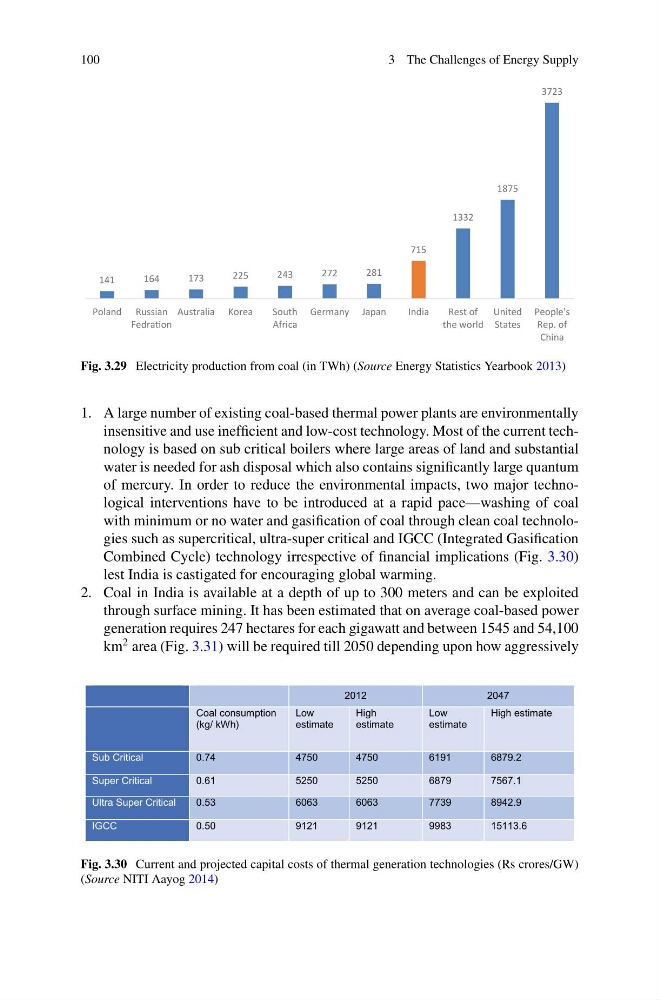
Fig. 3.29 Electricity production from coal (in TWh) (Source Energy Statistics Yearbook 2013)
1. A large number of existing coal-based thermal power plants are environmentally
insensitive and use inefficient and low-cost technology. Most of the current technology is based on sub critical boilers where large areas of land and substantial
water is needed for ash disposal which also contains significantly large quantum
of mercury. In order to reduce the environmental impacts, two major technological interventions have to be introduced at a rapid pace—washing of coal
with minimum or no water and gasification of coal through clean coal technologies such as supercritical, ultra-super critical and IGCC (Integrated Gasification
Combined Cycle) technology irrespective of financial implications (Fig. 3.30)
lest India is castigated for encouraging global warming.
2. Coal in India is available at a depth of up to 300 meters and can be exploited
through surface mining. It has been estimated that on average coal-based power
generation requires 247 hectares for each gigawatt and between 1545 and 54,100
km
2 area (Fig. 3.31) will be required till 2050 depending upon how aggressively
2012
2047
Coal consumption
(kg/ kWh)
Low
estimate
High
estimate
Low
estimate
High estimate
Sub Critical
0.74
4750
4750
6191
6879.2
Super Critical
0.61
5250
5250
6879
7567.1
Ultra Super Critical
0.53
6063
6063
7739
8942.9
IGCC
0.50
9121
9121
9983
15113.6
Fig. 3.30 Current and projected capital costs of thermal generation technologies (Rs crores/GW)
(Source NITI Aayog 2014)
3 The Challenges of Energy Supply
141
164
173
225
243
272
281
715
1332
1875
3723
Poland Russian
Fedraon
Australia Korea
South
Africa
Germany Japan
India
Rest of
the world
United
States
People's
Rep. of
China
Fig. 3.29 Electricity production from coal (in TWh) (Source Energy Statistics Yearbook 2013)
1. A large number of existing coal-based thermal power plants are environmentally
insensitive and use inefficient and low-cost technology. Most of the current technology is based on sub critical boilers where large areas of land and substantial
water is needed for ash disposal which also contains significantly large quantum
of mercury. In order to reduce the environmental impacts, two major technological interventions have to be introduced at a rapid pace—washing of coal
with minimum or no water and gasification of coal through clean coal technologies such as supercritical, ultra-super critical and IGCC (Integrated Gasification
Combined Cycle) technology irrespective of financial implications (Fig. 3.30)
lest India is castigated for encouraging global warming.
2. Coal in India is available at a depth of up to 300 meters and can be exploited
through surface mining. It has been estimated that on average coal-based power
generation requires 247 hectares for each gigawatt and between 1545 and 54,100
km
2 area (Fig. 3.31) will be required till 2050 depending upon how aggressively
2012
2047
Coal consumption
(kg/ kWh)
Low
estimate
High
estimate
Low
estimate
High estimate
Sub Critical
0.74
4750
4750
6191
6879.2
Super Critical
0.61
5250
5250
6879
7567.1
Ultra Super Critical
0.53
6063
6063
7739
8942.9
IGCC
0.50
9121
9121
9983
15113.6
Fig. 3.30 Current and projected capital costs of thermal generation technologies (Rs crores/GW)
(Source NITI Aayog 2014)