

3.5 Impediments to Electricity Generation
99
Proved
Indicated
Inferred
Total
143.06
139.30
32.78
315.14
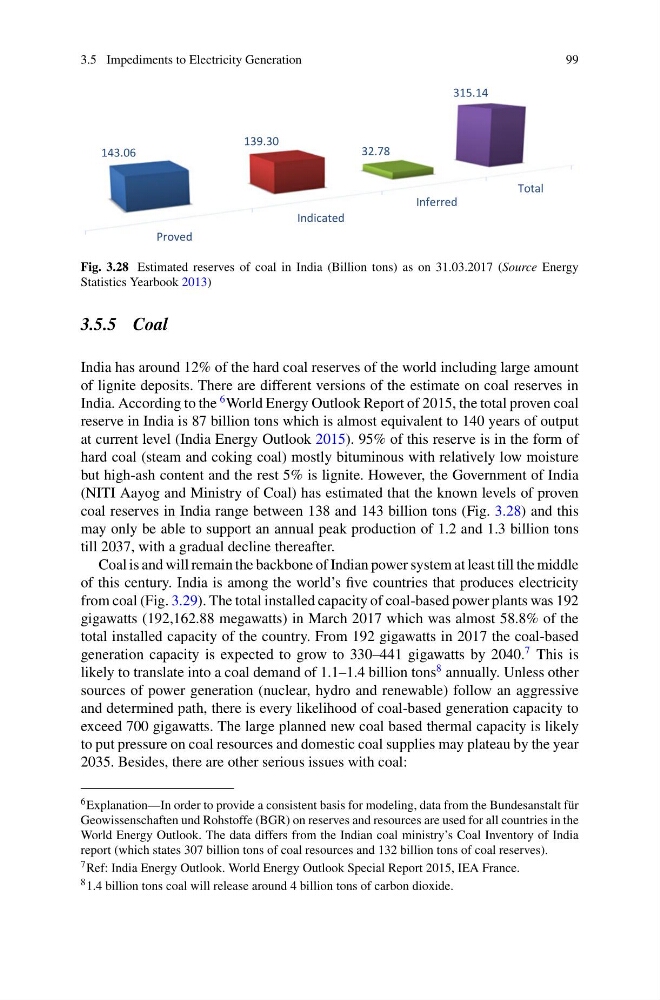
Fig. 3.28 Estimated reserves of coal in India (Billion tons) as on 31.03.2017 (Source Energy
Statistics Yearbook 2013)
3.5.5 Coal
India has around 12% of the hard coal reserves of the world including large amount
of lignite deposits. There are different versions of the estimate on coal reserves in
India. According to the
6 World Energy Outlook Report of 2015, the total proven coal
reserve in India is 87 billion tons which is almost equivalent to 140 years of output
at current level (India Energy Outlook 2015). 95% of this reserve is in the form of
hard coal (steam and coking coal) mostly bituminous with relatively low moisture
but high-ash content and the rest 5% is lignite. However, the Government of India
(NITI Aayog and Ministry of Coal) has estimated that the known levels of proven
coal reserves in India range between 138 and 143 billion tons (Fig. 3.28) and this
may only be able to support an annual peak production of 1.2 and 1.3 billion tons
till 2037, with a gradual decline thereafter.
Coal is and will remain the backbone of Indian power system at least till the middle
of this century. India is among the world’s five countries that produces electricity
from coal (Fig. 3.29). The total installed capacity of coal-based power plants was 192
gigawatts (192,162.88 megawatts) in March 2017 which was almost 58.8% of the
total installed capacity of the country. From 192 gigawatts in 2017 the coal-based
generation capacity is expected to grow to 330–441 gigawatts by 2040.
7 This is
likely to translate into a coal demand of 1.1–1.4 billion tons
8 annually. Unless other
sources of power generation (nuclear, hydro and renewable) follow an aggressive
and determined path, there is every likelihood of coal-based generation capacity to
exceed 700 gigawatts. The large planned new coal based thermal capacity is likely
to put pressure on coal resources and domestic coal supplies may plateau by the year
2035. Besides, there are other serious issues with coal:
6 Explanation—In order to provide a consistent basis for modeling, data from the Bundesanstalt für
Geowissenschaften und Rohstoffe (BGR) on reserves and resources are used for all countries in the
World Energy Outlook. The data differs from the Indian coal ministry’s Coal Inventory of India
report (which states 307 billion tons of coal resources and 132 billion tons of coal reserves).
7 Ref: India Energy Outlook. World Energy Outlook Special Report 2015, IEA France.
8 1.4 billion tons coal will release around 4 billion tons of carbon dioxide.
99
Proved
Indicated
Inferred
Total
143.06
139.30
32.78
315.14
Fig. 3.28 Estimated reserves of coal in India (Billion tons) as on 31.03.2017 (Source Energy
Statistics Yearbook 2013)
3.5.5 Coal
India has around 12% of the hard coal reserves of the world including large amount
of lignite deposits. There are different versions of the estimate on coal reserves in
India. According to the
6 World Energy Outlook Report of 2015, the total proven coal
reserve in India is 87 billion tons which is almost equivalent to 140 years of output
at current level (India Energy Outlook 2015). 95% of this reserve is in the form of
hard coal (steam and coking coal) mostly bituminous with relatively low moisture
but high-ash content and the rest 5% is lignite. However, the Government of India
(NITI Aayog and Ministry of Coal) has estimated that the known levels of proven
coal reserves in India range between 138 and 143 billion tons (Fig. 3.28) and this
may only be able to support an annual peak production of 1.2 and 1.3 billion tons
till 2037, with a gradual decline thereafter.
Coal is and will remain the backbone of Indian power system at least till the middle
of this century. India is among the world’s five countries that produces electricity
from coal (Fig. 3.29). The total installed capacity of coal-based power plants was 192
gigawatts (192,162.88 megawatts) in March 2017 which was almost 58.8% of the
total installed capacity of the country. From 192 gigawatts in 2017 the coal-based
generation capacity is expected to grow to 330–441 gigawatts by 2040.
7 This is
likely to translate into a coal demand of 1.1–1.4 billion tons
8 annually. Unless other
sources of power generation (nuclear, hydro and renewable) follow an aggressive
and determined path, there is every likelihood of coal-based generation capacity to
exceed 700 gigawatts. The large planned new coal based thermal capacity is likely
to put pressure on coal resources and domestic coal supplies may plateau by the year
2035. Besides, there are other serious issues with coal:
6 Explanation—In order to provide a consistent basis for modeling, data from the Bundesanstalt für
Geowissenschaften und Rohstoffe (BGR) on reserves and resources are used for all countries in the
World Energy Outlook. The data differs from the Indian coal ministry’s Coal Inventory of India
report (which states 307 billion tons of coal resources and 132 billion tons of coal reserves).
7 Ref: India Energy Outlook. World Energy Outlook Special Report 2015, IEA France.
8 1.4 billion tons coal will release around 4 billion tons of carbon dioxide.