

48
M. Hiramoto
(a)
(b)
H 2 Pc molecule
C 60 molecule
200 nm
Crystalline H 2 Pc
Crystalline C 60
(c)
-
200 nm
Crystalline H 2 Pc
Amorphous C 60
hν
+
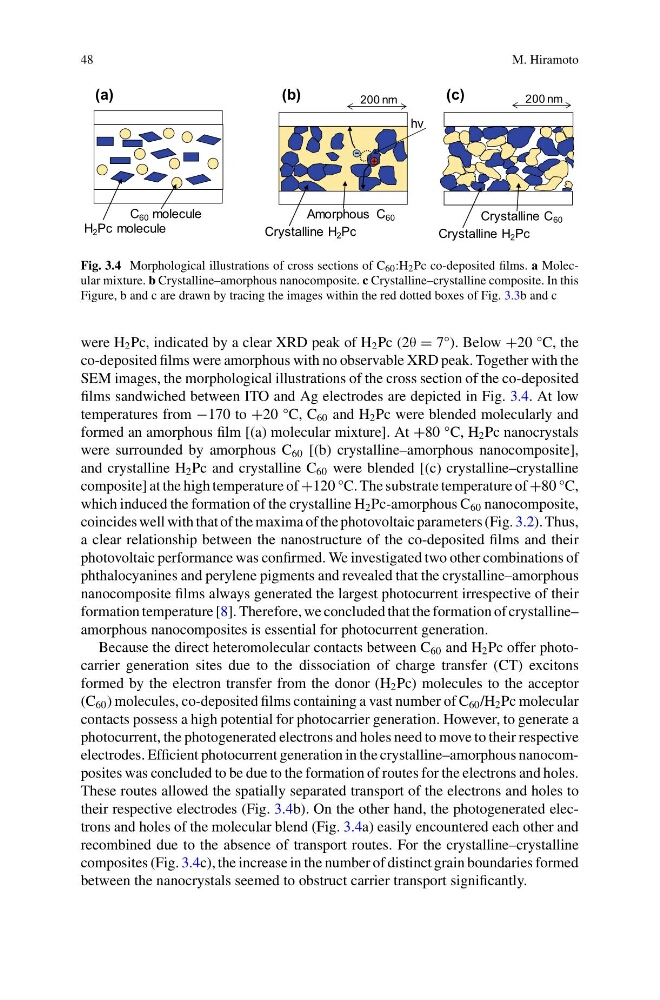
Fig. 3.4 Morphological illustrations of cross sections of C 60 :H 2 Pc co-deposited films. a Molecular mixture. b Crystalline–amorphous nanocomposite. c Crystalline–crystalline composite. In this
Figure, b and c are drawn by tracing the images within the red dotted boxes of Fig. 3.3b and c
were H 2 Pc, indicated by a clear XRD peak of H 2 Pc (2θ = 7°). Below +20 °C, the
co-deposited films were amorphous with no observable XRD peak. Together with the
SEM images, the morphological illustrations of the cross section of the co-deposited
films sandwiched between ITO and Ag electrodes are depicted in Fig. 3.4. At low
temperatures from −170 to +20 °C, C 60 and H 2 Pc were blended molecularly and
formed an amorphous film [(a) molecular mixture]. At +80 °C, H 2 Pc nanocrystals
were surrounded by amorphous C 60 [(b) crystalline–amorphous nanocomposite],
and crystalline H 2 Pc and crystalline C 60 were blended [(c) crystalline–crystalline
composite] at the high temperature of +120 °C. The substrate temperature of +80 °C,
which induced the formation of the crystalline H 2 Pc-amorphous C 60 nanocomposite,
coincides well with that of the maxima of the photovoltaic parameters (Fig. 3.2). Thus,
a clear relationship between the nanostructure of the co-deposited films and their
photovoltaic performance was confirmed. We investigated two other combinations of
phthalocyanines and perylene pigments and revealed that the crystalline–amorphous
nanocomposite films always generated the largest photocurrent irrespective of their
formation temperature [8]. Therefore, we concluded that the formation of crystalline–
amorphous nanocomposites is essential for photocurrent generation.
Because the direct heteromolecular contacts between C 60 and H 2 Pc offer photocarrier generation sites due to the dissociation of charge transfer (CT) excitons
formed by the electron transfer from the donor (H 2 Pc) molecules to the acceptor
(C 60 ) molecules, co-deposited films containing a vast number of C 60 /H 2 Pc molecular
contacts possess a high potential for photocarrier generation. However, to generate a
photocurrent, the photogenerated electrons and holes need to move to their respective
electrodes. Efficient photocurrent generation in the crystalline–amorphous nanocomposites was concluded to be due to the formation of routes for the electrons and holes.
These routes allowed the spatially separated transport of the electrons and holes to
their respective electrodes (Fig. 3.4b). On the other hand, the photogenerated electrons and holes of the molecular blend (Fig. 3.4a) easily encountered each other and
recombined due to the absence of transport routes. For the crystalline–crystalline
composites (Fig. 3.4c), the increase in the number of distinct grain boundaries formed
between the nanocrystals seemed to obstruct carrier transport significantly.
M. Hiramoto
(a)
(b)
H 2 Pc molecule
C 60 molecule
200 nm
Crystalline H 2 Pc
Crystalline C 60
(c)
-
200 nm
Crystalline H 2 Pc
Amorphous C 60
hν
+
Fig. 3.4 Morphological illustrations of cross sections of C 60 :H 2 Pc co-deposited films. a Molecular mixture. b Crystalline–amorphous nanocomposite. c Crystalline–crystalline composite. In this
Figure, b and c are drawn by tracing the images within the red dotted boxes of Fig. 3.3b and c
were H 2 Pc, indicated by a clear XRD peak of H 2 Pc (2θ = 7°). Below +20 °C, the
co-deposited films were amorphous with no observable XRD peak. Together with the
SEM images, the morphological illustrations of the cross section of the co-deposited
films sandwiched between ITO and Ag electrodes are depicted in Fig. 3.4. At low
temperatures from −170 to +20 °C, C 60 and H 2 Pc were blended molecularly and
formed an amorphous film [(a) molecular mixture]. At +80 °C, H 2 Pc nanocrystals
were surrounded by amorphous C 60 [(b) crystalline–amorphous nanocomposite],
and crystalline H 2 Pc and crystalline C 60 were blended [(c) crystalline–crystalline
composite] at the high temperature of +120 °C. The substrate temperature of +80 °C,
which induced the formation of the crystalline H 2 Pc-amorphous C 60 nanocomposite,
coincides well with that of the maxima of the photovoltaic parameters (Fig. 3.2). Thus,
a clear relationship between the nanostructure of the co-deposited films and their
photovoltaic performance was confirmed. We investigated two other combinations of
phthalocyanines and perylene pigments and revealed that the crystalline–amorphous
nanocomposite films always generated the largest photocurrent irrespective of their
formation temperature [8]. Therefore, we concluded that the formation of crystalline–
amorphous nanocomposites is essential for photocurrent generation.
Because the direct heteromolecular contacts between C 60 and H 2 Pc offer photocarrier generation sites due to the dissociation of charge transfer (CT) excitons
formed by the electron transfer from the donor (H 2 Pc) molecules to the acceptor
(C 60 ) molecules, co-deposited films containing a vast number of C 60 /H 2 Pc molecular
contacts possess a high potential for photocarrier generation. However, to generate a
photocurrent, the photogenerated electrons and holes need to move to their respective
electrodes. Efficient photocurrent generation in the crystalline–amorphous nanocomposites was concluded to be due to the formation of routes for the electrons and holes.
These routes allowed the spatially separated transport of the electrons and holes to
their respective electrodes (Fig. 3.4b). On the other hand, the photogenerated electrons and holes of the molecular blend (Fig. 3.4a) easily encountered each other and
recombined due to the absence of transport routes. For the crystalline–crystalline
composites (Fig. 3.4c), the increase in the number of distinct grain boundaries formed
between the nanocrystals seemed to obstruct carrier transport significantly.