

6 Charge Carrier Dynamics in Polymer Solar Cells
129
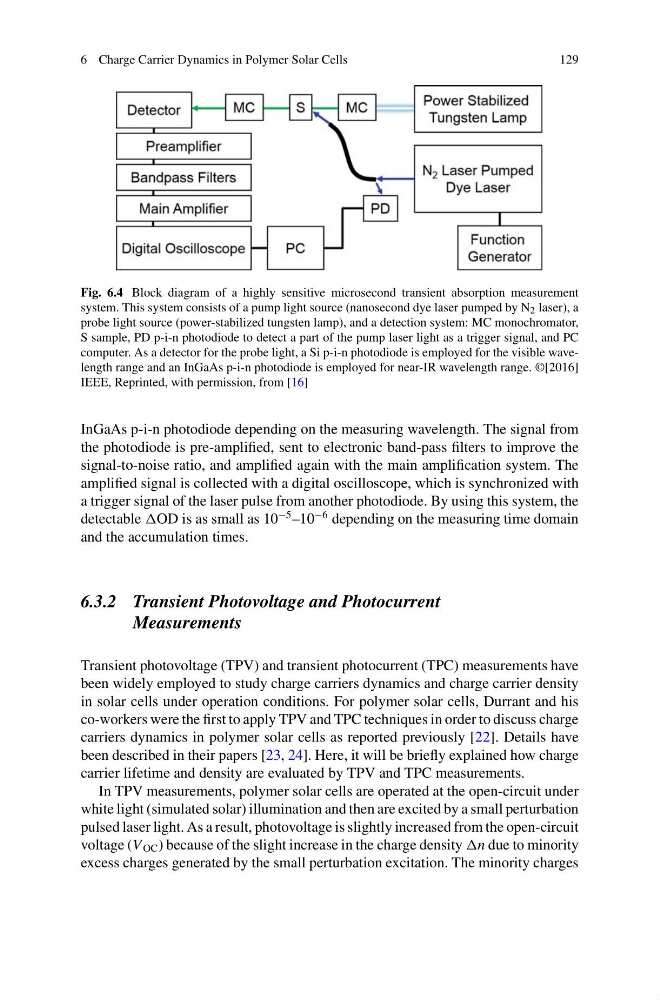
Fig. 6.4 Block diagram of a highly sensitive microsecond transient absorption measurement
system. This system consists of a pump light source (nanosecond dye laser pumped by N 2 laser), a
probe light source (power-stabilized tungsten lamp), and a detection system: MC monochromator,
S sample, PD p-i-n photodiode to detect a part of the pump laser light as a trigger signal, and PC
computer. As a detector for the probe light, a Si p-i-n photodiode is employed for the visible wavelength range and an InGaAs p-i-n photodiode is employed for near-IR wavelength range. ©[2016]
IEEE, Reprinted, with permission, from [16]
InGaAs p-i-n photodiode depending on the measuring wavelength. The signal from
the photodiode is pre-amplified, sent to electronic band-pass filters to improve the
signal-to-noise ratio, and amplified again with the main amplification system. The
amplified signal is collected with a digital oscilloscope, which is synchronized with
a trigger signal of the laser pulse from another photodiode. By using this system, the
detectable OD is as small as 10
−5 –10
−6 depending on the measuring time domain
and the accumulation times.
6.3.2 Transient Photovoltage and Photocurrent
Measurements
Transient photovoltage (TPV) and transient photocurrent (TPC) measurements have
been widely employed to study charge carriers dynamics and charge carrier density
in solar cells under operation conditions. For polymer solar cells, Durrant and his
co-workers were the first to apply TPV and TPC techniques in order to discuss charge
carriers dynamics in polymer solar cells as reported previously [22]. Details have
been described in their papers [23, 24]. Here, it will be briefly explained how charge
carrier lifetime and density are evaluated by TPV and TPC measurements.
In TPV measurements, polymer solar cells are operated at the open-circuit under
white light (simulated solar) illumination and then are excited by a small perturbation
pulsed laser light. As a result, photovoltage is slightly increased from the open-circuit
voltage (V OC ) because of the slight increase in the charge density n due to minority
excess charges generated by the small perturbation excitation. The minority charges
129
Fig. 6.4 Block diagram of a highly sensitive microsecond transient absorption measurement
system. This system consists of a pump light source (nanosecond dye laser pumped by N 2 laser), a
probe light source (power-stabilized tungsten lamp), and a detection system: MC monochromator,
S sample, PD p-i-n photodiode to detect a part of the pump laser light as a trigger signal, and PC
computer. As a detector for the probe light, a Si p-i-n photodiode is employed for the visible wavelength range and an InGaAs p-i-n photodiode is employed for near-IR wavelength range. ©[2016]
IEEE, Reprinted, with permission, from [16]
InGaAs p-i-n photodiode depending on the measuring wavelength. The signal from
the photodiode is pre-amplified, sent to electronic band-pass filters to improve the
signal-to-noise ratio, and amplified again with the main amplification system. The
amplified signal is collected with a digital oscilloscope, which is synchronized with
a trigger signal of the laser pulse from another photodiode. By using this system, the
detectable OD is as small as 10
−5 –10
−6 depending on the measuring time domain
and the accumulation times.
6.3.2 Transient Photovoltage and Photocurrent
Measurements
Transient photovoltage (TPV) and transient photocurrent (TPC) measurements have
been widely employed to study charge carriers dynamics and charge carrier density
in solar cells under operation conditions. For polymer solar cells, Durrant and his
co-workers were the first to apply TPV and TPC techniques in order to discuss charge
carriers dynamics in polymer solar cells as reported previously [22]. Details have
been described in their papers [23, 24]. Here, it will be briefly explained how charge
carrier lifetime and density are evaluated by TPV and TPC measurements.
In TPV measurements, polymer solar cells are operated at the open-circuit under
white light (simulated solar) illumination and then are excited by a small perturbation
pulsed laser light. As a result, photovoltage is slightly increased from the open-circuit
voltage (V OC ) because of the slight increase in the charge density n due to minority
excess charges generated by the small perturbation excitation. The minority charges