

186
antimony, chloride or bromide compounds into backbone. The use of the triazine
ring as a heterocyclic segment (Hajibeygi et al. 2016) and PA copolymers with a
phosphorus co-monomer (Ridgway 1988; Mateva and Dencheva 1993) have also
been reported. Table 8.6 gives an overview to the status of works done in this regard.
It is evident from the data that the chemical modification of PA could inverse harden
hydrogen bonds between chains, crystallinity and melting points. Consequently, the
additive approach has been recognized as the most popular and effective way to
improve the fire retardancy of PAs (Joseph and Tretsiakova-Mcnally 2011).
From economic point of view, the global bio-PA market has increased significantly in the last decade. The current value of the global bio-PA market is about
$41,769.5 million and is estimated to reach $266.9 million by 2024 (marketwatch.
com). Several biobased PAs are commercially available, such as PA10.12
(VESTAMID® Terra DD), PA4.10 (under trade name of EcoPaXX™ from Royal
DSM), PA6.10 (VESTAMID® Terra HS- Evonik), PA11 (Rilsan-Arkema), PA6.10
and 10.10 (Grilamid-EMS-Grivory), high performance PA (Kalix® and Solvay),
PA6.10 (Amilan-Toray), etc. Several academic researchers are also dedicated to the
development of biobased PAs (Martino et al. 2014; Jasinska et al. 2011). Due to this
emergence, it seems necessary to make these biobased PA flame retardants. To the
best of our knowledge, there is no published work on the chemical modification of
biobased PAs for flame retardancy purpose.
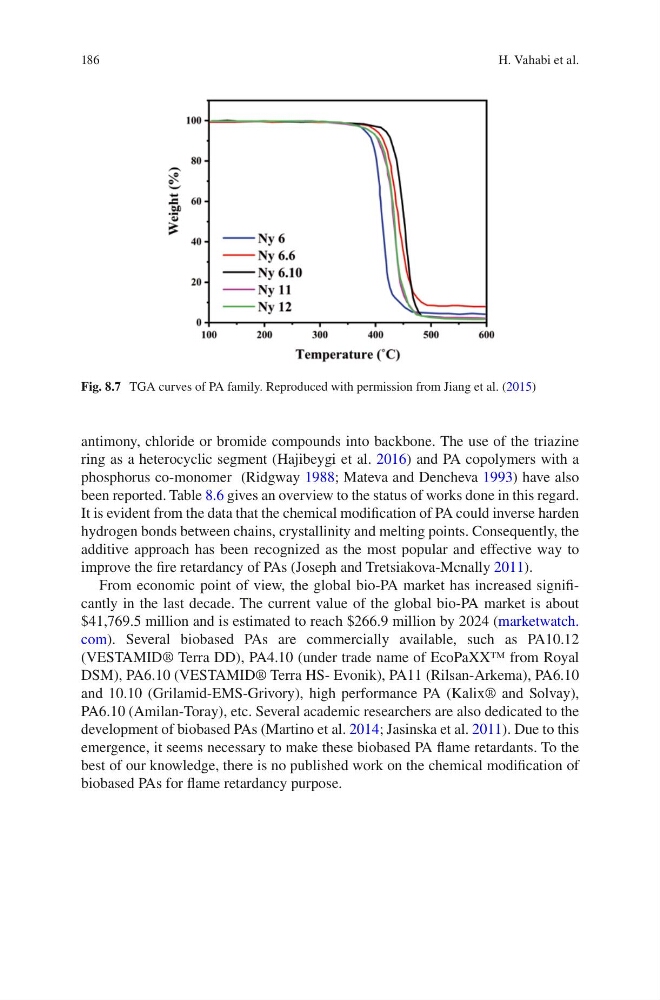
Fig. 8.7 TGA curves of PA family. Reproduced with permission from Jiang et al. (2015)
H. Vahabi et al.
antimony, chloride or bromide compounds into backbone. The use of the triazine
ring as a heterocyclic segment (Hajibeygi et al. 2016) and PA copolymers with a
phosphorus co-monomer (Ridgway 1988; Mateva and Dencheva 1993) have also
been reported. Table 8.6 gives an overview to the status of works done in this regard.
It is evident from the data that the chemical modification of PA could inverse harden
hydrogen bonds between chains, crystallinity and melting points. Consequently, the
additive approach has been recognized as the most popular and effective way to
improve the fire retardancy of PAs (Joseph and Tretsiakova-Mcnally 2011).
From economic point of view, the global bio-PA market has increased significantly in the last decade. The current value of the global bio-PA market is about
$41,769.5 million and is estimated to reach $266.9 million by 2024 (marketwatch.
com). Several biobased PAs are commercially available, such as PA10.12
(VESTAMID® Terra DD), PA4.10 (under trade name of EcoPaXX™ from Royal
DSM), PA6.10 (VESTAMID® Terra HS- Evonik), PA11 (Rilsan-Arkema), PA6.10
and 10.10 (Grilamid-EMS-Grivory), high performance PA (Kalix® and Solvay),
PA6.10 (Amilan-Toray), etc. Several academic researchers are also dedicated to the
development of biobased PAs (Martino et al. 2014; Jasinska et al. 2011). Due to this
emergence, it seems necessary to make these biobased PA flame retardants. To the
best of our knowledge, there is no published work on the chemical modification of
biobased PAs for flame retardancy purpose.
Fig. 8.7 TGA curves of PA family. Reproduced with permission from Jiang et al. (2015)
H. Vahabi et al.