

Acetogens and methanogens are organisms that reduce (fix) CO 2 in vivo [274,
275], and, as such, they have been the focus of intense research to develop new CO 2
converter devices, enzymatic and whole-cell systems, as is reviewed by Litty and
Müller in this Book [152] and also [153–159]. Herein, we only highlight the
dihydrogen-dependent CO 2 reductases (Sect. 4.2.2.) from Acetobacterium woodii
and T. kivui: the former is a SeCys–Mo–FDH that catalyses the CO 2 hydrogenation
with a k cat of 28 s
−1 (reported as 10Umg
−1 ; K m
HCO3−
% 37 mM) and displays
slightly higher rates of formate oxidation (CO 2 plus dihydrogen formation with a
k cat % 39 s
−1 , reported as 14Umg
−1 ; K m
HCOO−
% 1 mM) [153, 154]; the second is
a outstanding Cys–W–FDH that catalyses the CO 2 hydrogenation with a k cat of 2.5
 10
3 s
−1 (900 lmol formate min
−1 mg
−1
; K m
H2
% 130 lM—one of the fastest CO 2
reducers so far described), with the reverse reaction being catalysed with a k cat of
2.7 Â 10
3 s
−1 (930 lmol dihydrogen min
−1 mg
−1 ; K m
HCOO−
% 550 lM) [156]. The
CO 2 hydrogenation equilibrium constant close to one (ΔG º′ = 3.5KJmol
−1 ) makes
these systems ideal biocatalysts for dihydrogen storage and production. A. woodii
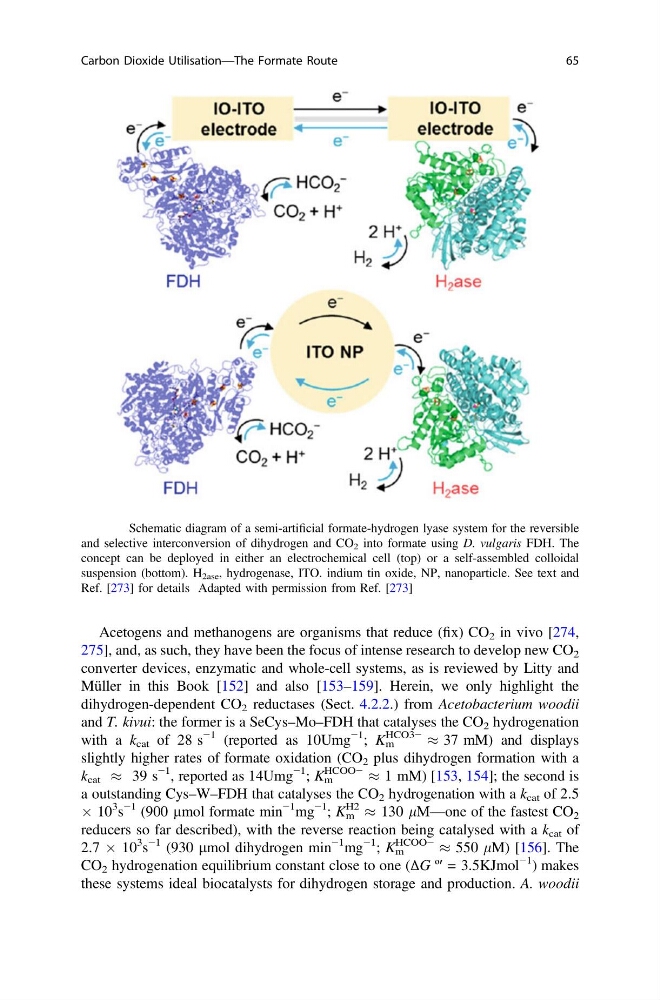
Fig. 19 Schematic diagram of a semi-artificial formate-hydrogen lyase system for the reversible
and selective interconversion of dihydrogen and CO 2 into formate using D. vulgaris FDH. The
concept can be deployed in either an electrochemical cell (top) or a self-assembled colloidal
suspension (bottom). H 2ase , hydrogenase, ITO. indium tin oxide, NP, nanoparticle. See text and
Ref. [273] for details Adapted with permission from Ref. [273]
Carbon Dioxide Utilisation—The Formate Route
65
275], and, as such, they have been the focus of intense research to develop new CO 2
converter devices, enzymatic and whole-cell systems, as is reviewed by Litty and
Müller in this Book [152] and also [153–159]. Herein, we only highlight the
dihydrogen-dependent CO 2 reductases (Sect. 4.2.2.) from Acetobacterium woodii
and T. kivui: the former is a SeCys–Mo–FDH that catalyses the CO 2 hydrogenation
with a k cat of 28 s
−1 (reported as 10Umg
−1 ; K m
HCO3−
% 37 mM) and displays
slightly higher rates of formate oxidation (CO 2 plus dihydrogen formation with a
k cat % 39 s
−1 , reported as 14Umg
−1 ; K m
HCOO−
% 1 mM) [153, 154]; the second is
a outstanding Cys–W–FDH that catalyses the CO 2 hydrogenation with a k cat of 2.5
 10
3 s
−1 (900 lmol formate min
−1 mg
−1
; K m
H2
% 130 lM—one of the fastest CO 2
reducers so far described), with the reverse reaction being catalysed with a k cat of
2.7 Â 10
3 s
−1 (930 lmol dihydrogen min
−1 mg
−1 ; K m
HCOO−
% 550 lM) [156]. The
CO 2 hydrogenation equilibrium constant close to one (ΔG º′ = 3.5KJmol
−1 ) makes
these systems ideal biocatalysts for dihydrogen storage and production. A. woodii
Fig. 19 Schematic diagram of a semi-artificial formate-hydrogen lyase system for the reversible
and selective interconversion of dihydrogen and CO 2 into formate using D. vulgaris FDH. The
concept can be deployed in either an electrochemical cell (top) or a self-assembled colloidal
suspension (bottom). H 2ase , hydrogenase, ITO. indium tin oxide, NP, nanoparticle. See text and
Ref. [273] for details Adapted with permission from Ref. [273]
Carbon Dioxide Utilisation—The Formate Route
65