

[272]. The D. vulgaris W-FDH has also been exploited to drive the dihydrogen
formation/storage in a system that mimics the natural formate-hydrogen lyase
systems (see Sect. 4.2.2.) [273]. The semi-artificial formate-hydrogen lyase system
consists of the D. vulgaris W-FDH and D. vulgaris Ni/Fe-Hase immobilised on a
conductive scaffold of indium tin oxide that acts as an electron relay. This configuration enables the overall reaction to proceed reversibly towards formate conversion into CO 2 plus dihydrogen or towards formate formation, with minimal bias
in either direction (Fig. 19), thus allowing the longed-for dihydrogen storage and
release on demand. The system is able to produce dihydrogen (upon formate
addition) at a rate of 4nmolmin
−1 (turnover number of 23 Â 10
3 and turnover
frequency of 6.4 s
−1 for the Hase) or to produce formate (in the presence of
dihydrogen) at a rate of 22nmolmin
−1 (turnover number of 16 Â 10
3 and turnover
frequency of e.4 s
−1 for the FDH) for 8 h (this bioelectrode system reached current
densities of 185 and 450 lAcm
−2 , for CO 2 and H
+ reduction, respectively (at
−0.6 V versus SHE) and of 300 and 440 lAcm
−2 for formate and H 2 oxidation,
respectively (at −0.2 V versus SHE), with Faradaic efficiencies for H 2 and formate
production of 77 and 76%, respectively). Moreover, this semi-artificial
formate-hydrogen lyase concept can be deployed in either an electrochemical cell
or a self-assembled colloidal suspension, thus providing versatility for applications
in different contexts.
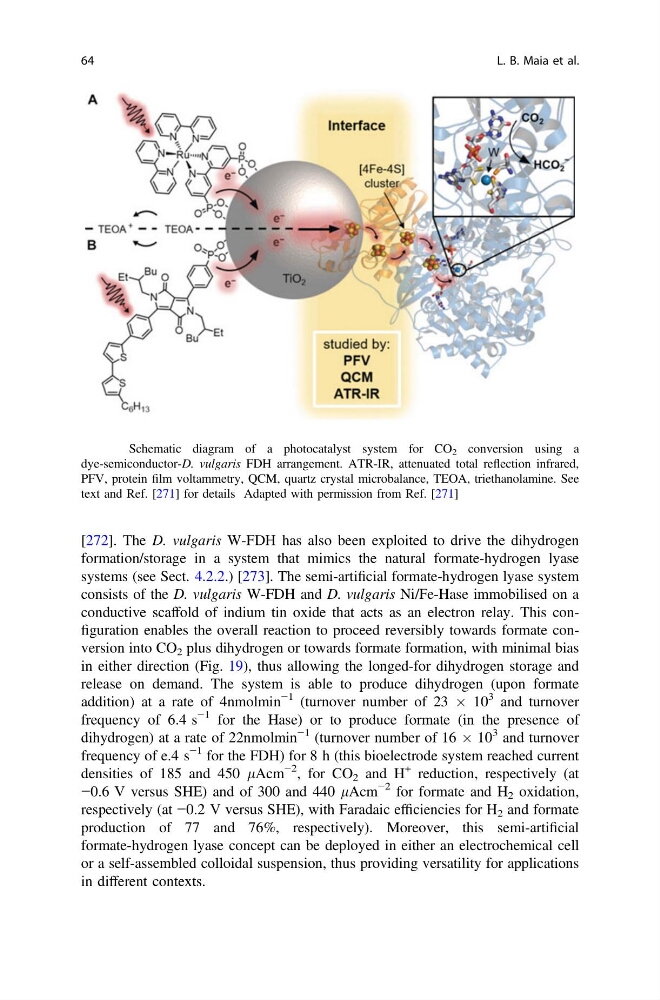
Fig. 18 Schematic diagram of a photocatalyst system for CO 2 conversion using a
dye-semiconductor-D. vulgaris FDH arrangement. ATR-IR, attenuated total reflection infrared,
PFV, protein film voltammetry, QCM, quartz crystal microbalance, TEOA, triethanolamine. See
text and Ref. [271] for details Adapted with permission from Ref. [271]
64
L. B. Maia et al.
formation/storage in a system that mimics the natural formate-hydrogen lyase
systems (see Sect. 4.2.2.) [273]. The semi-artificial formate-hydrogen lyase system
consists of the D. vulgaris W-FDH and D. vulgaris Ni/Fe-Hase immobilised on a
conductive scaffold of indium tin oxide that acts as an electron relay. This configuration enables the overall reaction to proceed reversibly towards formate conversion into CO 2 plus dihydrogen or towards formate formation, with minimal bias
in either direction (Fig. 19), thus allowing the longed-for dihydrogen storage and
release on demand. The system is able to produce dihydrogen (upon formate
addition) at a rate of 4nmolmin
−1 (turnover number of 23 Â 10
3 and turnover
frequency of 6.4 s
−1 for the Hase) or to produce formate (in the presence of
dihydrogen) at a rate of 22nmolmin
−1 (turnover number of 16 Â 10
3 and turnover
frequency of e.4 s
−1 for the FDH) for 8 h (this bioelectrode system reached current
densities of 185 and 450 lAcm
−2 , for CO 2 and H
+ reduction, respectively (at
−0.6 V versus SHE) and of 300 and 440 lAcm
−2 for formate and H 2 oxidation,
respectively (at −0.2 V versus SHE), with Faradaic efficiencies for H 2 and formate
production of 77 and 76%, respectively). Moreover, this semi-artificial
formate-hydrogen lyase concept can be deployed in either an electrochemical cell
or a self-assembled colloidal suspension, thus providing versatility for applications
in different contexts.
Fig. 18 Schematic diagram of a photocatalyst system for CO 2 conversion using a
dye-semiconductor-D. vulgaris FDH arrangement. ATR-IR, attenuated total reflection infrared,
PFV, protein film voltammetry, QCM, quartz crystal microbalance, TEOA, triethanolamine. See
text and Ref. [271] for details Adapted with permission from Ref. [271]
64
L. B. Maia et al.