

much more difficult to abstract the Ca proton from formate (Eq. 8) than
abstract a hydride (Eq. 9), which, in addition, lead to the formation of a
stable product (CO 2 ), instead of a carbonanion (CO 2
2− ) (Scheme 1). The
simple mechanistic strategy followed by the metal-independent FDHs
(Sect. 4.3.1.), that is, direct reaction with NAD
+
, with no enzyme cofactors
involved, further confirms that it must be exceptionally facile (thermodynamics) to abstract a hydride from the formate molecule. On its turn, CO 2 ,
with an electronic structure O −
−d C
+2d
− O
−d and a carbon-localised
LUMO, is susceptible to attack by nucleophiles and to reduction, being a
good hydride acceptor, as supported by the chemistry of several synthetic
transition metal-hydride complexes that mimic the FDH catalysis [65, 67,
187–192].
(iv) The terminal sulfido group of the active site (Fig. 10) is well documented as
a hydride acceptor/donor. Since the 1970s, the sulfido group is established as
the hydride acceptor in the oxidised molybdenum centre (Mo
6+ =S) of xanthine oxidase and aldehyde oxidase
6 [110–112, 162–165, 193–202], as well
Mo/W 6+ O
Mo/W 4+ OQ
Mo/W 4+ OR
R
2e-+2H +
RO
H 2 O
2e-+2H +
QO
H 2 O
Q
Mo/W 4+ OH 2
Mo/W 4+ + H 2 O
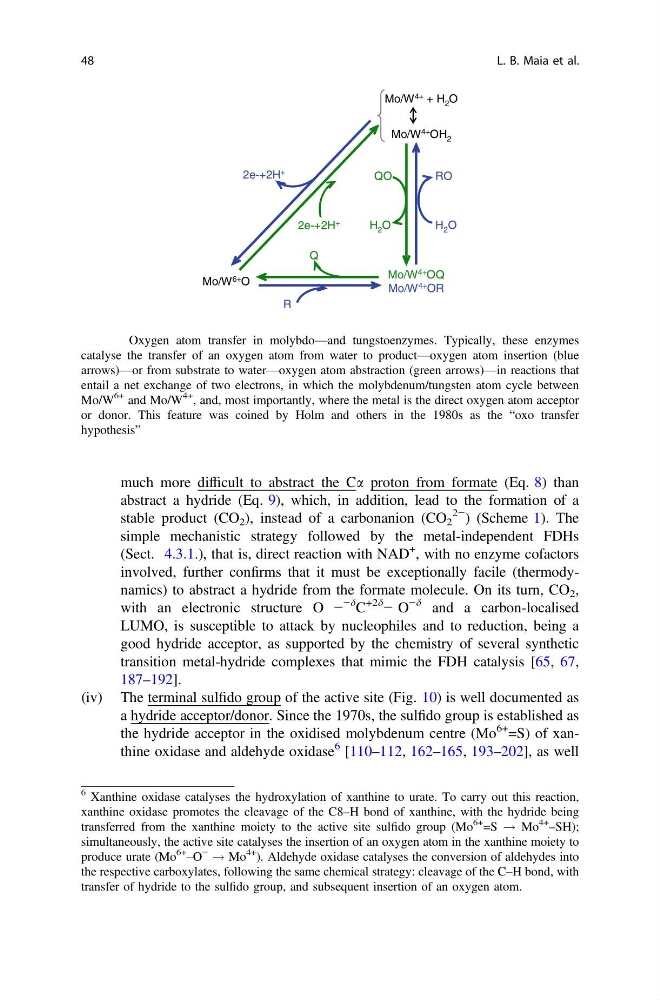
Fig. 12 Oxygen atom transfer in molybdo—and tungstoenzymes. Typically, these enzymes
catalyse the transfer of an oxygen atom from water to product—oxygen atom insertion (blue
arrows)—or from substrate to water—oxygen atom abstraction (green arrows)—in reactions that
entail a net exchange of two electrons, in which the molybdenum/tungsten atom cycle between
Mo/W
6+ and Mo/W
4+ , and, most importantly, where the metal is the direct oxygen atom acceptor
or donor. This feature was coined by Holm and others in the 1980s as the “oxo transfer
hypothesis”
6 Xanthine oxidase catalyses the hydroxylation of xanthine to urate. To carry out this reaction,
xanthine oxidase promotes the cleavage of the C8–H bond of xanthine, with the hydride being
transferred from the xanthine moiety to the active site sulfido group (Mo
6+ =S ! Mo
4+ –SH);
simultaneously, the active site catalyses the insertion of an oxygen atom in the xanthine moiety to
produce urate (Mo
6+ –O
− ! Mo
4+ ). Aldehyde oxidase catalyses the conversion of aldehydes into
the respective carboxylates, following the same chemical strategy: cleavage of the C–H bond, with
transfer of hydride to the sulfido group, and subsequent insertion of an oxygen atom.
48
L. B. Maia et al.
abstract a hydride (Eq. 9), which, in addition, lead to the formation of a
stable product (CO 2 ), instead of a carbonanion (CO 2
2− ) (Scheme 1). The
simple mechanistic strategy followed by the metal-independent FDHs
(Sect. 4.3.1.), that is, direct reaction with NAD
+
, with no enzyme cofactors
involved, further confirms that it must be exceptionally facile (thermodynamics) to abstract a hydride from the formate molecule. On its turn, CO 2 ,
with an electronic structure O −
−d C
+2d
− O
−d and a carbon-localised
LUMO, is susceptible to attack by nucleophiles and to reduction, being a
good hydride acceptor, as supported by the chemistry of several synthetic
transition metal-hydride complexes that mimic the FDH catalysis [65, 67,
187–192].
(iv) The terminal sulfido group of the active site (Fig. 10) is well documented as
a hydride acceptor/donor. Since the 1970s, the sulfido group is established as
the hydride acceptor in the oxidised molybdenum centre (Mo
6+ =S) of xanthine oxidase and aldehyde oxidase
6 [110–112, 162–165, 193–202], as well
Mo/W 6+ O
Mo/W 4+ OQ
Mo/W 4+ OR
R
2e-+2H +
RO
H 2 O
2e-+2H +
QO
H 2 O
Q
Mo/W 4+ OH 2
Mo/W 4+ + H 2 O
Fig. 12 Oxygen atom transfer in molybdo—and tungstoenzymes. Typically, these enzymes
catalyse the transfer of an oxygen atom from water to product—oxygen atom insertion (blue
arrows)—or from substrate to water—oxygen atom abstraction (green arrows)—in reactions that
entail a net exchange of two electrons, in which the molybdenum/tungsten atom cycle between
Mo/W
6+ and Mo/W
4+ , and, most importantly, where the metal is the direct oxygen atom acceptor
or donor. This feature was coined by Holm and others in the 1980s as the “oxo transfer
hypothesis”
6 Xanthine oxidase catalyses the hydroxylation of xanthine to urate. To carry out this reaction,
xanthine oxidase promotes the cleavage of the C8–H bond of xanthine, with the hydride being
transferred from the xanthine moiety to the active site sulfido group (Mo
6+ =S ! Mo
4+ –SH);
simultaneously, the active site catalyses the insertion of an oxygen atom in the xanthine moiety to
produce urate (Mo
6+ –O
− ! Mo
4+ ). Aldehyde oxidase catalyses the conversion of aldehydes into
the respective carboxylates, following the same chemical strategy: cleavage of the C–H bond, with
transfer of hydride to the sulfido group, and subsequent insertion of an oxygen atom.
48
L. B. Maia et al.