

3.2.1 Olefin Metathesis
With this issue in mind, Ward and coworkers developed the in cellulo production of
SAV and its exportation to the periplasm of bacteria thanks to its fusion with the
OmpA signal peptide. The choice of the periplasm as a compartment was mainly to
take advantage of its low content in glutathione compared to that of the cytoplasm.
Once in this compartment, SAV was also easily accessible to exogeneous molecules such as a synthetic biotinylated Hoveyda-Grubbs ruthenium complex to form
the artificial metathase directly in the bacterial periplasm. The artificial metathase
was shown to catalyze ring-closing metathesis. This was demonstrated in vivo by
the transformation of a non-fluorescent substrate into the fluorescent umbelliferone 2 (Fig. 23). The scope of the reaction was then extended to the water-soluble
benchmark substrate 3 which provided a poor yield. Interestingly, the authors took
advantage of this low activity to perform directed evolution of the artificial metalloenzyme in cellulo and managed to get a 5-fold yield improvement from a
quintuple mutant (Fig. 23) [111].
ATHase
HCO 2 Na
CO 2
Alkane
ene-reductase
Alkene
N
O
N
O
NADH mimic
N
O
O
O
O
O
O
96 % ee
94 % ee
98 % ee
Examples of resolved alkenes:
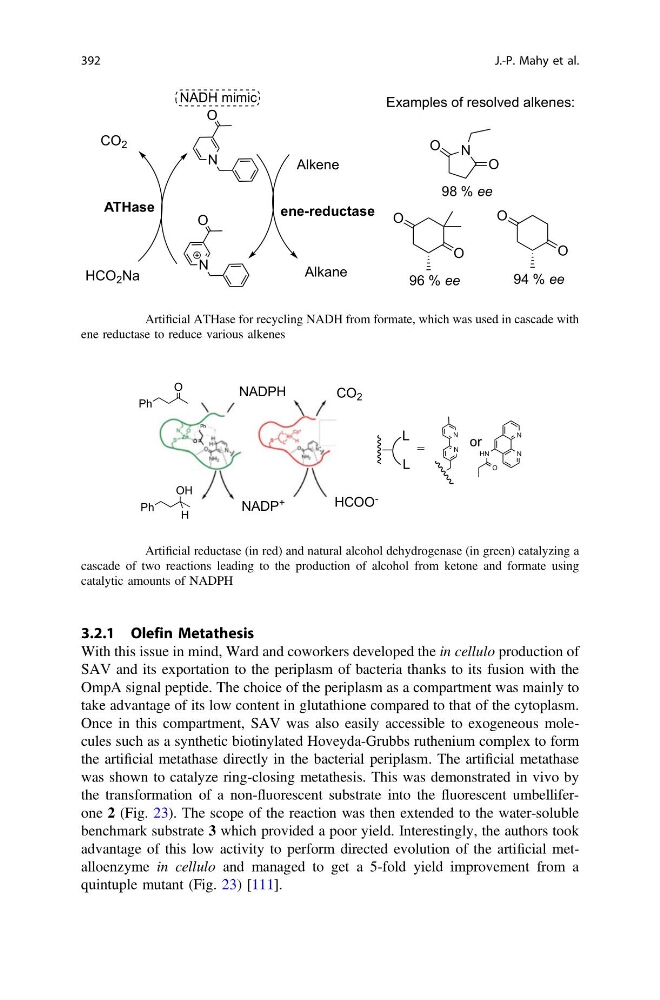
Scheme 5 Artificial ATHase for recycling NADH from formate, which was used in cascade with
ene reductase to reduce various alkenes
Ph
O
Ph
OH
H
NADP +
NADPH
CO 2
HCOO -
L
L
=
N
N
N
N
HN
O
or
Ph
O
Scheme 6 Artificial reductase (in red) and natural alcohol dehydrogenase (in green) catalyzing a
cascade of two reactions leading to the production of alcohol from ketone and formate using
catalytic amounts of NADPH
392
J.-P. Mahy et al.
With this issue in mind, Ward and coworkers developed the in cellulo production of
SAV and its exportation to the periplasm of bacteria thanks to its fusion with the
OmpA signal peptide. The choice of the periplasm as a compartment was mainly to
take advantage of its low content in glutathione compared to that of the cytoplasm.
Once in this compartment, SAV was also easily accessible to exogeneous molecules such as a synthetic biotinylated Hoveyda-Grubbs ruthenium complex to form
the artificial metathase directly in the bacterial periplasm. The artificial metathase
was shown to catalyze ring-closing metathesis. This was demonstrated in vivo by
the transformation of a non-fluorescent substrate into the fluorescent umbelliferone 2 (Fig. 23). The scope of the reaction was then extended to the water-soluble
benchmark substrate 3 which provided a poor yield. Interestingly, the authors took
advantage of this low activity to perform directed evolution of the artificial metalloenzyme in cellulo and managed to get a 5-fold yield improvement from a
quintuple mutant (Fig. 23) [111].
ATHase
HCO 2 Na
CO 2
Alkane
ene-reductase
Alkene
N
O
N
O
NADH mimic
N
O
O
O
O
O
O
96 % ee
94 % ee
98 % ee
Examples of resolved alkenes:
Scheme 5 Artificial ATHase for recycling NADH from formate, which was used in cascade with
ene reductase to reduce various alkenes
Ph
O
Ph
OH
H
NADP +
NADPH
CO 2
HCOO -
L
L
=
N
N
N
N
HN
O
or
Ph
O
Scheme 6 Artificial reductase (in red) and natural alcohol dehydrogenase (in green) catalyzing a
cascade of two reactions leading to the production of alcohol from ketone and formate using
catalytic amounts of NADPH
392
J.-P. Mahy et al.