

biochemical reduction of O 2 to generate electrical energy [109–113]. The direct ET
between the enzyme and the electrode contributes significant design advantages in
the construction of such devices, enabling them (theoretically) to be operated in a
single compartment cell, without exogenous redox mediators, at a potential
approaching the redox potential of the enzyme itself [66]. Biosensing electrodes
have also been designed based on the catalytic activity of the multicopper enzymes,
namely plant ascorbate oxidase (AOx) from Cucurbita sp. [114, 115] and bacterial
bilirubin oxidase (BOD) from Myrothecium verrucaria [116, 117]; examples are
presented in Table 3. Also, biosensors based on the plant or fungal laccases have
been widely researched for the monitoring of phenolic compounds (e.g, phenol,
catechol, dopamine) (extended reviews at references [118–120]). However, most of
these devices are operated at more acidic conditions (pH 4–6) than the physiological pH and in the presence of very low concentrations of chlorine. This is due to
the optimum pH for the catalytic activity being around pH 5, and to the low
tolerance of the enzyme to high levels of halides [111, 121–123]. These two factors
limit the direct application of laccase-based devices in environmental and clinical
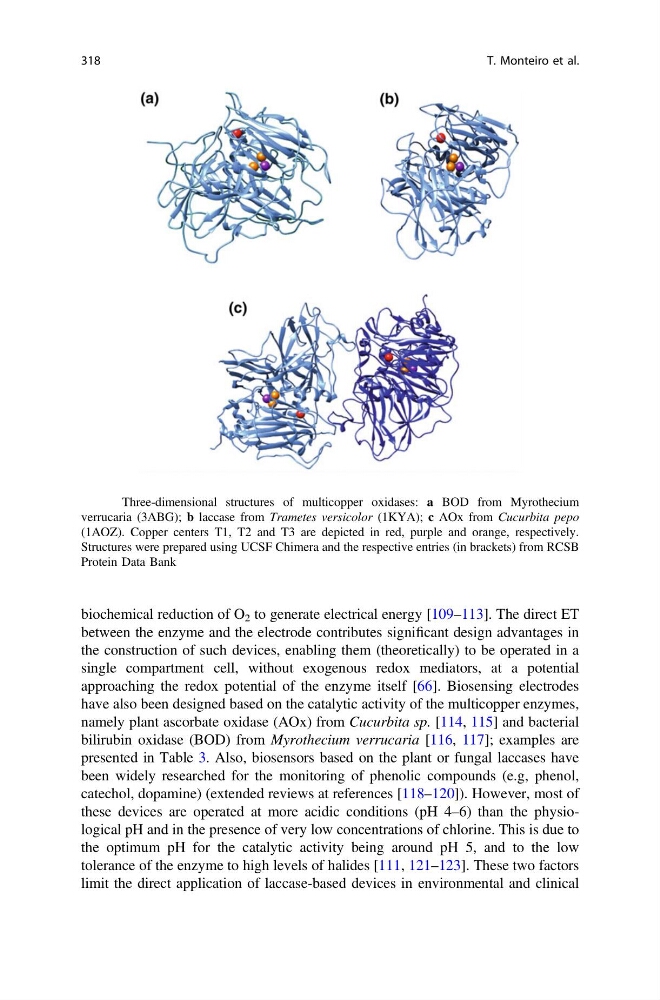
Fig. 4 Three-dimensional structures of multicopper oxidases: a BOD from Myrothecium
verrucaria (3ABG); b laccase from Trametes versicolor (1KYA); c AOx from Cucurbita pepo
(1AOZ). Copper centers T1, T2 and T3 are depicted in red, purple and orange, respectively.
Structures were prepared using UCSF Chimera and the respective entries (in brackets) from RCSB
Protein Data Bank
318
T. Monteiro et al.
between the enzyme and the electrode contributes significant design advantages in
the construction of such devices, enabling them (theoretically) to be operated in a
single compartment cell, without exogenous redox mediators, at a potential
approaching the redox potential of the enzyme itself [66]. Biosensing electrodes
have also been designed based on the catalytic activity of the multicopper enzymes,
namely plant ascorbate oxidase (AOx) from Cucurbita sp. [114, 115] and bacterial
bilirubin oxidase (BOD) from Myrothecium verrucaria [116, 117]; examples are
presented in Table 3. Also, biosensors based on the plant or fungal laccases have
been widely researched for the monitoring of phenolic compounds (e.g, phenol,
catechol, dopamine) (extended reviews at references [118–120]). However, most of
these devices are operated at more acidic conditions (pH 4–6) than the physiological pH and in the presence of very low concentrations of chlorine. This is due to
the optimum pH for the catalytic activity being around pH 5, and to the low
tolerance of the enzyme to high levels of halides [111, 121–123]. These two factors
limit the direct application of laccase-based devices in environmental and clinical
Fig. 4 Three-dimensional structures of multicopper oxidases: a BOD from Myrothecium
verrucaria (3ABG); b laccase from Trametes versicolor (1KYA); c AOx from Cucurbita pepo
(1AOZ). Copper centers T1, T2 and T3 are depicted in red, purple and orange, respectively.
Structures were prepared using UCSF Chimera and the respective entries (in brackets) from RCSB
Protein Data Bank
318
T. Monteiro et al.