

reduction potentials are a numerical approach to quantifying the difference in
donors: ca. −2.7 V for the NiN 2 S 2 and −1.7 V for the [Fe(NO)]N 2 S 2 relative to
Fc/Fc
+ = 0.00 V.
These differences control the position of the first-added electron in the cyclic
voltammograms of the NiFe complexes containing the “hard” acceptor as well as
the proton/electron level that defines the ultimate coupling process. Figure 18
illustrates the hypotheses behind selection of sample structures to calculate
according to landing sites for protons that remain protonic (blue sites) or hydridic
(green, the hydrides on iron or nickel). The purple arrows represent points of bond
breaking as electron density builds up on the iron acceptor. As mentioned above,
cleavage of the iron-sulfur donor provides landing sites for proton uptake both at
sulfur and at iron. DFT calculations correlate the pKa and E 1/2 of these processes,
and relate to observed electrochemical events.
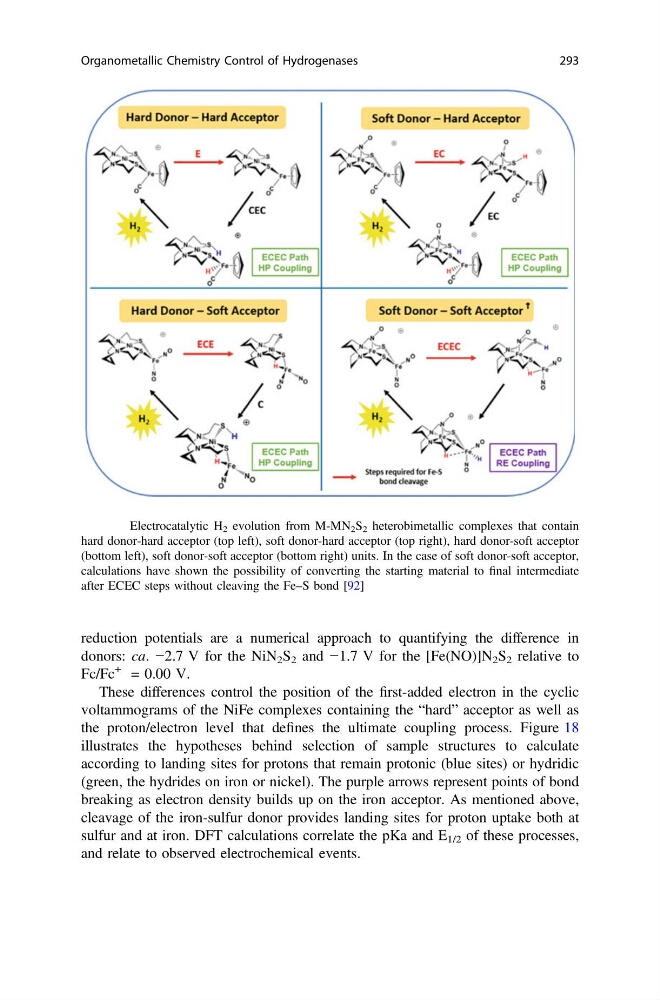
Fig. 17 Electrocatalytic H 2 evolution from M-MN 2 S 2 heterobimetallic complexes that contain
hard donor-hard acceptor (top left), soft donor-hard acceptor (top right), hard donor-soft acceptor
(bottom left), soft donor-soft acceptor (bottom right) units. In the case of soft donor-soft acceptor,
calculations have shown the possibility of converting the starting material to final intermediate
after ECEC steps without cleaving the Fe–S bond [92]
Organometallic Chemistry Control of Hydrogenases
293
donors: ca. −2.7 V for the NiN 2 S 2 and −1.7 V for the [Fe(NO)]N 2 S 2 relative to
Fc/Fc
+ = 0.00 V.
These differences control the position of the first-added electron in the cyclic
voltammograms of the NiFe complexes containing the “hard” acceptor as well as
the proton/electron level that defines the ultimate coupling process. Figure 18
illustrates the hypotheses behind selection of sample structures to calculate
according to landing sites for protons that remain protonic (blue sites) or hydridic
(green, the hydrides on iron or nickel). The purple arrows represent points of bond
breaking as electron density builds up on the iron acceptor. As mentioned above,
cleavage of the iron-sulfur donor provides landing sites for proton uptake both at
sulfur and at iron. DFT calculations correlate the pKa and E 1/2 of these processes,
and relate to observed electrochemical events.
Fig. 17 Electrocatalytic H 2 evolution from M-MN 2 S 2 heterobimetallic complexes that contain
hard donor-hard acceptor (top left), soft donor-hard acceptor (top right), hard donor-soft acceptor
(bottom left), soft donor-soft acceptor (bottom right) units. In the case of soft donor-soft acceptor,
calculations have shown the possibility of converting the starting material to final intermediate
after ECEC steps without cleaving the Fe–S bond [92]
Organometallic Chemistry Control of Hydrogenases
293