

continued to respond even after cycling several times between ethanolic and ambient air, showing the reversible adsorption of the vapor and demonstrating the
reusability of these devices. Sensor response depended greatly upon the etching
conditions and the wavelength of the laser source, offering the opportunity to diversify or tune these experimental parameters to detect a variety of gaseous agents.
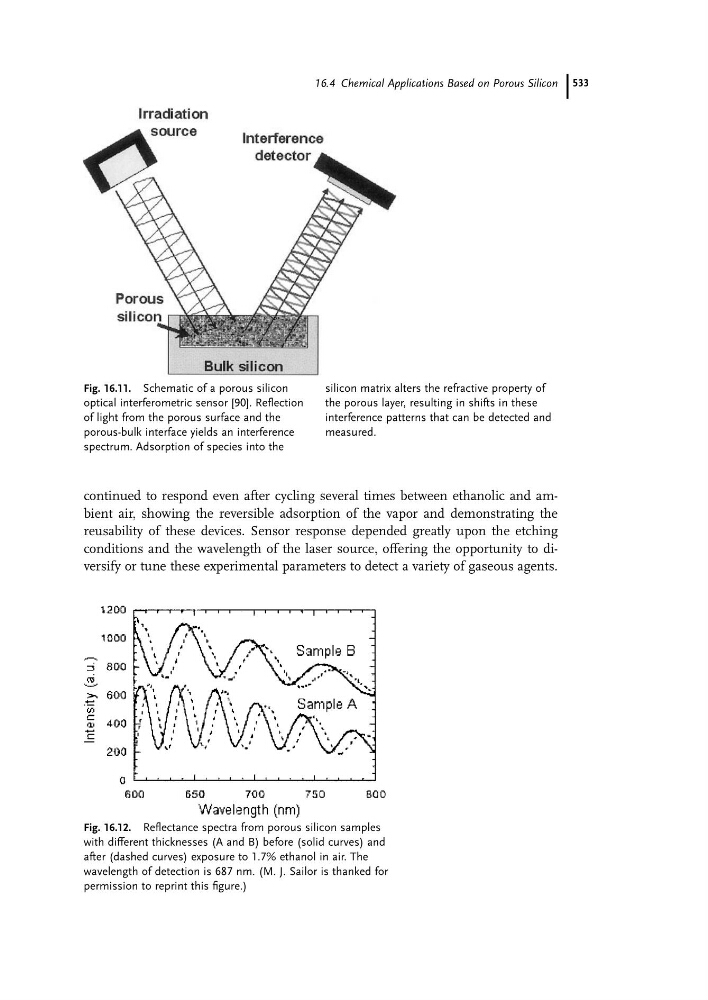
Fig. 16.11. Schematic of a porous silicon
optical interferometric sensor [90]. Reflection
of light from the porous surface and the
porous-bulk interface yields an interference
spectrum. Adsorption of species into the
silicon matrix alters the refractive property of
the porous layer, resulting in shifts in these
interference patterns that can be detected and
measured.
Fig. 16.12. Reflectance spectra from porous silicon samples
with different thicknesses (A and B) before (solid curves) and
after (dashed curves) exposure to 1.7% ethanol in air. The
wavelength of detection is 687 nm. (M. J. Sailor is thanked for
permission to reprint this figure.)
16.4 Chemical Applications Based on Porous Silicon 533