

microchips was reported by Yakovleva et al. [88]. Detection limits of ng L
À1 levels
of labeled atrazine were established for several types of immuno surfaces, offering
this material as a sensitive and durable substrate for mTAS sensing. Appropriation
of free-standing porous silicon for physical applications in mTAS such as microsieves has also been proposed [89].
16.4.3
Porous Silicon Sensors
The development of sensors based upon porous silicon materials has proceeded in
recent years, seeking to fashion these readily abundant and easily modified substrates into inexpensive and reliable detection devices. Efforts in this area, particularly those of the Sailor group and its collaborators, have focused upon changes in
the optical reflectivity of porous silicon substrates when exposed to biomolecular
[90–93] or chemical [94–96] analytes (Figure 16.11). Diffusion of gaseous species
into porous silicon has been shown to effect changes in the refractive index of this
material, shifting the wavelengths of the Fabry–Pe ´rot fringes when probed with
laser interferometry (Figure 16.12). Gao et al. have examined the shifts induced
by the adsorption of ethanol vapor onto oxidized porous silicon by measuring the
change in reflectance at a fixed laser wavelength [97, 98]; the difference in reflectivity between the exposed substrate and the untreated material was directly
correlated to the concentration of the vapor. Concentrations as low as 250 ppb were
detected by laser interferometry of these porous silicon sensors. The substrates
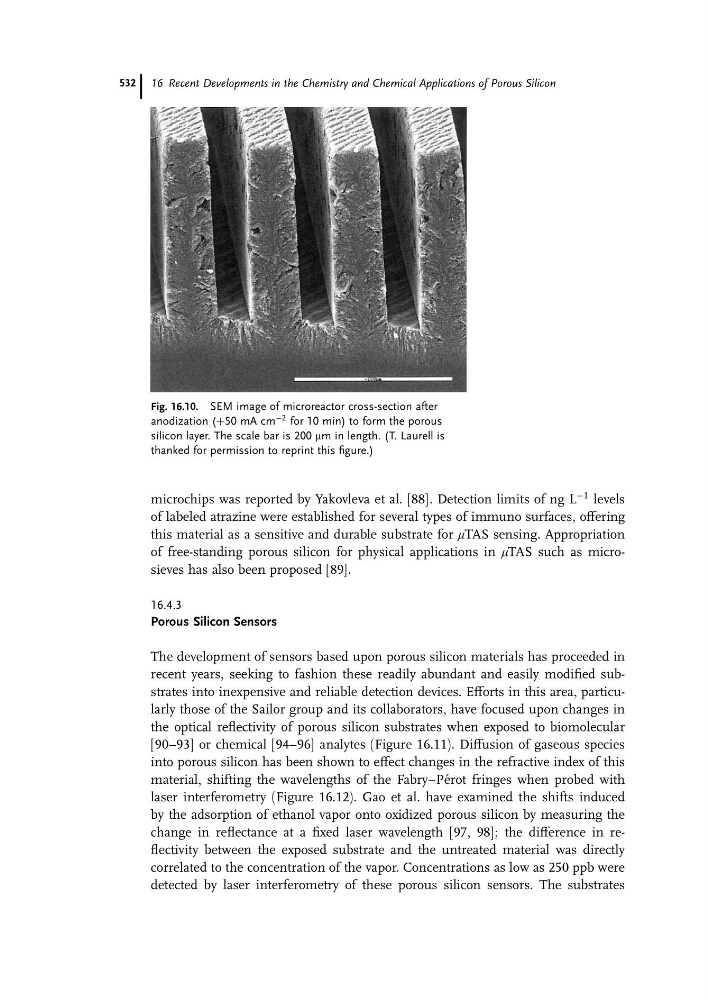
Fig. 16.10. SEM image of microreactor cross-section after
anodization (þ50 mA cm
À2 for 10 min) to form the porous
silicon layer. The scale bar is 200 mm in length. (T. Laurell is
thanked for permission to reprint this figure.)
16 Recent Developments in the Chemistry and Chemical Applications of Porous Silicon
532