

densed to three inner barrelanoid cages. Four of these M 10 tetrahedral subunits are
assembled around a central adamantoid cage to yield the observed structure, with a
distribution of the In(III) and Cu(I) centers throughout the cluster. The tetrahedral
framework in 27 contrasts with the spherical binary cores in the system copper–
selenium as described in Section 13.3.1.2 and can be attributed to the large number of indium sites in the cluster. The adamantoid structural motif is dominant in
the XV–XVI framework solids [95], and is also clearly exhibited in the extended
superlattices of [In 28 Cd 6 S 54 ]
12À [96], [In 16 Cd 4 S 35 ]
14À [97] and [In 16 Cd 4 S 33 ]
10À [98],
which are built up from these covalently linked semiconductor quantum dot units.
These remarkable lattices are formed under solvothermal conditions, by combining commercially available Cd and In sources with elemental sulfur.
13.6
Metal Pnictides from E(SiMe 3 ) 3 Reagents
The demonstrated, rich chemistry that has evolved from the development of the
reactions of silylated chalcogen sources E(SiMe 3 ) 2 has yet to be matched with
related Group XV reagents. Clear indicators of the utility of these molecules in
accessing large, molecular semiconductor clusters have however been reported.
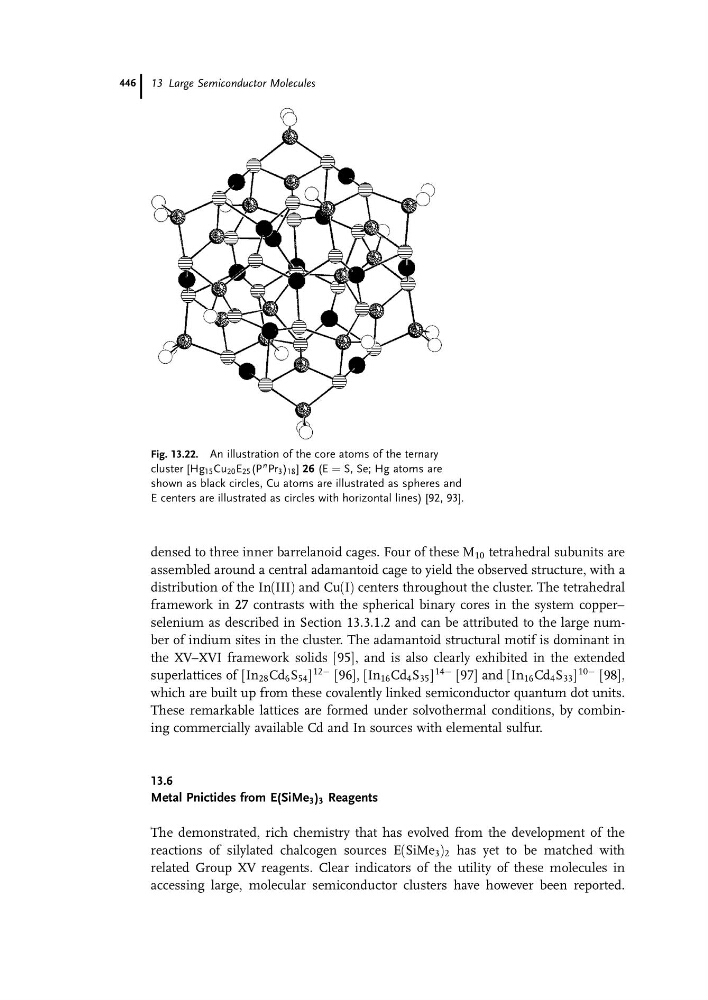
Fig. 13.22. An illustration of the core atoms of the ternary
cluster [Hg 15 Cu 20 E 25 (P
n Pr 3 ) 18 ] 26 (E ¼ S, Se; Hg atoms are
shown as black circles, Cu atoms are illustrated as spheres and
E centers are illustrated as circles with horizontal lines) [92, 93].
13 Large Semiconductor Molecules
446
assembled around a central adamantoid cage to yield the observed structure, with a
distribution of the In(III) and Cu(I) centers throughout the cluster. The tetrahedral
framework in 27 contrasts with the spherical binary cores in the system copper–
selenium as described in Section 13.3.1.2 and can be attributed to the large number of indium sites in the cluster. The adamantoid structural motif is dominant in
the XV–XVI framework solids [95], and is also clearly exhibited in the extended
superlattices of [In 28 Cd 6 S 54 ]
12À [96], [In 16 Cd 4 S 35 ]
14À [97] and [In 16 Cd 4 S 33 ]
10À [98],
which are built up from these covalently linked semiconductor quantum dot units.
These remarkable lattices are formed under solvothermal conditions, by combining commercially available Cd and In sources with elemental sulfur.
13.6
Metal Pnictides from E(SiMe 3 ) 3 Reagents
The demonstrated, rich chemistry that has evolved from the development of the
reactions of silylated chalcogen sources E(SiMe 3 ) 2 has yet to be matched with
related Group XV reagents. Clear indicators of the utility of these molecules in
accessing large, molecular semiconductor clusters have however been reported.
Fig. 13.22. An illustration of the core atoms of the ternary
cluster [Hg 15 Cu 20 E 25 (P
n Pr 3 ) 18 ] 26 (E ¼ S, Se; Hg atoms are
shown as black circles, Cu atoms are illustrated as spheres and
E centers are illustrated as circles with horizontal lines) [92, 93].
13 Large Semiconductor Molecules
446