

The ‘‘transition point’’ observed for the AgaSe nanoclusters, with respect
to whether or not a structural relationship to the binary solid is evident, appears to occur for structures with greater than 90 Ag centers. Thus the cluster
[Ag 112 Se 32 (Se
n Bu) 48 (P
t Bu 3 ) 12 ] also displays a layered arrangement of the Se framework, whereas the structure of [Ag 90 Se 38 (Se
t Bu) 14 (PEt 3 ) 22 ] 21 (Figure 13.17) is best
described as having a shell-like construction of three Se layers, and an overall
torus-shaped cluster core [67]. One should not, however, ignore the influence of
the substituents on the surface selenolate ligands and their role in mediating core
geometries. The utility of E-SiMe 3 reagents in ensuring the homogeneous conditions necessary for their crystallization, in addition to the relatively ionic bonding
(and thus flexible coordination geometries) in the XI–XVI clusters, are both essential in enabling the formation of these unparalleled nanocluster complexes.
13.4
Group XII-chalogenides and the Quantum Confinement Effect
13.4.1
CdS
As described in the previous sections, the vibrant interest in the development of
the XI–XVI clusters and nanoclusters may be attributed to the dimensions of the
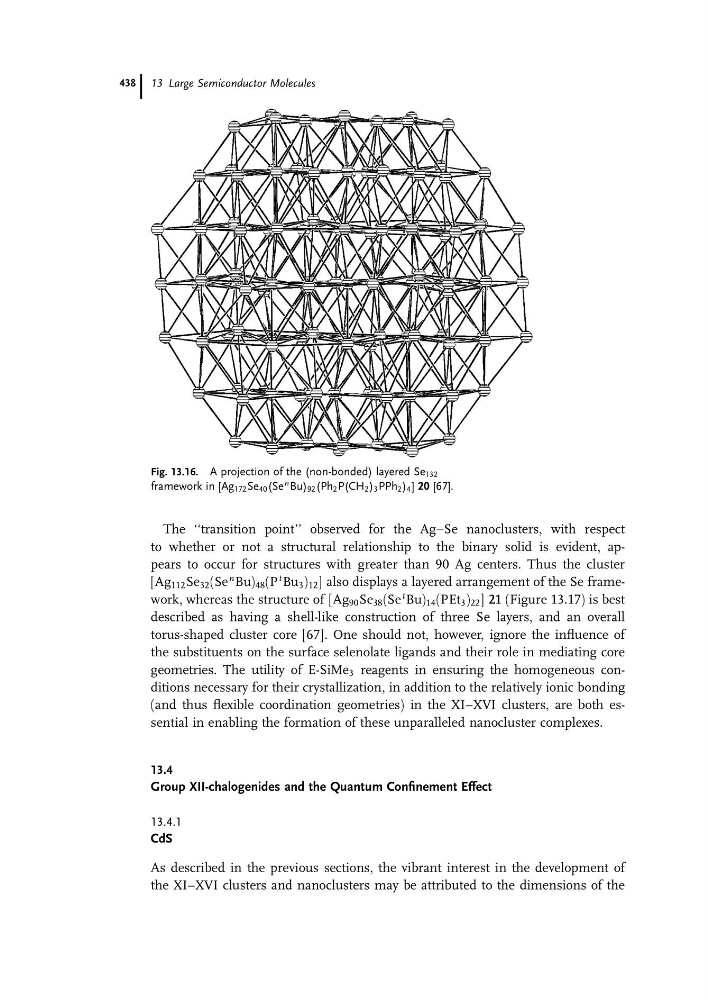
Fig. 13.16. A projection of the (non-bonded) layered Se 132
framework in [Ag 172 Se 40 (Se
n Bu) 92 (Ph 2 P(CH 2 ) 3 PPh 2 ) 4 ] 20 [67].
13 Large Semiconductor Molecules
438
to whether or not a structural relationship to the binary solid is evident, appears to occur for structures with greater than 90 Ag centers. Thus the cluster
[Ag 112 Se 32 (Se
n Bu) 48 (P
t Bu 3 ) 12 ] also displays a layered arrangement of the Se framework, whereas the structure of [Ag 90 Se 38 (Se
t Bu) 14 (PEt 3 ) 22 ] 21 (Figure 13.17) is best
described as having a shell-like construction of three Se layers, and an overall
torus-shaped cluster core [67]. One should not, however, ignore the influence of
the substituents on the surface selenolate ligands and their role in mediating core
geometries. The utility of E-SiMe 3 reagents in ensuring the homogeneous conditions necessary for their crystallization, in addition to the relatively ionic bonding
(and thus flexible coordination geometries) in the XI–XVI clusters, are both essential in enabling the formation of these unparalleled nanocluster complexes.
13.4
Group XII-chalogenides and the Quantum Confinement Effect
13.4.1
CdS
As described in the previous sections, the vibrant interest in the development of
the XI–XVI clusters and nanoclusters may be attributed to the dimensions of the
Fig. 13.16. A projection of the (non-bonded) layered Se 132
framework in [Ag 172 Se 40 (Se
n Bu) 92 (Ph 2 P(CH 2 ) 3 PPh 2 ) 4 ] 20 [67].
13 Large Semiconductor Molecules
438