

cluster cores and the often clear transition between those that mimic the structural
features observed for the related binary semiconductor and those that do not. For
the XII–XVI clusters no such ‘‘transition point’’ need be observed as even the
smallest of clusters display a clear structural relationship to the solid materials
[10]. The structures observed in the majority of these molecules are best described
as being built up from admantoid and barrelanoid frameworks, the same fundamental units that are observed in the XII–XVI solids. Several larger clusters of the
Group XII–XVI elements have been prepared and these structures are based on
the fusion of these cages via edge-sharing interactions. This has allowed for a systematic investigation of size–property relationships in these cluster systems.
This fusion principle is illustrated with the isolation of [M 10 E 4 (SPh) 16 ]
4À
(M ¼ Zn, Cd; E ¼ S, Se) (22, Figure 13.18), formed from the reactions of adamantoid [M 4 (SPh) 10 ]
2À with elemental sulfur or selenium [69]. The neutral analogue [Zn 10 S 4 (SEt) 12 (lut) 4 ] (lut ¼ 3,5-lutidine) has also been reported, where the
tetrahedral geometry of the four vertex Zn centers is completed via coordination to the four lutidine molecules [70]. The structurally related, larger cluster
[Cd 17 S 4 (SPh) 28 ]
2À (23, Figure 13.19) was subsequently reported, formed from the
reaction of Na 2 S, PhS
À and Cd(NO 3 ) 2 [71]. The structure of the nanometer-sized
cluster 23 can be described as being built up from four central adamantoid cages
(sharing edges and one vertex), capped by four barrelanoid cages. The former are
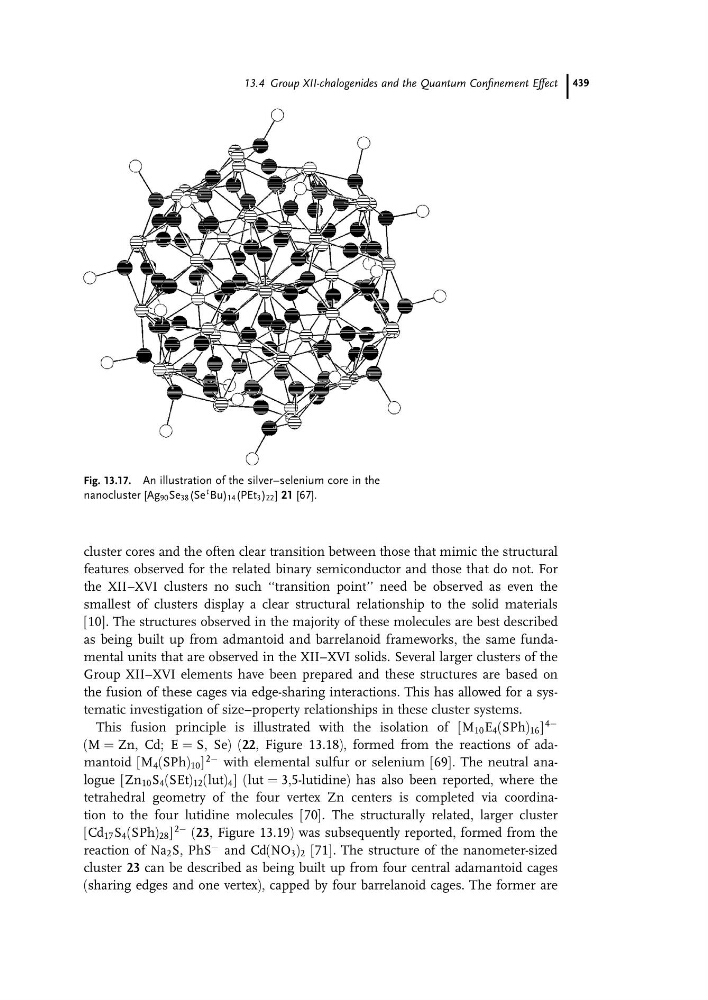
Fig. 13.17. An illustration of the silver–selenium core in the
nanocluster [Ag 90 Se 38 (Se
t Bu) 14 (PEt 3 ) 22 ] 21 [67].
13.4 Group XII-chalogenides and the Quantum Confinement Effect 439
features observed for the related binary semiconductor and those that do not. For
the XII–XVI clusters no such ‘‘transition point’’ need be observed as even the
smallest of clusters display a clear structural relationship to the solid materials
[10]. The structures observed in the majority of these molecules are best described
as being built up from admantoid and barrelanoid frameworks, the same fundamental units that are observed in the XII–XVI solids. Several larger clusters of the
Group XII–XVI elements have been prepared and these structures are based on
the fusion of these cages via edge-sharing interactions. This has allowed for a systematic investigation of size–property relationships in these cluster systems.
This fusion principle is illustrated with the isolation of [M 10 E 4 (SPh) 16 ]
4À
(M ¼ Zn, Cd; E ¼ S, Se) (22, Figure 13.18), formed from the reactions of adamantoid [M 4 (SPh) 10 ]
2À with elemental sulfur or selenium [69]. The neutral analogue [Zn 10 S 4 (SEt) 12 (lut) 4 ] (lut ¼ 3,5-lutidine) has also been reported, where the
tetrahedral geometry of the four vertex Zn centers is completed via coordination to the four lutidine molecules [70]. The structurally related, larger cluster
[Cd 17 S 4 (SPh) 28 ]
2À (23, Figure 13.19) was subsequently reported, formed from the
reaction of Na 2 S, PhS
À and Cd(NO 3 ) 2 [71]. The structure of the nanometer-sized
cluster 23 can be described as being built up from four central adamantoid cages
(sharing edges and one vertex), capped by four barrelanoid cages. The former are
Fig. 13.17. An illustration of the silver–selenium core in the
nanocluster [Ag 90 Se 38 (Se
t Bu) 14 (PEt 3 ) 22 ] 21 [67].
13.4 Group XII-chalogenides and the Quantum Confinement Effect 439