

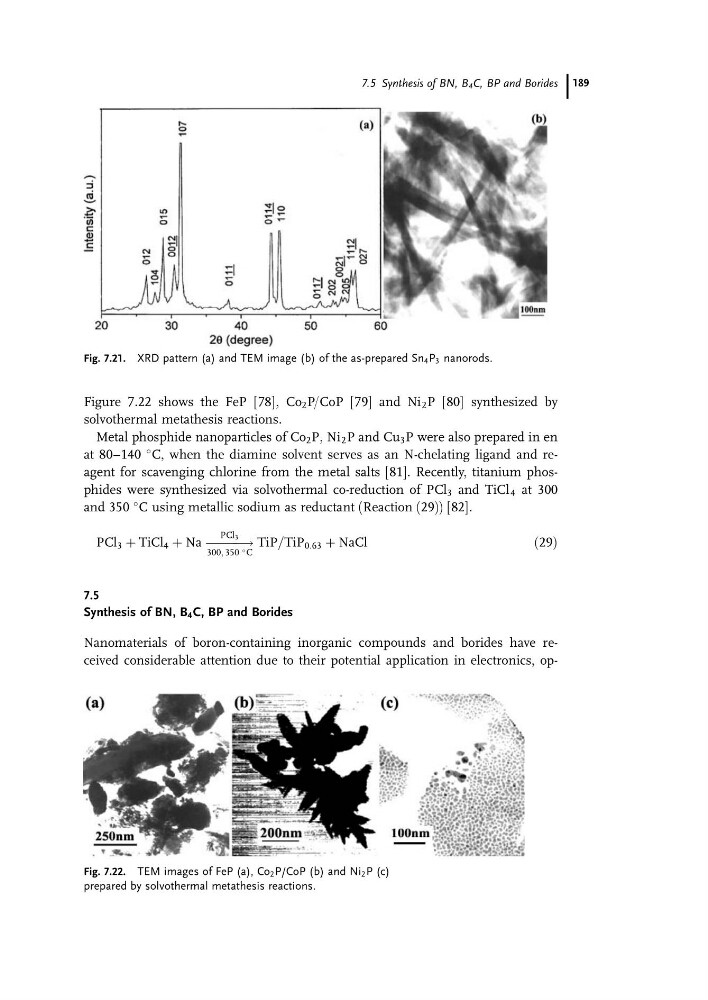
Figure 7.22 shows the FeP [78], Co 2 P/CoP [79] and Ni 2 P [80] synthesized by
solvothermal metathesis reactions.
Metal phosphide nanoparticles of Co 2 P, Ni 2 P and Cu 3 P were also prepared in en
at 80–140
C, when the diamine solvent serves as an N-chelating ligand and reagent for scavenging chlorine from the metal salts [81]. Recently, titanium phosphides were synthesized via solvothermal co-reduction of PCl 3 and TiCl 4 at 300
and 350
C using metallic sodium as reductant (Reaction (29)) [82].
PCl 3 þ TiCl 4 þ Na !
PCl3
300; 350 C
TiP=TiP 0:63 þ NaCl
ð29Þ
7.5
Synthesis of BN, B 4 C, BP and Borides
Nanomaterials of boron-containing inorganic compounds and borides have received considerable attention due to their potential application in electronics, opFig. 7.21. XRD pattern (a) and TEM image (b) of the as-prepared Sn 4 P 3 nanorods.
Fig. 7.22. TEM images of FeP (a), Co 2 P/CoP (b) and Ni 2 P (c)
prepared by solvothermal metathesis reactions.
7.5 Synthesis of BN, B 4 C, BP and Borides 189
solvothermal metathesis reactions.
Metal phosphide nanoparticles of Co 2 P, Ni 2 P and Cu 3 P were also prepared in en
at 80–140
C, when the diamine solvent serves as an N-chelating ligand and reagent for scavenging chlorine from the metal salts [81]. Recently, titanium phosphides were synthesized via solvothermal co-reduction of PCl 3 and TiCl 4 at 300
and 350
C using metallic sodium as reductant (Reaction (29)) [82].
PCl 3 þ TiCl 4 þ Na !
PCl3
300; 350 C
TiP=TiP 0:63 þ NaCl
ð29Þ
7.5
Synthesis of BN, B 4 C, BP and Borides
Nanomaterials of boron-containing inorganic compounds and borides have received considerable attention due to their potential application in electronics, opFig. 7.21. XRD pattern (a) and TEM image (b) of the as-prepared Sn 4 P 3 nanorods.
Fig. 7.22. TEM images of FeP (a), Co 2 P/CoP (b) and Ni 2 P (c)
prepared by solvothermal metathesis reactions.
7.5 Synthesis of BN, B 4 C, BP and Borides 189